1,3-Propanediol → HCID 44217649, compound
Reaction equation

[OH-].[Na+].[CH2:3]([N:10]1[C:18]2[C:13](=[CH:14][CH:15]=[CH:16][CH:17]=2)[C:12]([CH2:19]Cl)=[N:11]1)[C:4]1[CH:9]=[CH:8][CH:7]=[CH:6][CH:5]=1.[CH2:21]([OH:25])[CH2:22][CH2:23][OH:24]>>[CH2:3]([N:10]1[C:18]2[C:13](=[CH:14][CH:15]=[CH:16][CH:17]=2)[C:12]([CH2:19][O:24][CH2:23][CH2:22][CH2:21][OH:25])=[N:11]1)[C:4]1[CH:9]=[CH:8][CH:7]=[CH:6][CH:5]=1Participants
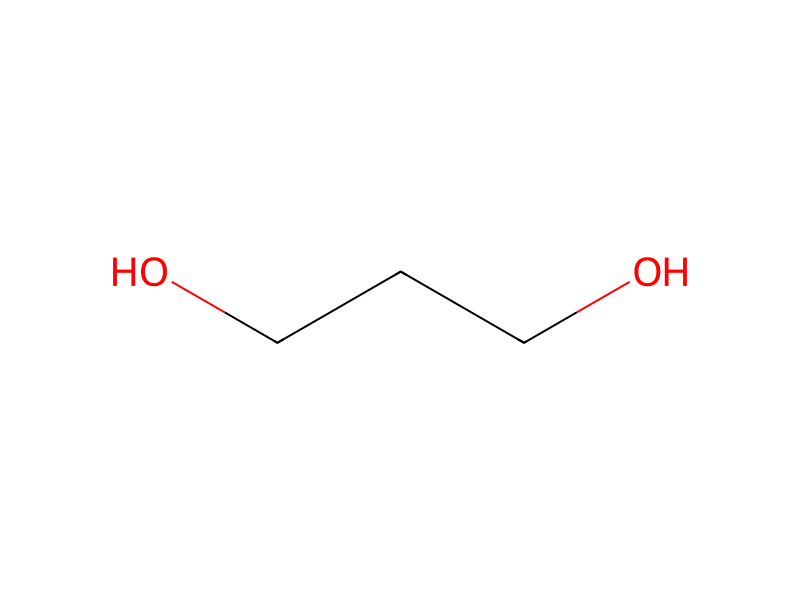



Conditions
- Temperature
- 130 °C
Procedure
To a solution of NaOH (2.8 g; 0.07 mol) in 1,3-propanediol (150 ml) stirred at room temperature was added 1-benzyl-3-chloromethylindazole, prepared as described in Example 2a of EP 382 276 (17.6 g; 0.07 mol). The solution was heated at 130° C. for 4 hours and then cooled to room temperature, and the solvent was evaporated off under reduced pressure. The residue was taken up in water (100 ml) and the product was extracted with ethyl acetate (3×100 ml). The combined organic phases were concentrated under reduced pressure and the crude residue obtained was purified by flash chromatography on silica gel, using as eluent a 1/1 hexane/ethyl acetate mixture. The product was purified by crystallization from an approximately 1/1 hexane/ethyl acetate mixture.
Workup
- customprepared
- temperaturecooled to room temperature
- customthe solvent was evaporated off under reduced pressure
- extractionthe product was extracted with ethyl acetate (3×100 ml)
- concentrationThe combined organic phases were concentrated under reduced pressure
Sources & evidence
- ORD record
- ord-115752aae62a4506a6c461fe1d7feac6
- Source dataset
- uspto-grants-2014_09
- Patent number
- US08835481B2
Reaction notes
Loading…