4-Aminobenzylamine → N-(5-Methylisoxaz-3-oyl)-4-Aminobenzylamine
Reaction equation

[NH2:1][C:2]1[CH:9]=[CH:8][C:5]([CH2:6][NH2:7])=[CH:4][CH:3]=1.[CH3:10][C:11]1[O:15][N:14]=[C:13]([C:16](Cl)=[O:17])[CH:12]=1>>[CH3:10][C:11]1[O:15][N:14]=[C:13]([C:16]([NH:7][CH2:6][C:5]2[CH:8]=[CH:9][C:2]([NH2:1])=[CH:3][CH:4]=2)=[O:17])[CH:12]=1Participants

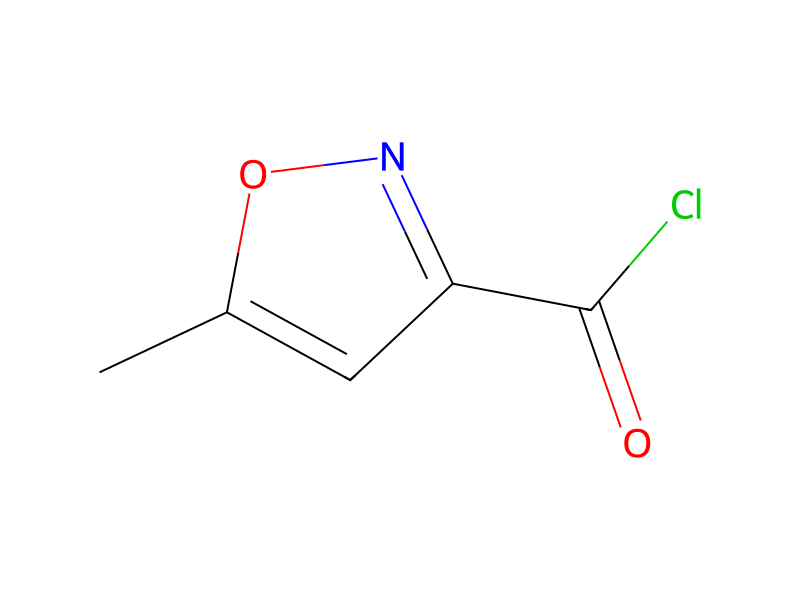

Procedure
4-Aminobenzylamine (265 mg, 2.17 mmol) and 5-methyl-3-isoxazoyl chloride (316 mg, 2.17 mmol) were converted to the title compound by the procedure of Preparation 1 except that a 2:1 mixture of mono to bis acylated products resulted which were separated by partitioning the mixture in 100 mL of ethyl acetate and 100 mL of 1N aqueous hydrochloric acid. The organic was extracted an additional two times with the acid and the combined acid extracts were made basic (about pH 8) with saturated aqueous sodium bicarbonate. This basic solution was extracted with ethyl acetate and the organic extracts were dried over magnesium sulfate, filtered, and concentrated to yield 94 mg of the monoacylated title compound. (18.7%). MS(FD) m/z 231 (M+). IR(KBr) υ=3334, 1646, 1551, 1519, 1459 cm−1.
Sources & evidence
- ORD record
- ord-9c0e2e3bdead49c99368f930beaaf585
- Source dataset
- uspto-grants-2002_04
- Patent number
- US06369070B1
Reaction notes
Loading…