p-Bromobenzenesulfonyl chloride → N-(3-methyl-5-isoxazolyl)-4-bromobenzenesulfonamide
Reaction equation

[Br:1][C:2]1[CH:7]=[CH:6][C:5]([S:8](Cl)(=[O:10])=[O:9])=[CH:4][CH:3]=1.[CH3:12][C:13]1[CH:17]=[C:16]([NH2:18])[O:15][N:14]=1>N1C=CC=CC=1>[CH3:12][C:13]1[CH:17]=[C:16]([NH:18][S:8]([C:5]2[CH:6]=[CH:7][C:2]([Br:1])=[CH:3][CH:4]=2)(=[O:10])=[O:9])[O:15][N:14]=1Participants
Reactant 2

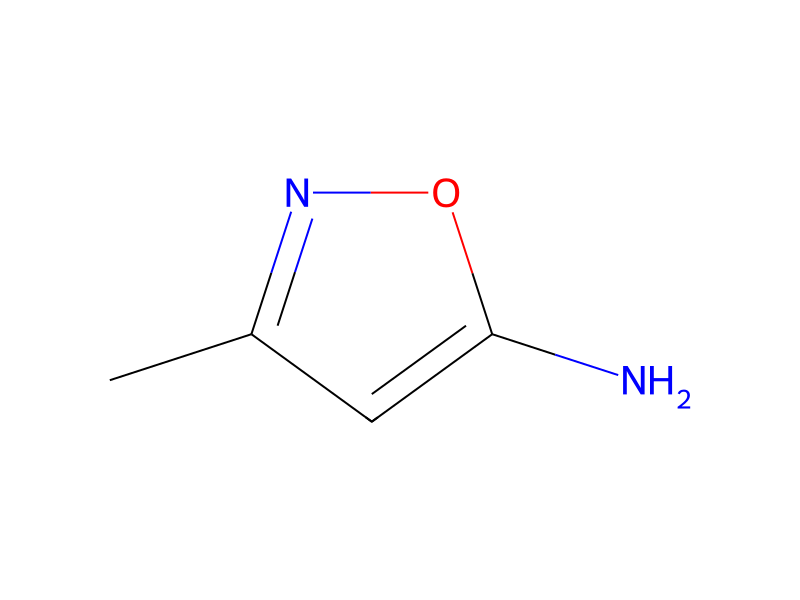
Product 1

Reagents, catalysts & solvents 1

Procedure
4-brombenzenesulfonyl chloride (solid) was added, in five portions, to a solution of 3-methyl-5-aminoisoxazole (3.82 g, 40 mmol) in dry pyridine (30 ml). This was stirred at room temperature for 3 h and the pyridine was removed under reduced pressure. The residue was dissolved in THF (300 ml) and a 5% NaOH solution (100 ml) was added. Stirring continued for 1 h at room temperature. The THF was removed under reduced pressure and the resultant residue was neutralized to pH 2 using concentrated hydrochloric acid. This was extracted with ethyl acetate (3×200 ml) and the combined organic layer was dried over MgSO4 and concentrated. The crude product was recrystallized using hexane/ethyl acetate giving N-(3-methyl-5-isoxazolyl)-4-bromobenzenesulfonamide (9.2 g, 72% yield).
Workup
- customthe pyridine was removed under reduced pressure
- dissolutionThe residue was dissolved in THF (300 ml)
- additiona 5% NaOH solution (100 ml) was added
- stirringStirring
- waitcontinued for 1 h at room temperature
- customThe THF was removed under reduced pressure
- extractionThis was extracted with ethyl acetate (3×200 ml)
- dry with materialthe combined organic layer was dried over MgSO4
- concentrationconcentrated
- customThe crude product was recrystallized
Sources & evidence
- ORD record
- ord-7daa5db80ba04d9281479c55682a0c5f
- Source dataset
- uspto-grants-2002_04
- Patent number
- US06376523B1
Reaction notes
Loading…