Pyridine → 4-fluoro-N-(4-nitrophenyl)benzamide
Reaction equation

[N+:1]([C:4]1[CH:10]=[CH:9][C:7]([NH2:8])=[CH:6][CH:5]=1)([O-:3])=[O:2].N1C=CC=CC=1.[F:17][C:18]1[CH:26]=[CH:25][C:21]([C:22](Cl)=[O:23])=[CH:20][CH:19]=1>ClCCl.FC1C=CC(C(Cl)=O)=CC=1.N1C=CC=CC=1>[F:17][C:18]1[CH:26]=[CH:25][C:21]([C:22]([NH:8][C:7]2[CH:9]=[CH:10][C:4]([N+:1]([O-:3])=[O:2])=[CH:5][CH:6]=2)=[O:23])=[CH:20][CH:19]=1Participants


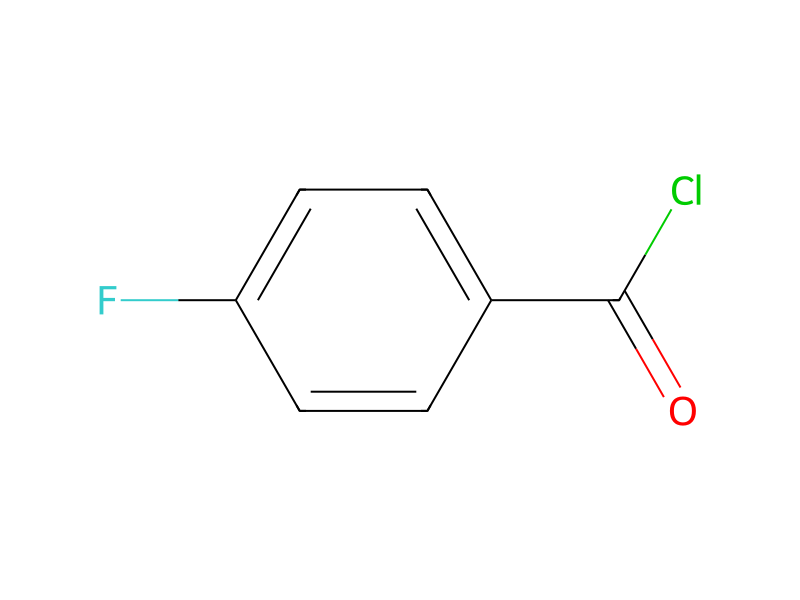


Conditions
- Temperature
- 0 °C
Procedure
To a suspension of 30.0 gm (0.217 mole) 4-nitroaniline in 225 mL dichloromethane were added 17.57 mL (0.217 mole) pyridine. The suspension was cooled to 0° C. and then 25.66 mL (0.217 mole) 4-fluorobenzoyl chloride were added slowly. Within 15 minutes the reaction mixture became homogeneous and was allowed to warm to room temperature. After an hour an additional 2.56 mL (21.7 mMol) 4-fluorobenzoyl chloride and 1.75 mL (21.7 mMol) pyridine were added and the reaction continued at room temperature for an additional hour. The reaction mixture was then washed with 200 mL water at which point a precipitate formed. The solid was filtered, washed with 100 mL hexane, washed with 200 mL water and dried under reduced pressure at 60° C. to give 56.6 gm (100%) of the desired compound.
Workup
- temperatureto warm to room temperature
- waitthe reaction continued at room temperature for an additional hour
- washThe reaction mixture was then washed with 200 mL water at which point a precipitate
- customformed
- filtrationThe solid was filtered
- washwashed with 100 mL hexane
- washwashed with 200 mL water
- customdried under reduced pressure at 60° C.
Sources & evidence
- ORD record
- ord-d2e25913b5d74067938b27c02cf3716e
- Source dataset
- uspto-grants-2002_04
- Patent number
- US06380201B1
Reaction notes
Loading…