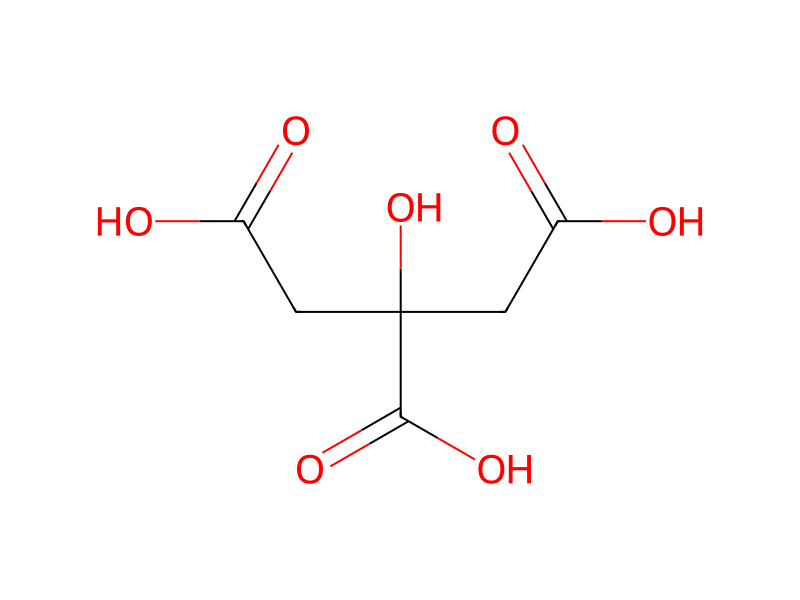
Citric Acid → 2-(3,4-Dichlorophenyl)pent-4-enal
Reaction equation

[C:1]([CH:3]([C:7]1[CH:12]=[CH:11][C:10]([Cl:13])=[C:9]([Cl:14])[CH:8]=1)[CH2:4][CH:5]=[CH2:6])#N.[H-].C([Al+]CC(C)C)C(C)C.O.C(O)(=O)CC(CC(O)=O)(C(O)=O)[OH:29]>C1(C)C=CC=CC=1>[Cl:14][C:9]1[CH:8]=[C:7]([CH:3]([CH:1]=[O:29])[CH2:4][CH:5]=[CH2:6])[CH:12]=[CH:11][C:10]=1[Cl:13]Participants
Reactant 4



Product 1

Reagents, catalysts & solvents 1

Conditions
- Temperature
- -70 °C
Procedure
4-Cyano-4-(3,4-dichlorophenyl)but-1-ene (13 g) (see Preparation 20) was dissolved in anhydrous toluene (100 ml) and cooled to −70° C. under a nitrogen atmosphere. Diisobutylaluminium hydride (50 ml of a 1.5M solution in toluene) was added to the solution over 30 minutes, the mixture stirred at −70° C. for a further 30 minutes and then allowed to warm slowly to −10° C. Water (6 ml) was carefully added (exothermic reaction) before pouring the mixture into a 15% (by weight) aqueous solution of citric acid (500 ml), followed by further addition of toluene (300 ml) and vigorous stirring of the mixture for 30 minutes. The two phases were separated, the organic phase washed with brine, dried over anhydrous sodium sulphate and the solvent removed under reduced pressure to give 4-(3,4-dichlorophenyl)-4-formylbut-1-ene as an oil (14 g).
Workup
- temperatureto warm slowly to −10° C
- custom(exothermic reaction)
- stirringvigorous stirring of the mixture for 30 minutes
- customThe two phases were separated
- washthe organic phase washed with brine
- dry with materialdried over anhydrous sodium sulphate
- customthe solvent removed under reduced pressure
Sources & evidence
- ORD record
- ord-3db923cd1fb14d3c9d6c0e41de6504f9
- Source dataset
- uspto-grants-2002_04
- Patent number
- US06380396B1
Reaction notes
Loading…