Acetonitrile → 1-Methyl-3,4-dihydroisoquinoline
Reaction equation

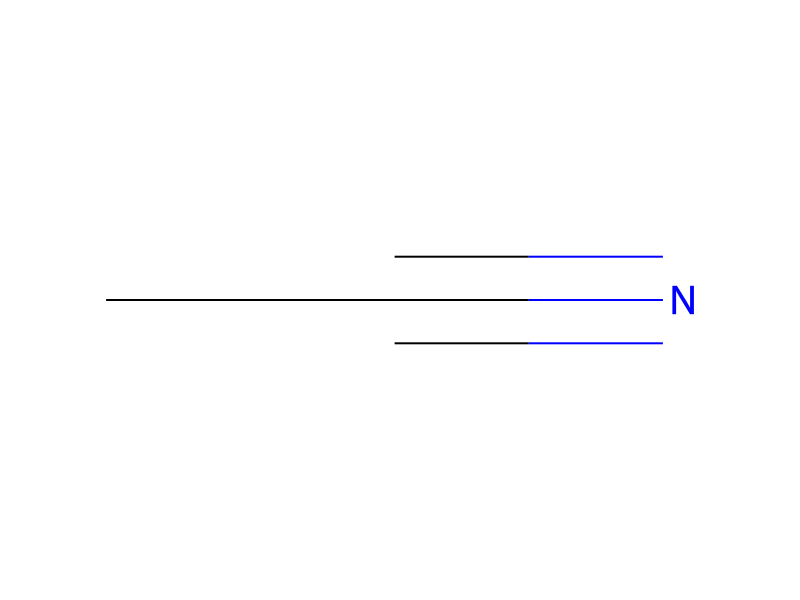
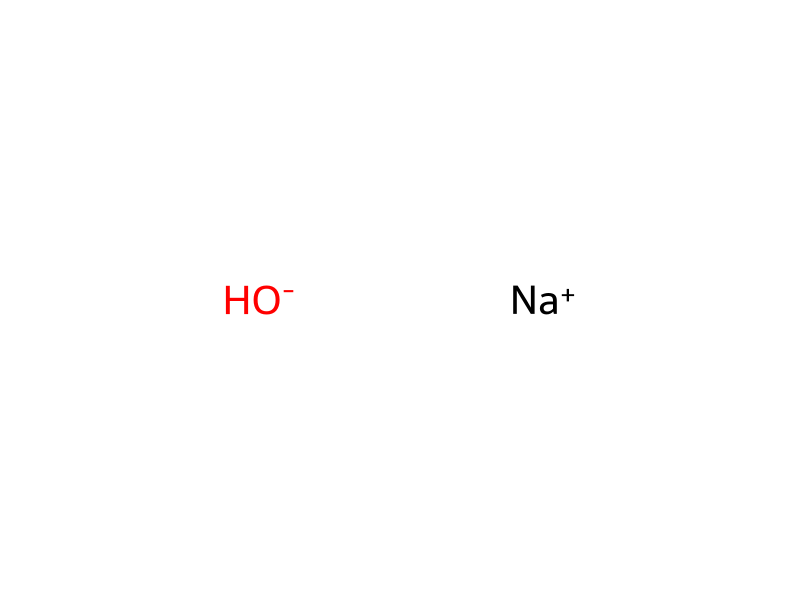
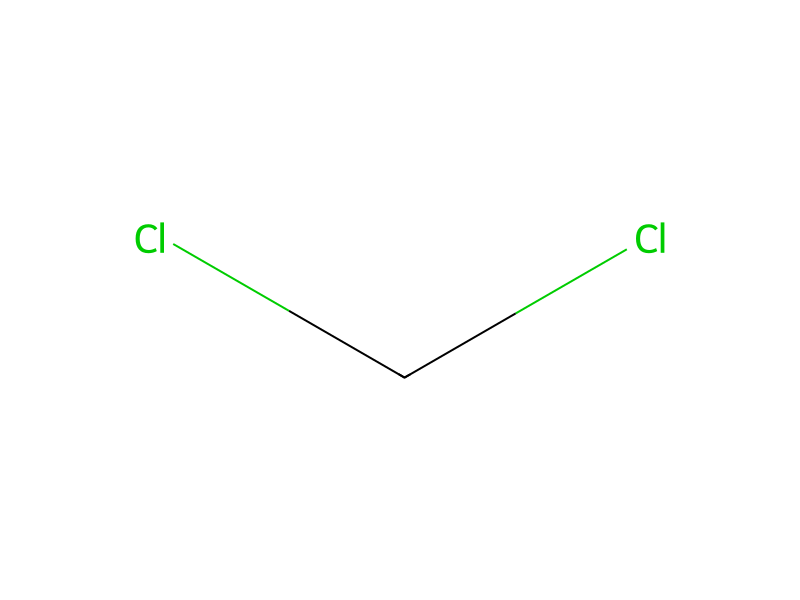
[C:1](#[N:3])[CH3:2].Cl[CH2:5][CH2:6][C:7]1[CH:12]=[CH:11][CH:10]=[CH:9][CH:8]=1.[OH-].[Na+]>C(Cl)Cl>[CH3:2][C:1]1[C:12]2[C:7](=[CH:8][CH:9]=[CH:10][CH:11]=2)[CH2:6][CH2:5][N:3]=1Participants
Reactant 3

Product 1

Reagents, catalysts & solvents 1
Conditions
- Temperature
- 10 °C
Procedure
A reaction vessel was charged with 2723 ml acetonitrile which was held under a nitrogen blanket. With the reaction vessel cooled in an ice bath, 1888.5 g stannic chloride was added gradually below the surface of the acetonitrile with stirring over a period of 2 hours 20 minutes. During the addition period, the temperature of the reaction mixture varied between 3° C. and 39° C. The mixture was allowed to stand overnight at room temperature. With the reaction mixture at 22° C., 916 g 2-chloroethylbenzene was added in increments to the reaction vessel over a ten-minute period. With the mixture under reduced pressure and heated, 1369.7 g acetonitrile was gradually stripped from the mixture. During the stripping period, the temperature of the mixture varied from 23° C. to 84° C. and the pressure in the reaction vessel varied from 45 mm Hg to about 100 mm Hg. The reaction mixture, milky in color, was heated to reflux. The reaction mixture was maintained at reflux for about 61/2 hours during which period the temperature of the mixture varied from about 109° C. to about 113° C. With the temperature of the reaction mixture at about 75° C., the entire amount of previously-stripped acetonitrile was added back to the reaction mixture. The mixture was allowed to cool, stand overnight and was observed to contain a slurry. About 2 liters of methylene chloride was added to the mixture. Then, this mixture was added with stirring to 4 liters of 10% sodium hydroxide previously cooled to about 10° C. The temperature of the mixture reached 40° C. and the mixture was found to be acidic. About 13 liters more 10% sodium hydroxide was added to make the mixture alkaline. The organic phase was separated and washed with water. The organic phase was dried over sodium sulfate, filtered and stripped on a rotary evaporator at a temperature of 35°-40° C. to provide 749.3 g 1-methyl-3,4-dihyroisoquinoline (79.2% yield based on 2-chloroethylbenzene starting material). An autoclave was charged with a slurry of 300 g 50%-wetted 5% palladium-on-carbon catalyst in 8 liters absolute ethanol. Then, there was added to the slurry a mixture of 2143.2 g 1-methyl-3,4-dihydroisoquinoline along with 82.2 g 2-chloroethylbenzene contaminant (such as prepared by the foregoing procedures). The autoclave was flushed with hydrogen gas. With the reaction mixture being stirred, the autoclave was gradually pressurized with hydrogen over a period of about two hours to a final pressure of about 185 psi (12.5 atm; 12.6×10⁵Pascal) and temperature of about 50° C. The autoclave was maintained in this pressurized condition overnight. The temperature of the autoclave dropped to 9° C. after venting with stirring of the reaction mixture. The mixture was filtered and stripped of ethanol to provide 2100.0 g 1-methyl-1,2,3,4-tetrahydroisoquinoline (96.7% based on 1-methyl-3,4-di-hydroisoquinoline starting material). A reaction vessel was charged with a mixture of 1136 g 1-methyl-1,2,3,4-tetrahydroisoquinoline in 1360 ml toluene. The mixture was cooled to 10° C., stirred and placed under a nitrogen blanket. With the temperature of the mixture at 10° C., 150 ml dichloroacetyl chloride was added to the reaction mixture gradually in a 13-minute period, after which time the temperature reached 70° C. Then, over a two-hour period portions of dichloroacetyl chloride and toluene were added gradually until a total of 780 ml dichloroacetyl chloride and 2100 ml toluene were added. The mixture was heated to reflux over a 21/2 hour period during which time HCl gas evolved from the reaction mixture. The mixture was cooled and 100 g silica gel was added to the mixture. The mixture was filtered and then stripped of toluene and of excess dichloroacetyl chloride to provide 1801.5 g 2-(dichloroacetyl)-1-methyl-1,2,3,4-tetrahydroisoquinoline (97.7% yield based on 1-methyl-1,2,3,4-tetrahydroisoquinoline starting material).
Workup
- temperatureWith the reaction vessel cooled in an ice bath
- additionDuring the addition period
- customthe temperature of the reaction mixture varied between 3° C. and 39° C
- waitto stand overnight at room temperature
- temperatureWith the mixture under reduced pressure and heated
- customvaried from 23° C. to 84° C.
- temperatureThe reaction mixture, milky in color, was heated to reflux
- temperatureThe reaction mixture was maintained
- temperatureat reflux for about 61/2 hours during which period the temperature of the mixture
- customvaried from about 109° C. to about 113° C
- temperatureto cool
- waitstand overnight
- additionThen, this mixture was added
- customreached 40° C.
- customThe organic phase was separated
- washwashed with water
- dry with materialThe organic phase was dried over sodium sulfate
- filtrationfiltered
- customstripped on a rotary evaporator at a temperature of 35°-40° C.
Sources & evidence
- ORD record
- ord-0dd96fb85c254ed69d26efa33aa000fa
- Source dataset
- uspto-grants-1988_07
- Patent number
- US04755218
Reaction notes
Loading…