Hydrochloric Acid → 1-Cyclohexyl-4-dimethylamino-2-phenyl-2-buten-1-ol
Reaction equation

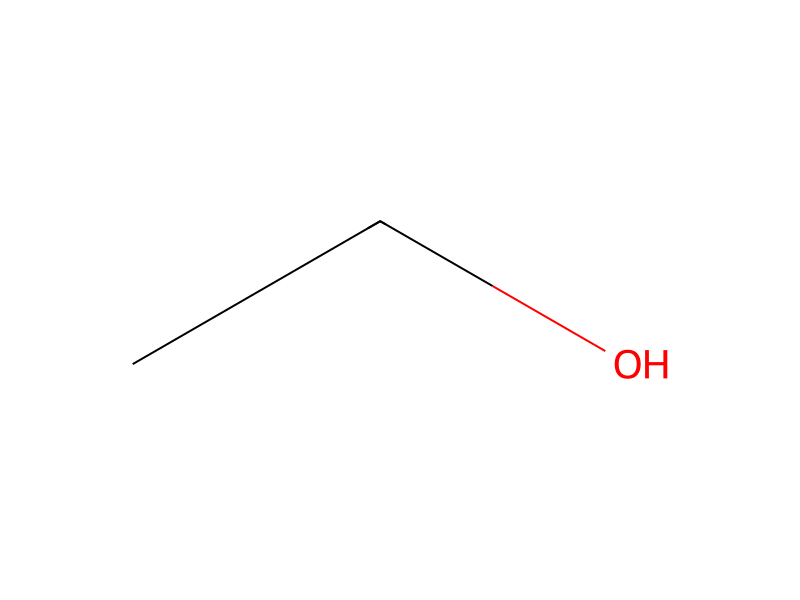
[CH3:1][N:2]([CH3:13])[CH:3]=[CH:4][C:5]([C:7]1[CH:12]=[CH:11][CH:10]=[CH:9][CH:8]=1)=O.P(Cl)(Cl)(Cl)=O.S[C:20]1[CH:25]=[CH:24]N=[CH:22][CH:21]=1.C([BH3-])#N.[Na+].Cl.[C:31]([OH:36])(=O)[C:32](O)=O>O.C(O)C>[CH:32]1([CH:31]([OH:36])[C:5]([C:7]2[CH:12]=[CH:11][CH:10]=[CH:9][CH:8]=2)=[CH:4][CH2:3][N:2]([CH3:13])[CH3:1])[CH2:24][CH2:25][CH2:20][CH2:21][CH2:22]1Participants
Reactant 6


Product 1

Reagents, catalysts & solvents 2
Procedure
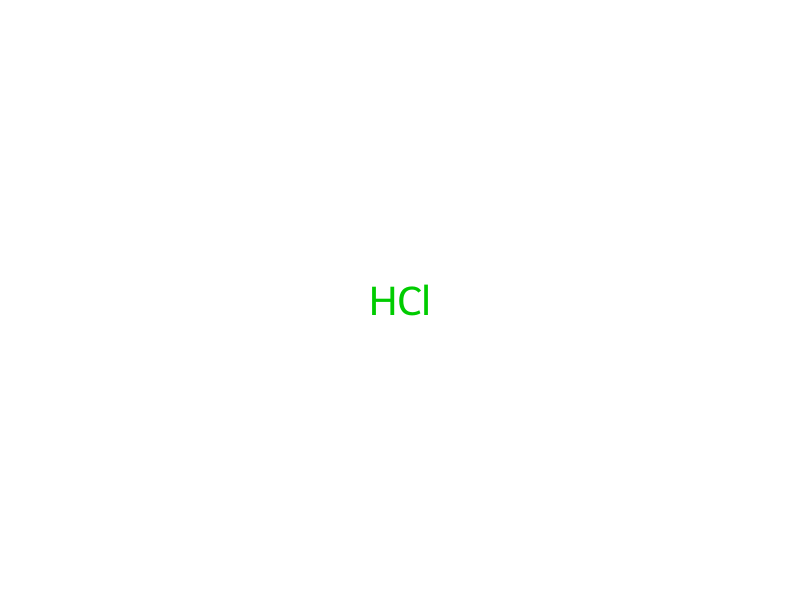
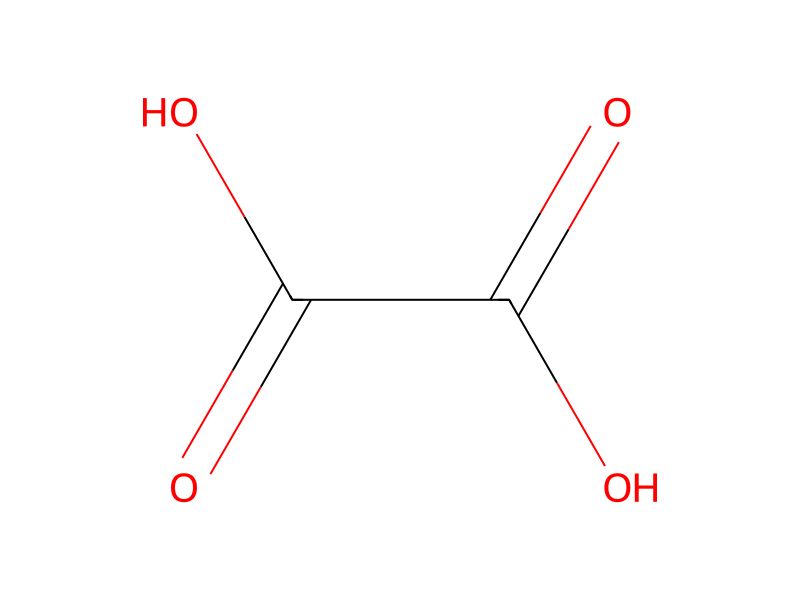
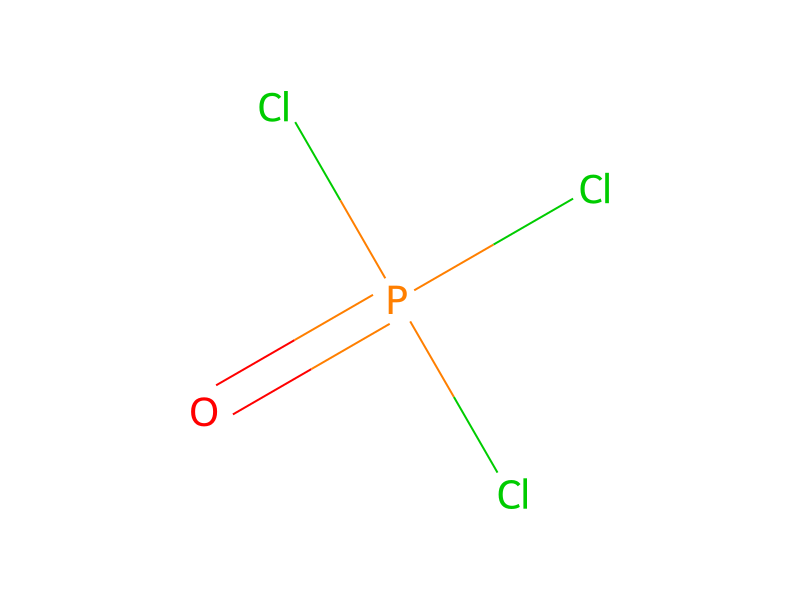
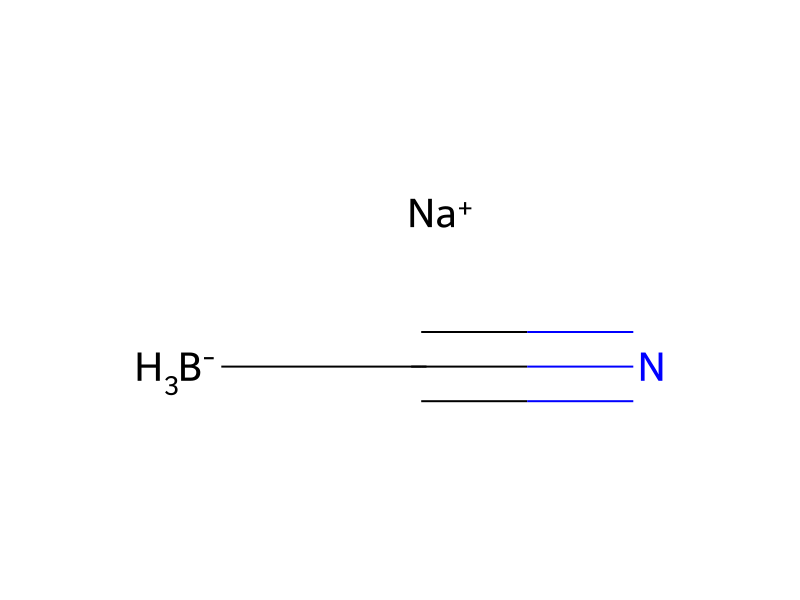
By using a method similar to that described in Example 35, but starting from 3-dimethylaminoacrylophenone (10 g), phosphorus oxychloride (5 cc), 4-mercaptopyridine (6.35 g) and sodium cyanoborohydride (2 g), a chestnut-coloured residue is obtained which is taken up in water (100 cc). The solution is acidified to pH 2 by adding an aqueous solution of concentrated hydrochloric acid and then washed with ethyl ether (2×50 cc). The aqueous phase is adjusted to pH 10 by adding a concentrated aqueous solution of sodium hydroxide and then extracted with methylene chloride. The resultant organic phase is dried over sodium sulphate, filtered and then concentrated to dryness under reduced pressure (2.7 kPa) at 30° C. to give a red residue which is chromatographed on silica gel [eluent: methylene chloride/methanol (95/5 by volume)], 200 cc fractions being collected. Fractions 13 to 25 are concentrated under reduced pressure (2.7 kPa) at 30° C. A residue is obtained which is dissolved in ethanol (15 cc). A 1.2N ethanolic solution (20 cc) of oxalic acid is added to this solution; the solid which precipitates is separated off by filtration and recrystallised from a mixture (110 cc) of acetonitrile and ethanol (20/80 by volume). In this way 1-dimethylamino-3-phenyl-3-(4-pyridylthio)-2-propene (Z) sesquioxalate (3 g) is obtained in the form of white crystals melting at 173° C.
Workup
- customa chestnut-coloured residue is obtained which
- washwashed with ethyl ether (2×50 cc)
- additionby adding a concentrated aqueous solution of sodium hydroxide
- extractionextracted with methylene chloride
- dry with materialThe resultant organic phase is dried over sodium sulphate
- filtrationfiltered
- concentrationconcentrated to dryness under reduced pressure (2.7 kPa) at 30° C.
- customto give a red residue which
- customis chromatographed on silica gel [eluent: methylene chloride/methanol (95/5 by volume)], 200 cc fractions
- custombeing collected
- concentrationFractions 13 to 25 are concentrated under reduced pressure (2.7 kPa) at 30° C
- customA residue is obtained which
- customthe solid which precipitates
- customis separated off by filtration
- customrecrystallised from a mixture (110 cc) of acetonitrile and ethanol (20/80 by volume)
Sources & evidence
- ORD record
- ord-7c55b82e3ad24831bf98c7b51eeffbe4
- Source dataset
- uspto-grants-1988_07
- Patent number
- US04755599
Reaction notes
Loading…