Phosphorus oxide (P4O10) → Sodium Hydroxide
Reaction equation

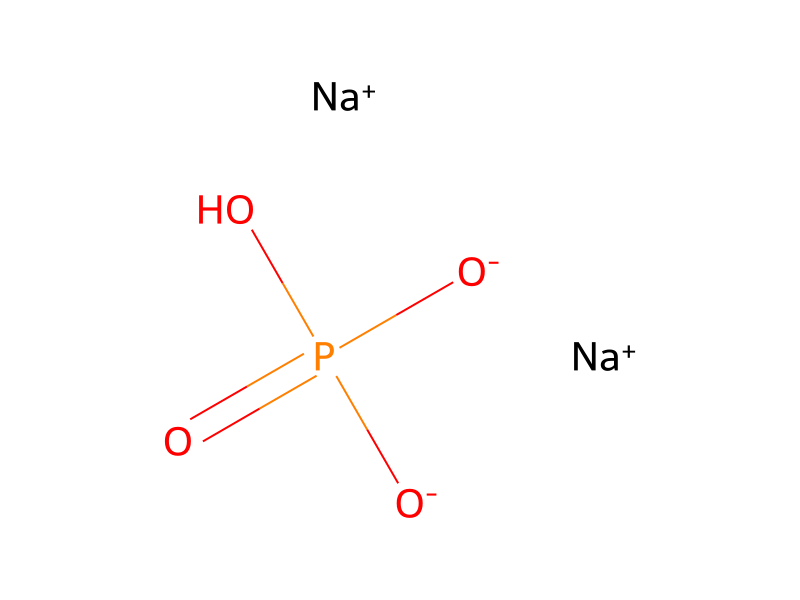
[OH-].[Ca+2].[OH-].[O:4]=P12OP3(OP(OP(O3)(O1)=O)(=O)O2)=O.[P:18]([OH:22])([OH:21])([O-:20])=[O:19].[Na+:23]>>[OH-:4].[Na+:23].[P:18]([OH:22])([O-:21])([O-:20])=[O:19].[Na+:23].[Na+:23]Participants



Procedure
To the above filtrate, a slurry containing 179 g of calcium hydroxide (32%) was added at a temperature of about 55 degrees C. An amount of 241 g of dicalcium phosphate was separated (49% humidity) leaving a solution of 1960 ml. The solution had a pH of 4.75 with a P2O5 concentration of 7.6%. This filtrate consisted substantially of pure monosodium phosphate; by its neutralization with a solution of 47.5% NaOH (containing 1.2% NaCl) to a pH of about 8.7, disodium phosphate was produced. In this neutralization operation, an appreciable amount of heat evolved, being accompanied by the precipitation of small particles of CaO and MgO in the form of hydroxyphosphate salts. After the removal of the fine precipitates, the filtrate was cooled to about 5 degrees, by a controlled cooling at the rate of about 10 degrees per hour. The chloride concentration in the mother-liquor was about 2% which gave rise to an increase of crystallization, the yield depending on NaCl concentration, known as salting out effect. An amount of 920 g of very pure crystals (14% humidity) of disodium phosphate were separated.
Workup
- additionwas added at a temperature of about 55 degrees C
- customAn amount of 241 g of dicalcium phosphate was separated (49% humidity)
- customleaving a solution of 1960 ml
Sources & evidence
- ORD record
- ord-564feff937c4476cbf0350229f029b85
- Source dataset
- uspto-grants-1988_07
- Patent number
- US04759920
Reaction notes
Loading…