2-Bromo-6-nitrotoluene → HCID 19771316, compound
Reaction equation

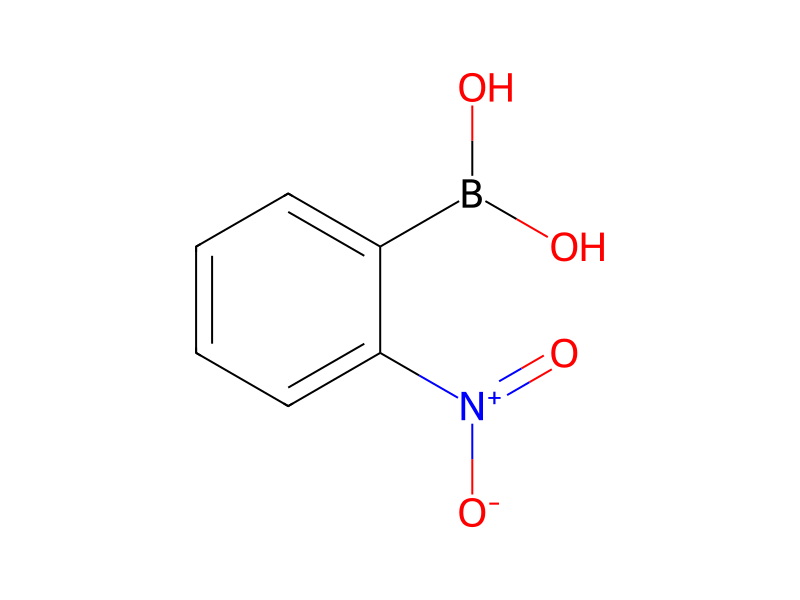
[N+:1]([C:4]1[CH:9]=[CH:8][CH:7]=[CH:6][C:5]=1B(O)O)([O-:3])=[O:2].Br[C:14]1[CH:19]=[CH:18][CH:17]=[C:16]([N+:20]([O-:22])=[O:21])[C:15]=1[CH3:23]>C1C=CC([P]([Pd]([P](C2C=CC=CC=2)(C2C=CC=CC=2)C2C=CC=CC=2)([P](C2C=CC=CC=2)(C2C=CC=CC=2)C2C=CC=CC=2)[P](C2C=CC=CC=2)(C2C=CC=CC=2)C2C=CC=CC=2)(C2C=CC=CC=2)C2C=CC=CC=2)=CC=1>[N+:1]([C:4]1[CH:9]=[C:8]([C:14]2[CH:19]=[CH:18][CH:17]=[C:16]([N+:20]([O-:22])=[O:21])[C:15]=2[CH3:23])[CH:7]=[CH:6][CH:5]=1)([O-:3])=[O:2]Participants
4
Reactant 2

Product 1

Reagents, catalysts & solvents 1

Procedure
The procedure of Example 12 was used except that the starting material was 1.3 g of 2-nitrophenylboronic acid which was reacted with 3 g of 2-bromo-6-nitrotoluene and 0.480 g of tetrakis(triphenylphosphine)palladium(0). In this way, 2.8 g (79% yield) of yellowish crystals were obtained.
Sources & evidence
- ORD record
- ord-511bb8bfc671466e8f0e9fad2477e68f
- Source dataset
- uspto-grants-1992_08
- Patent number
- US05135838
Reaction notes
Loading…