Boron trifluoride etherate → Methyl 4-(hexadecylamino)-2-thiophenecarboxylate
Reaction equation

[CH2:1]([NH:17][C:18]1[CH:19]=[C:20]([C:23]([OH:25])=[O:24])[S:21][CH:22]=1)[CH2:2][CH2:3][CH2:4][CH2:5][CH2:6][CH2:7][CH2:8][CH2:9][CH2:10][CH2:11][CH2:12][CH2:13][CH2:14][CH2:15][CH3:16].B(F)(F)F.[CH3:30]COCC>CO>[CH2:1]([NH:17][C:18]1[CH:19]=[C:20]([C:23]([O:25][CH3:30])=[O:24])[S:21][CH:22]=1)[CH2:2][CH2:3][CH2:4][CH2:5][CH2:6][CH2:7][CH2:8][CH2:9][CH2:10][CH2:11][CH2:12][CH2:13][CH2:14][CH2:15][CH3:16]Participants
4
Reactant 2
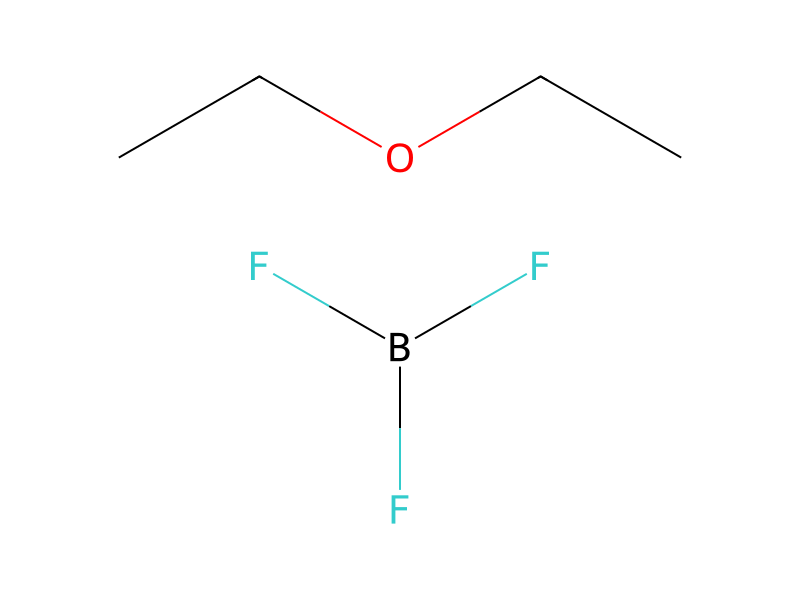

Product 1

Reagents, catalysts & solvents 1

Procedure
A solution of 50.5 g. of 4-(hexadecylamino)-2-thiophenecarboxylic acid and 34.4 ml. of boron trifluoride etherate in 200 ml. of methanol is stirred under reflux for 44 hours, allowed to cool, and poured into 1.20 liters of ice-cold 5% aqueous sodium carbonate solution. The white solid is collected by filtration and recrystallized from benzene-ethanol to yield methyl 4-(hexadecylamino)-2-thiophenecarboxylate as a white solid.
Workup
- temperatureunder reflux for 44 hours
- temperatureto cool
- filtrationThe white solid is collected by filtration
- customrecrystallized from benzene-ethanol
Sources & evidence
- ORD record
- ord-aec7829590324d70a799d7fa9f248d7a
- Source dataset
- uspto-grants-1983_05
- Patent number
- US04382143
Reaction notes
Loading…