Water → HCID 13079634, compound
Reaction equation

O.[C:2]1([C:8]([CH:10]=O)=[O:9])[CH:7]=[CH:6][CH:5]=[CH:4][CH:3]=1.[OH:12][CH2:13][CH2:14][O:15][C:16]1[CH:21]=[CH:20][C:19]([CH2:22][CH2:23][C:24]([NH2:27])([CH3:26])[CH3:25])=[CH:18][CH:17]=1.O>C1C=CC=CC=1>[OH:12][CH2:13][CH2:14][O:15][C:16]1[CH:21]=[CH:20][C:19]([CH2:22][CH2:23][C:24]([NH:27][CH2:10][CH:8]([OH:9])[C:2]2[CH:3]=[CH:4][CH:5]=[CH:6][CH:7]=2)([CH3:25])[CH3:26])=[CH:18][CH:17]=1Participants
5
Reactant 3

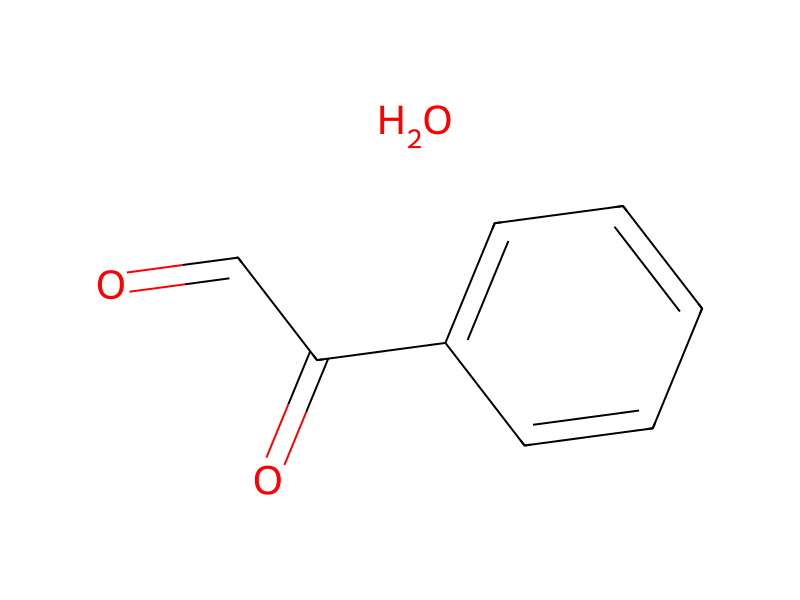

Product 1

Reagents, catalysts & solvents 1

Procedure
A solution of phenyl glyoxal monohydrate (3.6 g) and 3-[4-(2-hydroxyethoxy)phenyl]-1,1-dimethylpropylamine (5 g) in benzene (100 ml) was heated under reflux with removal of water by a Dean and Stark trap. When water removal was complete, the benzene was evaporated under reduced pressure, the residue dissolved in methanol and sodium borohydride (2 g) added. The solution was stirred at ice-water temperature for 15 minutes, the methanol evaporated and the residue portioned between ethyl acetate and water. The organic layer was dried MgSO4 and evaporated to give a solid (6 g) which was purified on a silica gel column eluting with 4% methanol in chloroform. The product (2.8 g) was crystallised from dichloromethane, mp 118°-120° C.
Workup
- customWhen water removal
- customthe benzene was evaporated under reduced pressure
- dissolutionthe residue dissolved in methanol
- additionsodium borohydride (2 g) added
- customthe methanol evaporated
- customevaporated
Sources & evidence
- ORD record
- ord-b9495b7374b842cd9033d20941a9e059
- Source dataset
- uspto-grants-1983_05
- Patent number
- US04382958
Reaction notes
Loading…