Lactic Acid → Lactic acid itaconic acid
반응식

[C:1]([OH:6])(=[O:5])[C@H:2]([CH3:4])[OH:3].[C:7]([OH:15])(=[O:14])[C:8]([CH2:10][C:11]([OH:13])=[O:12])=[CH2:9].OCC(CO)(CO)CO.[Sn+2].C(O)(=O)C(C)O>>[C:1]([OH:6])(=[O:5])[CH:2]([CH3:4])[OH:3].[C:7]([OH:15])(=[O:14])[C:8]([CH2:10][C:11]([OH:13])=[O:12])=[CH2:9]참가 물질
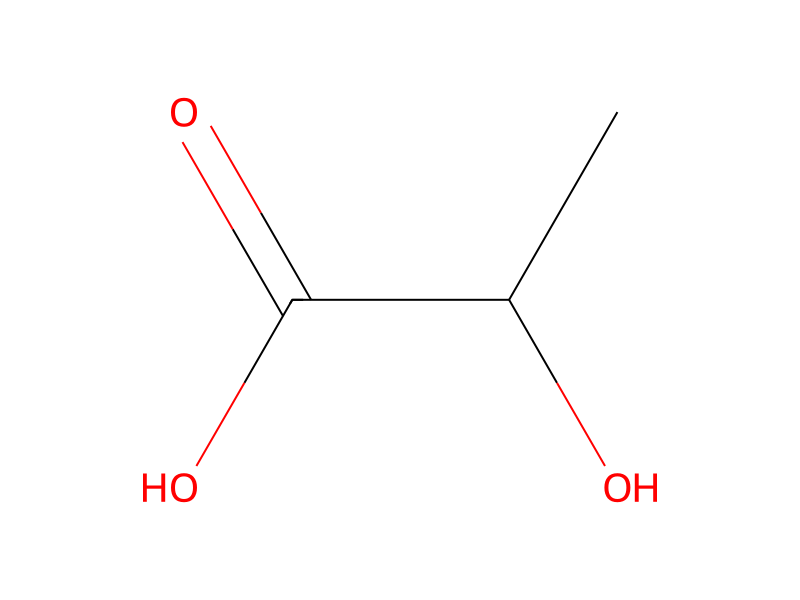


반응 조건
- 온도
- 180 °C
실험 절차
Into a 2 litre Rotavapor equipment used as the reactor was added 437.5 g L-lactic acid (88% water solution corresponding to 89 mole-%), 47.9 g itaconic acid (9 mol-%), 14.5 g pentaerythritol (2 mole-%) and 0.19 g tin(II) octoate. Dry nitrogen was led into the reactor and 500 mbar absolute pressure was established. The reactor vessel was partly immersed in an oil bath with a temperature of 90° C. The temperature of the oil bath was increased at a rate of 30° C./h to 120° C., and the reaction mixture was mixed by starting the rotation at a speed of 100 rpm. The temperature of the oil bath was evenly increased by 15° C./h until 180° C., where it was kept until the end of the polymerisation. The pressure was decreased every hour by the following steps: 500 (start)-500-450-400-350-290-190-140-90-60-50-40-30 mbar, at which pressure it was kept to the end of the polymerisation. Bubbling of nitrogen was continued throughout the polymerisation and the formed water was collected as it evolved. Total polymerisation time was 24 hours. During the polymerisation no lactide was formed on the reactor walls, condenser or receiver, although it typically forms in a condensation polymerisation of lactic acid.
후처리
- customThe reactor vessel was partly immersed in an oil bath with a temperature of 90° C
- temperatureThe temperature of the oil bath was increased at a rate of 30° C./h to 120° C.
- additionthe reaction mixture was mixed
- customwhere it was kept until the end of the polymerisation
- waitThe pressure was decreased every hour by the following steps
- custom500 (start)-500-450-400-350-290-190-140-90-60-50-40-30 mbar, at which pressure it was kept to the end of the polymerisation
- customBubbling of nitrogen
- customwas continued throughout the polymerisation
- customthe formed water was collected as it
- customTotal polymerisation time
- customwas formed on the reactor walls, condenser or receiver, although it
출처 및 근거
- ORD 기록
- ord-0277ee7bc7eb45f5b6ed8ac6f6b00e24
- 출처 데이터셋
- uspto-grants-2007_08
- 특허 번호
- US07256250B2
반응 노트
불러오는 중…