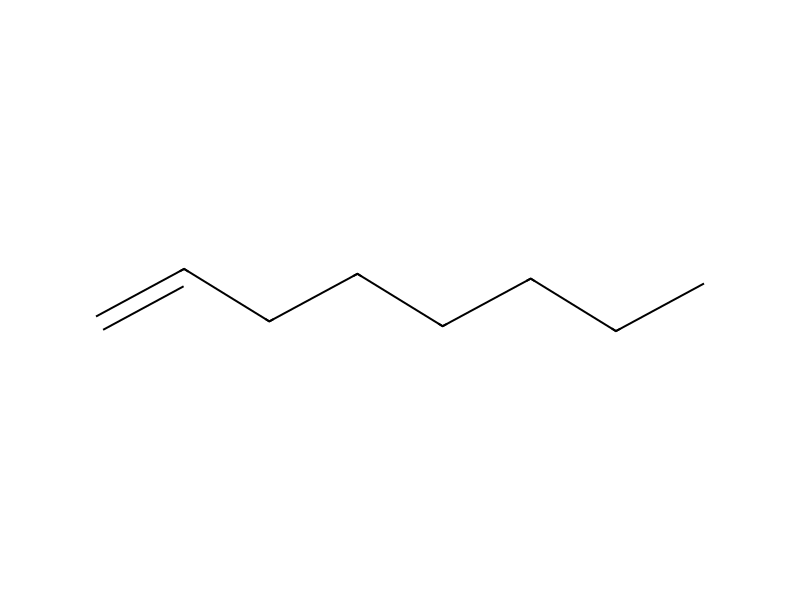
Ethylene → Ethene;oct-1-ene
Reaktionsgleichung

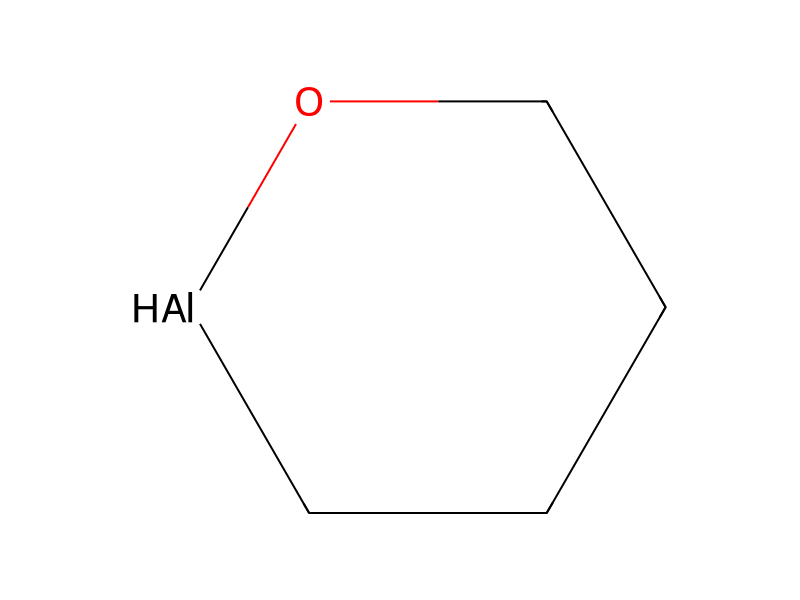
C=C.[CH2:3]=[CH:4][CH2:5][CH2:6][CH2:7][CH2:8][CH2:9][CH3:10].[AlH]1CCCCO1>>[CH2:3]=[CH2:4].[CH2:3]=[CH:4][CH2:5][CH2:6][CH2:7][CH2:8][CH2:9][CH3:10]Komponenten


Versuchsvorschrift
Solution semi-batch reactor copolymerizations of ethylene and octene are carried out in a 1 gallon metal autoclave reactor equipped with a mechanical stirrer, a jacket with circulating heat transfer fluid, which can be heated or cooled in order to control the internal reactor temperature, an internal thermocouple, pressure transducer, with a control computer and several inlet and output valves. Pressure and temperature are continuously monitored during the polymerization reaction. Measured amounts of 1-octene are added to the reactor containing about 1442 g Isopar E as solvent. The reactor is heated up to the reaction temperature with stirring (typically about 1,000 rpm or higher) and then pressurized with ethylene at the desired pressure until the solvent is saturated. The active catalyst is prepared in a drybox by syringing together solutions of the appropriate catalyst, cocatalyst, and any scavenger (if desired) components with additional solvent to give a total volume which can be conveniently added to the reactor (typically 10–20 mL total). If desired, a portion of the scavenger (typically an aluminum alkyl, alumoxane, or other alkyl-aluminum compound) may be added to the reactor separately prior to the addition on the active catalyst solution. The active catalyst solution is then transferred by syringe to a catalyst addition loop and injected into the reactor over approximately 4 minutes using a flow of high pressure solvent. The polymerization is allowed to proceed for the desired length of time while feeding ethylene on demand to maintain a constant pressure. The amount of ethylene consumed during the reaction is monitored using a mass flowmeter. Immediately following the desired polymerization time, the polymer solution is then dumped from the reactor using a bottom-valve through a heated transfer line into a nitrogen-purged glass kettle containing 10–20 mL of isopropanol, which acts as a catalyst kill. An aliquot of the additive solution described above is added to this kettle and the solution stirred thoroughly (the amount of additive used is chosen based on the total ethylene consumed during the polymerization, and is typically targeted at a level of about 1000–2000 ppm). The polymer solution is dumped into a tray, air dried overnight, then thoroughly dried in a vacuum oven for two days. The weights of the polymers are recorded and the efficiency calculated as grams of polymer per gram of transition metal. Because the polymerization of ethylene and alpha olefins is quite exothermic, there is usually an increase in the temperature (an exotherm) of the reaction solution which is observed after the active catalyst is added. The process control computer can be used to keep the reaction temperature relatively constant during the polymerization reaction by cooling the jacket of the reactor, but some deviation from the set point is usually observed, especially for catalysts having a relatively fast initial rate of polymerization. If too much active catalyst is added to the semi-batch reactor, the exotherm can be quite large, and the monomer concentrations, especially the ethylene concentration, can deviate significantly from the equilibrium concentration. Because the polymer molecular weight and the comonomer incorporation depend significantly on the ethylene concentration, it is important to control the exotherm. For the semi-batch reactor polymerizations reported herein, the exotherm was generally kept below 5° C. or less. Various catalysts differ significantly in their rates of polymerization and thus, the amount of exotherm. The exotherm can be controlled by adjusting the amount or rate of addition of the catalyst.
Aufarbeitung
- customequipped with a mechanical stirrer
- temperaturea jacket with circulating heat transfer fluid, which
- temperaturecan be heated
- temperaturecooled in order
- customPressure and temperature are continuously monitored during the polymerization reaction
- additioncontaining about 1442 g Isopar E as solvent
- temperatureThe reactor is heated up to the reaction temperature
- customThe active catalyst is prepared in a drybox
- customany scavenger (if desired) components with additional solvent to give a total volume which
- additioncan be conveniently added to the reactor (typically 10–20 mL total)
- additionto the addition on the active catalyst solution
- additionThe active catalyst solution is then transferred by syringe to a catalyst addition loop
- temperatureto maintain a constant pressure
- customThe amount of ethylene consumed during the reaction
- custompolymerization time
- custompurged glass kettle
- additioncontaining 10–20 mL of isopropanol, which
- additionabove is added to this kettle
- stirringthe solution stirred thoroughly (the amount
- customconsumed during the polymerization
- customdried overnight
- customthoroughly dried in a vacuum oven for two days
- customBecause the polymerization of ethylene and alpha olefins
- temperaturean increase in the temperature (an exotherm) of the reaction solution which
- additionis added
- customrelatively constant during the polymerization reaction
- temperatureby cooling the jacket of the reactor
- customrate of polymerization
- additionIf too much active catalyst is added to the semi-batch reactor
- concentrationthe monomer concentrations
- concentrationespecially the ethylene concentration
- concentrationcan deviate significantly from the equilibrium concentration
- concentrationBecause the polymer molecular weight and the comonomer incorporation depend significantly on the ethylene concentration, it
- customwas generally kept below 5° C. or less
- customVarious catalysts differ significantly in their rates of polymerization
- additionthe amount or rate of addition of the catalyst
Quellen und Nachweise
- ORD-Eintrag
- ord-0587eadf3a2846e28d152b461438ac51
- Quelldatensatz
- uspto-grants-2006_12
- Patentnummer
- US07148305B2
Notizen zur Reaktion
Wird geladen…