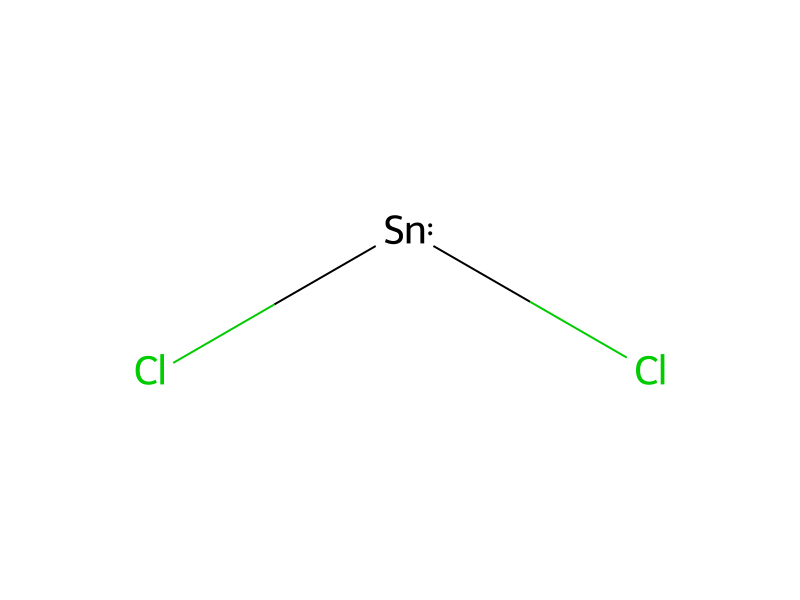
Stannous Chloride → HCID 19699078, compound
Reaction equation

[Cl:1][C:2]1[CH:22]=[C:21]([N+:23]([O-])=O)[CH:20]=[CH:19][C:3]=1[C:4]([N:6]1[CH2:12][CH2:11][C:10]2[CH:13]=[N:14][NH:15][C:9]=2[C:8]2[S:16][CH:17]=[CH:18][C:7]1=2)=[O:5].[Sn](Cl)Cl>C(O)C>[Cl:1][C:2]1[CH:22]=[C:21]([NH2:23])[CH:20]=[CH:19][C:3]=1[C:4]([N:6]1[CH2:12][CH2:11][C:10]2[CH:13]=[N:14][NH:15][C:9]=2[C:8]2[S:16][CH:17]=[CH:18][C:7]1=2)=[O:5]Participants
4
Reactant 2

Product 1

Reagents, catalysts & solvents 1

Conditions
- Temperature
- 80 °C
Procedure
A mixture of 1.8 g of 6-(2-chloro-4-nitro-benzoyl)-1,4,5,6-tetrahydropyrazolo[3,4-d]thieno[3,2-b]-azepine in 35 ml of absolute ethanol is added 5.42 g of tin (II) chloride followed by heating at reflux for 1 hour at 80° C. The volatiles are evaporated in vacuo to a residue which is partitioned between 150 ml of ethyl acetate and saturated aqueous NaHC3 the reactants are stirred at room temperature for 1 hour and filtered. The organic layer is separated and washed with 30 ml of brine, dried (Na2SO4) and filtered through a pad of hydrous magnesium silicate. The filtrate is evaporated in vacuo to give 1.55 g of a yellow-orange foam.
Workup
- temperatureby heating
- customThe volatiles are evaporated in vacuo to a residue which
- customis partitioned between 150 ml of ethyl acetate and saturated aqueous NaHC3 the reactants
- filtrationfiltered
- customThe organic layer is separated
- washwashed with 30 ml of brine
- dry with materialdried (Na2SO4)
- filtrationfiltered through a pad of hydrous magnesium silicate
- customThe filtrate is evaporated in vacuo
Sources & evidence
- ORD record
- ord-0aa6101dc40c41f9a875921a8ff61a8a
- Source dataset
- uspto-grants-1998_02
- Patent number
- US05719278
Reaction notes
Loading…