2-Propanol, 1,3-diphthalimido- → HCID 23374871, compound
Reaction equation

[C:1]1(=[O:26])[N:5]([CH2:6][CH:7](O)[CH2:8][N:9]2[C:13](=[O:14])[C:12]3=[CH:15][CH:16]=[CH:17][CH:18]=[C:11]3[C:10]2=[O:19])[C:4](=[O:21])[C:3]2=[CH:22][CH:23]=[CH:24][CH:25]=[C:2]12.CC(C)=[O:29].OS(O)(=O)=O.O=[Cr](=O)=O>CC(C)=O>[C:1]1(=[O:26])[N:5]([CH2:6][CH2:7][C:8]([N:9]2[C:13](=[O:14])[C:12]3=[CH:15][CH:16]=[CH:17][CH:18]=[C:11]3[C:10]2=[O:19])=[O:29])[C:4](=[O:21])[C:3]2=[CH:22][CH:23]=[CH:24][CH:25]=[C:2]12Participants
4
Reactant 2

Product 1

Reagents, catalysts & solvents 1

Procedure
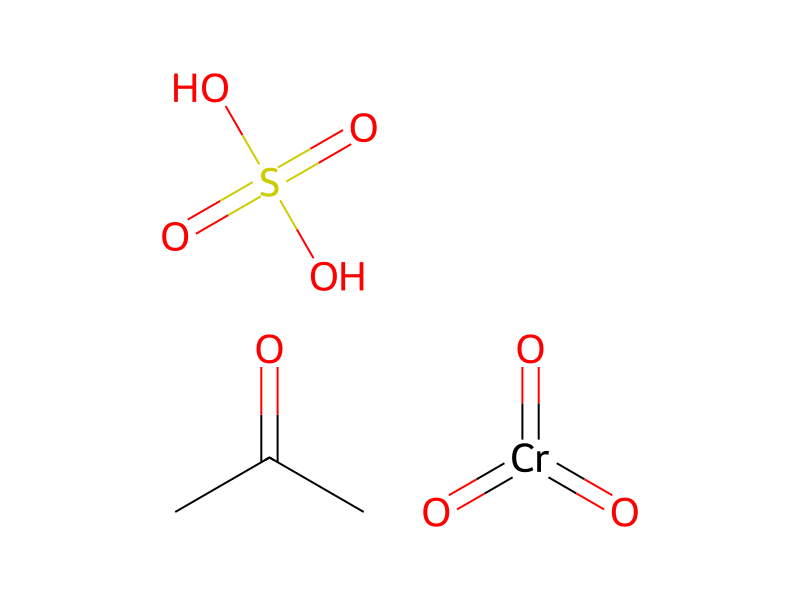
To a solution of 1,3-diphthalimido-2-hydroxypropane (1.00 g., 2,86 mmol) in 80 mL of acetone was added Jones reagent (chromium trioxide and sulfuric acid) until an orange color persisted. The excess oxidant was removed by the addition of 2-isopropanol until a green color was obtained and the solvents were evaporated under reduced pressure. The residue was partitioned between methylene chloride and water and the layers were separated. The organic layer was washed with water, dried over anhydrous sodium sulfate and evaporated under reduced pressure to give 1,3-diphthalimido-3-oxopropane.
Workup
- customThe excess oxidant was removed by the addition of 2-isopropanol until a green color
- customwas obtained
- customthe solvents were evaporated under reduced pressure
- customThe residue was partitioned between methylene chloride and water
- customthe layers were separated
- washThe organic layer was washed with water
- dry with materialdried over anhydrous sodium sulfate
- customevaporated under reduced pressure
Sources & evidence
- ORD record
- ord-59981879cec74d92b1b8b10cc3648c47
- Source dataset
- uspto-grants-1996_10
- Patent number
- US05565184
Reaction notes
Loading…