Acetic Acid → 2-Imidazolecarbaldehyde-(5-nitro-2-pyridyl)hydrazone
Reaction equation

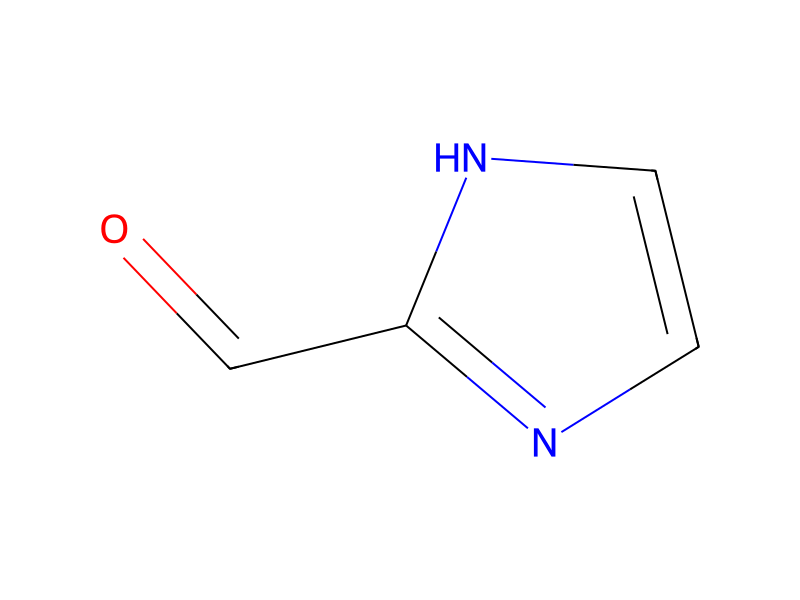
[N+:1]([C:4]1[CH:5]=[CH:6][C:7]([NH:10][NH2:11])=[N:8][CH:9]=1)([O-:3])=[O:2].[NH:12]1[CH:16]=[CH:15][N:14]=[C:13]1[CH:17]=O.C(O)(=O)C>C(O)C>[N+:1]([C:4]1[CH:5]=[CH:6][C:7]([NH:10][N:11]=[CH:17][C:13]2[NH:12][CH:16]=[CH:15][N:14]=2)=[N:8][CH:9]=1)([O-:3])=[O:2]Participants
5
Reactant 3


Product 1

Reagents, catalysts & solvents 1

Procedure
3.10 g (20.1 mmol) of 5-nitro-2-pyridylhydrazine and 2.00 g (20.8 mmol) of 2-imidazolecarbaldehyde were dissolved in 50 ml of ethanol. To this mixture, 1 ml of acetic acid was added and heated under reflux for 2 hours while being stirred. After the resultant reaction mixture was allowed to stand still overnight, coarse crystals precipitated were filtrated by the suction-filtration. The obtained coarse crystals were recrystallized from a hot ethanol solution to obtain a desired product.
Workup
- temperatureheated
- temperatureunder reflux for 2 hours
- customAfter the resultant reaction mixture
- customcoarse crystals precipitated
- filtrationwere filtrated by the suction-filtration
- customThe obtained coarse crystals
- customwere recrystallized from a hot ethanol solution
Sources & evidence
- ORD record
- ord-7940dabf70f64392b48271243514229b
- Source dataset
- uspto-grants-1996_10
- Patent number
- US05569763
Reaction notes
Loading…