3,4-Dimethoxyaniline → 1-(3,4-Dimethoxyphenyl)-3-phenoxycarbonylurea
Reaction equation

[O:1]([C:8]([N:10]=[C:11]=[O:12])=[O:9])[C:2]1[CH:7]=[CH:6][CH:5]=[CH:4][CH:3]=1.[NH2:13][C:14]1[CH:15]=[C:16]([O:22][CH3:23])[C:17]([O:20][CH3:21])=[CH:18][CH:19]=1>O1CCOCC1>[CH3:23][O:22][C:16]1[CH:15]=[C:14]([NH:13][C:11]([NH:10][C:8]([O:1][C:2]2[CH:7]=[CH:6][CH:5]=[CH:4][CH:3]=2)=[O:9])=[O:12])[CH:19]=[CH:18][C:17]=1[O:20][CH3:21]Participants
4
Reactant 2
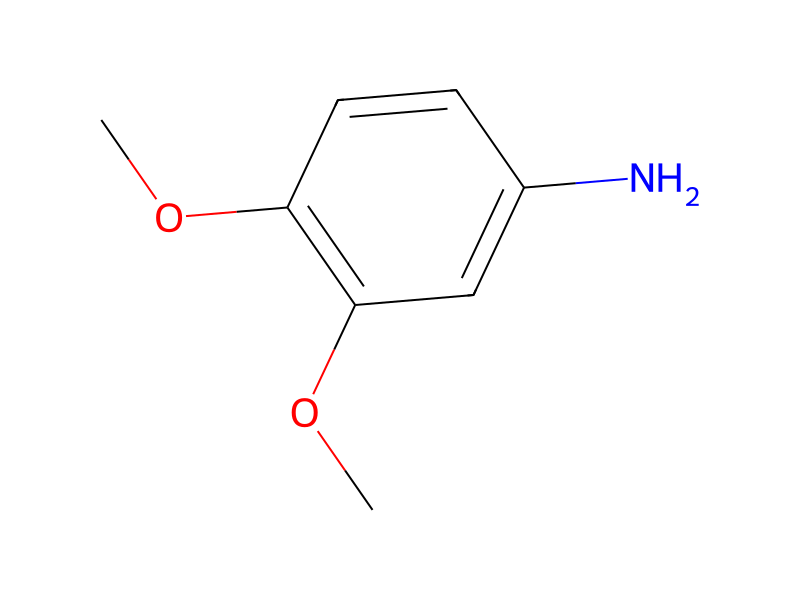

Product 1

Reagents, catalysts & solvents 1

Procedure
To a solution of phenoxycarbonylisocyanate (7.0 g., 0.043 mole) in 50 ml. of dioxane is added 4-aminoveratrole (6.57 g., 0.043 mole) under a nitrogen atmosphere while maintaining a temperature of 20°-25°. Following the addition of the 4-aminoveratrole, a second 50 ml. portion of dioxane is added and the solution refluxed for a period of one hour. Concentration of the reaction mixture under reduced pressure provides an oily solid residue. Titration of this residual material with about 40 ml. of cold carbon tetrachloride followed by crystallization from acetonitrile provides analytically pure 1-(3,4-dimethoxyphenyl)-3-phenoxycarbonylurea, m.p. 139.5°-142°.
Workup
- temperaturewhile maintaining a temperature of 20°-25°
- temperaturethe solution refluxed for a period of one hour
- customConcentration of the reaction mixture under reduced pressure provides an oily solid residue
- customof cold carbon tetrachloride followed by crystallization from acetonitrile
Sources & evidence
- ORD record
- ord-84ca08b4c288427f890306fe4b321d6f
- Source dataset
- uspto-grants-1978_07
- Patent number
- US04102885
Reaction notes
Loading…