Dimethyl Sulfoxide → cyclohexylcarbodiimide DMSO
Reaction equation

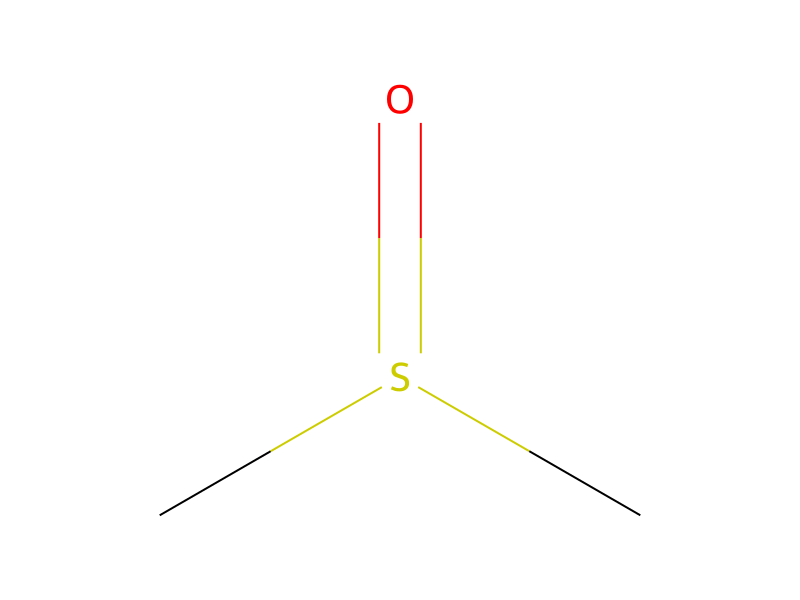
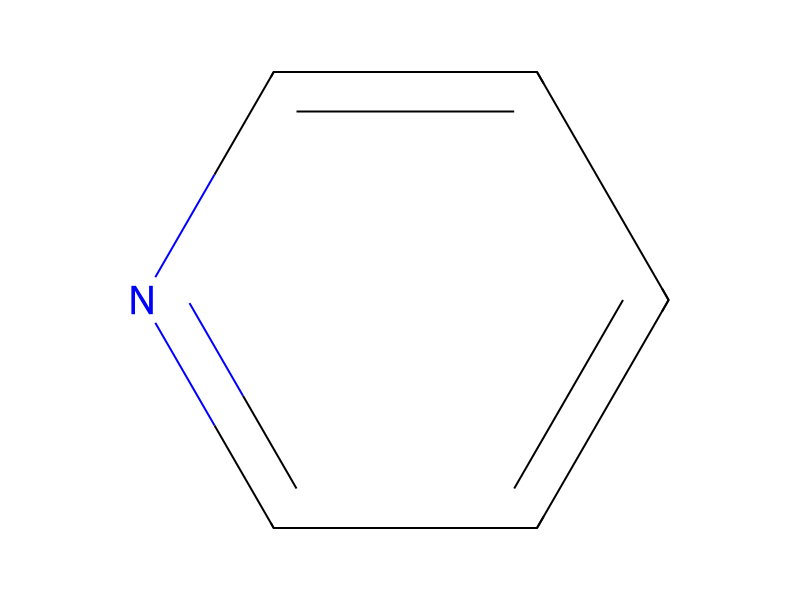
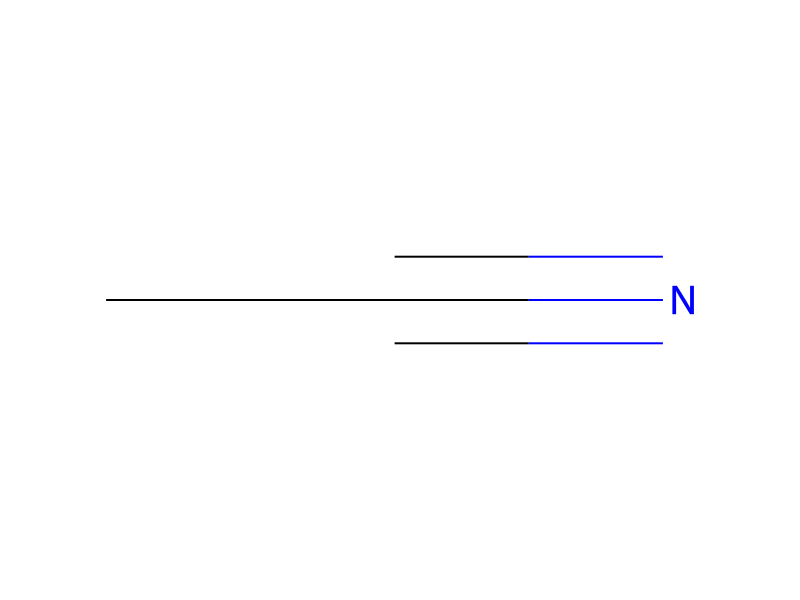
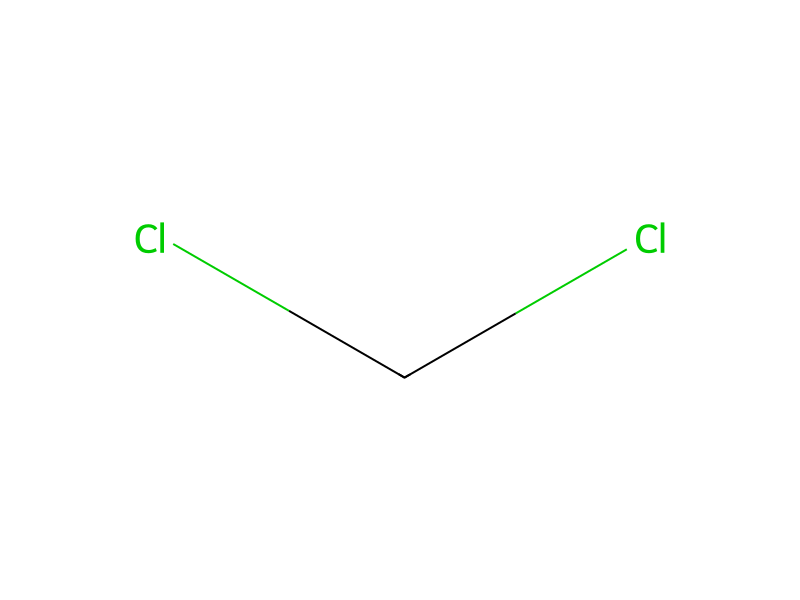
[CH3:1][S:2]([CH3:4])=[O:3].C(OC(=O)C)(=O)C.[N:12]1[CH:17]=[CH:16][CH:15]=[CH:14][CH:13]=1.[CH3:18]S(C)=O.[C:22](#[N:24])C>C(Cl)Cl>[CH:17]1([N:12]=[C:22]=[NH:24])[CH2:16][CH2:15][CH2:14][CH2:13][CH2:18]1.[CH3:1][S:2]([CH3:4])=[O:3]Participants
Reactant 4

Product 1

Reagents, catalysts & solvents 1
Procedure
In words relative to the above diagram for the preparation of 1, the 4-(2-acetoxyvinyl)azetidine-2-one (3) is prepared by reacting chloro sulphonyl isocyanate and an acyloxybutadiene such as 1-acetoxybutadiene in a solvent such as anhydrous dimethyl ether at a temperature of from about -30° C. to 0° C. under a nitrogen atmosphere. The reaction intermediate 2 is converted to 3 by hydrolysis. The reduction of 3 to provide the 4-(2-acetoxyethyl)-2-azetidinone (4) is conducted by any convenient means such as hydrogenation in the presence of a catalyst such as platinum, palladium or oxides thereof under a hydrogen pressure of from 1 to 20 atmospheres in a solvent such as ethanol, ethylacetate, or the like at a temperature of from 0° to 25° C., for from 5 minutes to 1 hour. The 4-(2-hydroxyethyl)-2-azetidinone species, 5, is obtained from 4 by hydrolysis. The 8-oxo- 2,2-dimethyl-3-oxa-1-azabicyclo[4.2.0]octane species, 6, is obtained on treatment of 5 with 2,2-dimethoxypropane in the presence of a catalyst such as boron trifluoride etherate in a solvent such as methylene chloride at a temperature of from 0° to 40° C. for from 1 to 40 minutes. Alternatively, 5 can be treated with borontrifluoride etherate and trimethylorthoformate to give 8-oxo-2-methoxy-3-oxa-1-azabicyclo[4.2.0]octane which can be mono- or dialkylated following the procedures for 6→7 or 8. Alkylation of 6 provides 7. Typically, 6 is treated with a strong base such as lithium diisopropyl amide, sodium hydride, phenyl lithium or butyl lithium and the like in a solvent such as tetrahydrofuran (THF), ether, dimethoxyethane and the like at a temperature of from -80° C. to 0° C., whereupon the alkylating agent of choice, R1X, is added (R1 is as described above and X is chloro or bromo; alternatively the alkylating agent may be R1 -tosylate, R1 -mesylate or an aldehyde or ketone such as acetaldehyde and the like) to provide mono-alkylated species 7. When desired dialkylated species 8 may be obtained from 7 by repeating the alkylating procedure, 6→7. Species 9 is obtained from 7 or 8 by acid hydrolysis. Oxidation of 9 with an oxidizing agent such as DMSO-acetic anhydride, pyridine.CrO3, cyclohexylcarbodiimide/DMSO, and the like in a solvent such as DMSO, pyridine, acetonitrile, methylene chloride, and the like at a temperature of from about 0° to 25° C. for from 0.5 to 12 hours provides 10 which upon treatment with the Grignard reagent R3MgX (R3 is as defined above and X is halogen) provides 11. Typically, the alkylation reaction 10→11 is conducted in a solvent such as ether, THF, benzene and the like at a temperature of from -78° to about 25° C. for from 0.5 to about 24 hours.
Workup
- custommay be obtained from 7
- customSpecies 9 is obtained from 7 or 8 by acid hydrolysis
Sources & evidence
- ORD record
- ord-769296f15f734f59ac72b2d4b7d8c896
- Source dataset
- uspto-grants-1988_10
- Patent number
- US04775669
Reaction notes
Loading…