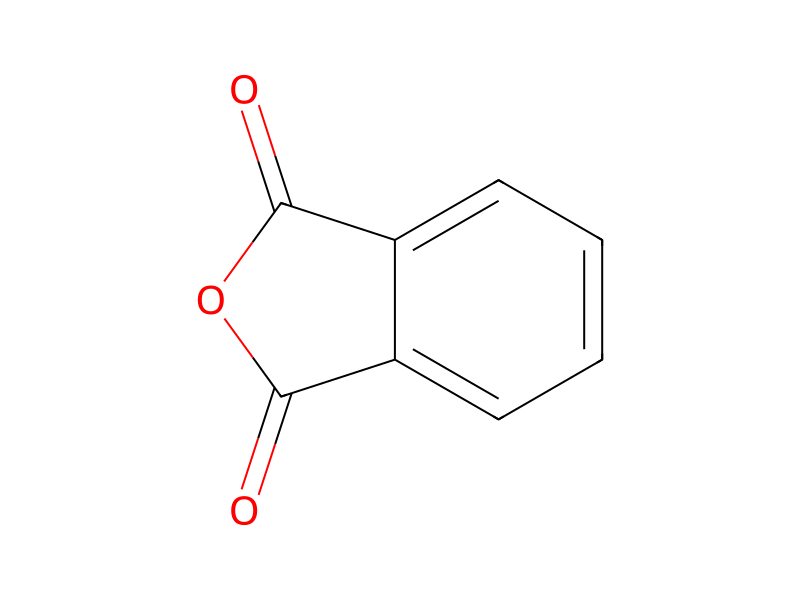
Phthalic Anhydride → HCID 67187616, compound
Reaction equation

[CH3:1][N:2]1[C:10]2[C:5](=[C:6]([CH3:11])[CH:7]=[CH:8][CH:9]=2)[C:4]([CH2:12][C:13]([OH:15])=O)=[CH:3]1.C1(=O)O[C:19](=[O:20])[C:18]2=[CH:22][CH:23]=[CH:24][CH:25]=[C:17]12.C([O-])(=O)C.[Na+]>O>[CH3:1][N:2]1[C:10]2[C:5](=[C:6]([CH3:11])[CH:7]=[CH:8][CH:9]=2)[C:4](/[CH:12]=[C:13]2\[O:15][C:19](=[O:20])[C:18]3[C:22]\2=[CH:23][CH:24]=[CH:25][CH:17]=3)=[CH:3]1Participants
5
Reactant 3


Product 1

Reagents, catalysts & solvents 1

Conditions
- Temperature
- 200 °C
Procedure
A reaction flask equipped with a nitrogen line and a stir bar is charged with (1,4-Dimethyl-1H-indol-3-yl)-acetic acid (0.5 g, 2.4 mmol) (from example 1.5), 0.3 g (2.4 mmol) of phthalic anhydride followed by 1.2 g (15.2 mmol) of anhydrous sodium acetate. The flask is heated to 200° C. under a stream of nitrogen for 2 h. Water formed is azeotropically evaporated using toluene. The resulting brown melt 11.1 (98%) is taken immediately to the next step LC/MS (M++1): 290.3.
Workup
- customA reaction flask equipped with a nitrogen line and a stir bar
- customis azeotropically evaporated
Sources & evidence
- ORD record
- ord-0b5fbf74f7584d038964d6f20815c1a8
- Source dataset
- uspto-grants-2015_03
- Patent number
- US08969348B2
Reaction notes
Loading…