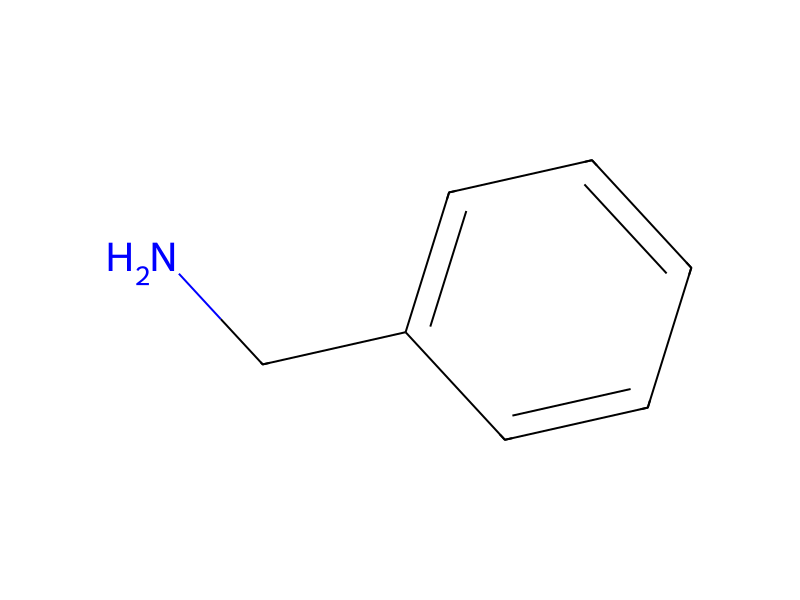
Benzylamine → N-Benzyl-2-chloro-9H-purin-6-amine
Reaction equation

[Cl:1][C:2]1[N:10]=[C:9]2[C:5]([NH:6][CH:7]=[N:8]2)=[C:4](Cl)[N:3]=1.[CH2:12]([NH2:19])[C:13]1[CH:18]=[CH:17][CH:16]=[CH:15][CH:14]=1>>[Cl:1][C:2]1[N:10]=[C:9]2[C:5]([NH:6][CH:7]=[N:8]2)=[C:4]([NH:19][CH2:12][C:13]2[CH:18]=[CH:17][CH:16]=[CH:15][CH:14]=2)[N:3]=1Participants


Procedure
Reaction of the commercially available 2,6-dichloropurine (3) with benzylamine gave 2-chloro-6-benzylaminopurine (4) using a reported procedure. Under our conditions, the reaction was complete in 15 min at 60° C. instead of the reported time of 3 h at 110° C. Propargylation of compound 4 using propargyl bromide in DMSO under mild conditions gave 2-chloro-6-benzylamino-9-(2-propynyl) purine (5) regioselectively in high yield. The Cu(I) catalyzed azide-alkyne click reaction (the Sharpless-Huisgen 1,3-dipolar cycloaddition) of the alkyne 5 with fluorinated benzyl azides, prepared in situ from their corresponding benzyl bromides, gave exclusively 1,4-disubstituted triazoles, 7-9. The isomeric homogeneity of the product triazoles was readily verified through their 19F NMR spectra. The pentafluorophenylmethyl-triazole, 9, showed relatively shielded δ19F absorptions as compared to the o-fluorophenylmethyl- and the 2,6-difluorophenylmethyl-triazoles, 7 and 8 respectively, in accordance with similar observations for the monofluoro-, difluoro-, and pentafluorotoluenes.
Sources & evidence
- ORD record
- ord-7fd4fad38b0a48d5b6b1d0ee8dd19220
- Source dataset
- uspto-grants-2015_03
- Patent number
- US08969556B2
Reaction notes
Loading…