1,1-Dimethylhydrazine → N-[(E)-[(E)-3-(4-bromo-2-prop-2-ynoxyphenyl)prop-2-enylidene]amino]-N-methylmethanamine
反応式

[Br:1][C:2]1[CH:7]=[CH:6][C:5](/[CH:8]=[CH:9]/[CH:10]=O)=[C:4]([O:12][CH2:13][C:14]#[CH:15])[CH:3]=1.[O-]S([O-])(=O)=O.[Mg+2].[CH3:22][N:23]([CH3:25])[NH2:24]>ClCCl>[Br:1][C:2]1[CH:7]=[CH:6][C:5](/[CH:8]=[CH:9]/[CH:10]=[N:24]/[N:23]([CH3:25])[CH3:22])=[C:4]([O:12][CH2:13][C:14]#[CH:15])[CH:3]=1参加物

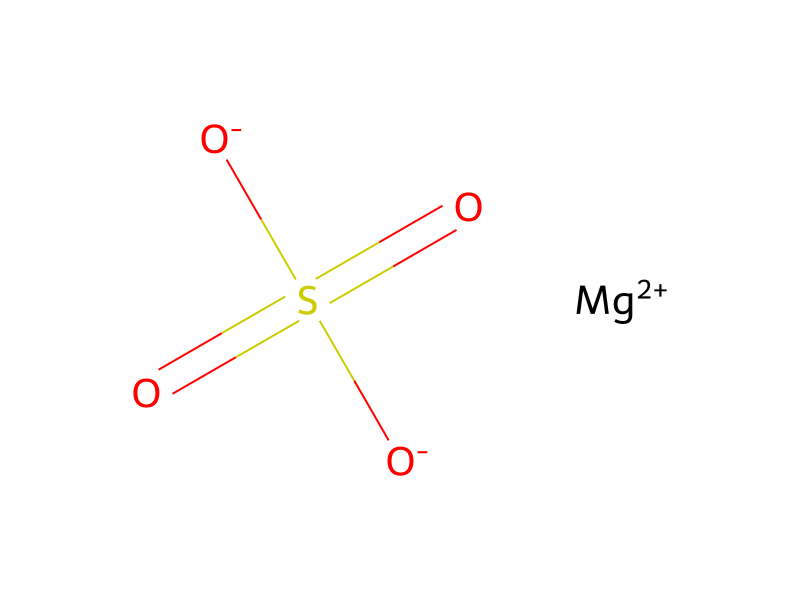



実験手順
A solution of (E)-3-(4-bromo-2-(prop-2-ynyloxy)phenyl)acrylaldehyde (2.85 g, 10.8 mmol) in dichloromethane (200 mL) containing anhydrous MgSO4 (16 g) was cooled in an ice bath with stirring. To the ice-cold solution was added 1,1-dimethylhydrazine (2.45 mL, 32.4 mmol) dropwise and the reaction mixture was allowed to warm up to ambient temperature and was stirred for 18 h. The volatiles were concentrated under reduced pressure and the residue was coevaporated sequentially with dichloromethane (50 mL), dichloroethane (50 mL) and heptane (50 mL). (E)-2-((E)-3-(4-bromo-2-(prop-2-ynyloxy)phenyl)allylidene)-1,1-dimethylhydrazine (2.7 g, 8.79 mmol, 90% yield, 90% purity) was obtained as a yellow powder. 1H NMR (500 MHz, CDCl3) δ 7.39 (d, J=7.9 Hz, 1H), 7.20-7.10 (m, 3H), 7.00-6.86 (m, 2H), 4.75 (d, J=2.3 Hz, 2H), 2.95 (s, 6H), 2.58 (t, J=2.3 Hz, 1H); LCMS (Method B) (ESI) m/e 307.0, 309.0 Br pattern [(M+H)+, calcd for C14H15BrN2O 307.0].
後処理
- temperaturewas cooled in an ice bath
- stirringwas stirred for 18 h
- concentrationThe volatiles were concentrated under reduced pressure
出典と根拠
- ORDレコード
- ord-cdece5ef261742c8a83a69157c1eea64
- 出典データセット
- uspto-grants-2015_03
- 特許番号
- US08969564B2
反応ノート
読み込み中…