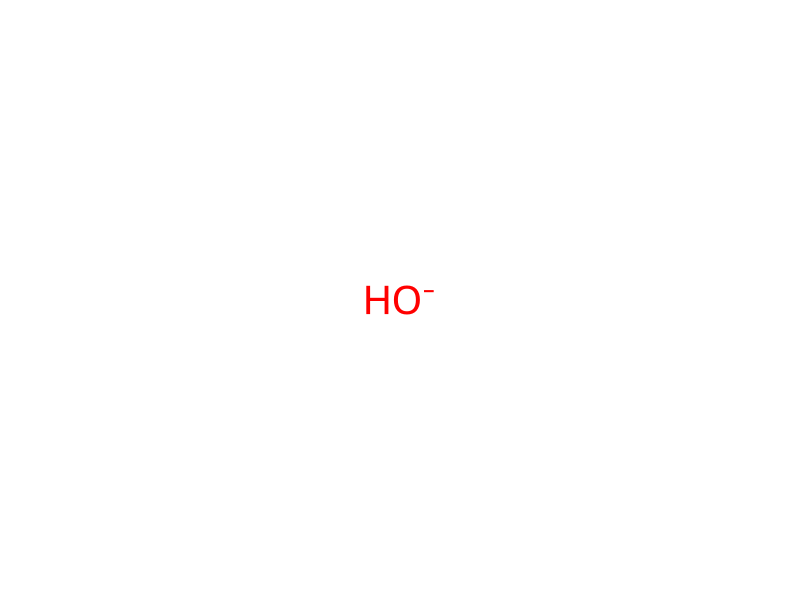
Hydroxide → HCID 76119366, compound
Reaction equation

N1CCCC(=O)[C:2]1=O.F[C:10]([C:13]1[C:14](=[O:20])[C:15](=[O:19])[N:16]=[CH:17][CH:18]=1)(F)F.FC(F)(S(F)(=O)=O)C(OC)=O.[OH-].[OH-].[Li+].[OH-].[Na+]>[Cu]I.CO.O1CCCC1.CN(C=O)C>[CH3:2][C:18]1[CH:17]=[N:16][C:15](=[O:19])[C:14](=[O:20])[C:13]=1[CH3:10]Participants
Reactant 6




Product 1

Reagents, catalysts & solvents 4




Procedure
The ester (compound D, Scheme 1) can be treated with NIS in DMF to provide the C6 iodide (B). The resulting iodide (B) can be converted to trifluoromethylpyridinedione (C) by the treatment with methyl 2,2-difluoro-2-(fluorosulfonyl)acetate in the presence of copper (I) iodide in a solvent such as DMF. The ester (C) can be hydrolyzed using an aqueous hydroxide base such as lithium hydroxide or sodium hydroxide with a co-solvent such as tetrahydrofuran or methanol to provide the acid (D). The acid (D) can be coupled to an amine (RNH2) using standard peptide coupling conditions such as PyBOP/DIPEA or EDC/HOBT/DIPEA in a solvent such as dichloromethane or THF to produce the amide (E). The methoxy group on amide (E) could be cleaved using boron tribromide-methyl sulfide complex, boron tribromide solution in dichloromethane or boron trichloride to provide the pyridinedione (F).
Sources & evidence
- ORD record
- ord-cf8c53a7d6094b4d868a8d98eff59bcb
- Source dataset
- uspto-grants-2015_03
- Patent number
- US08993557B2
Reaction notes
Loading…