Benzene → Cumene
Reaction equation

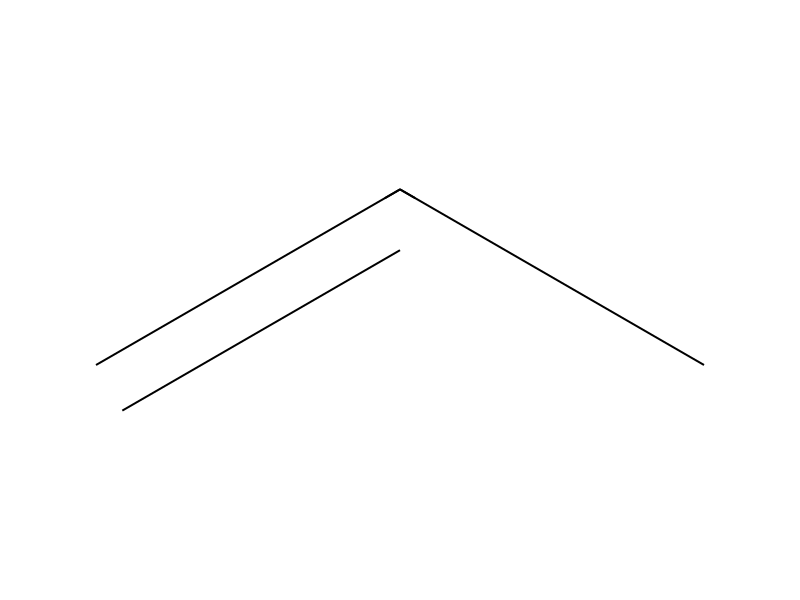
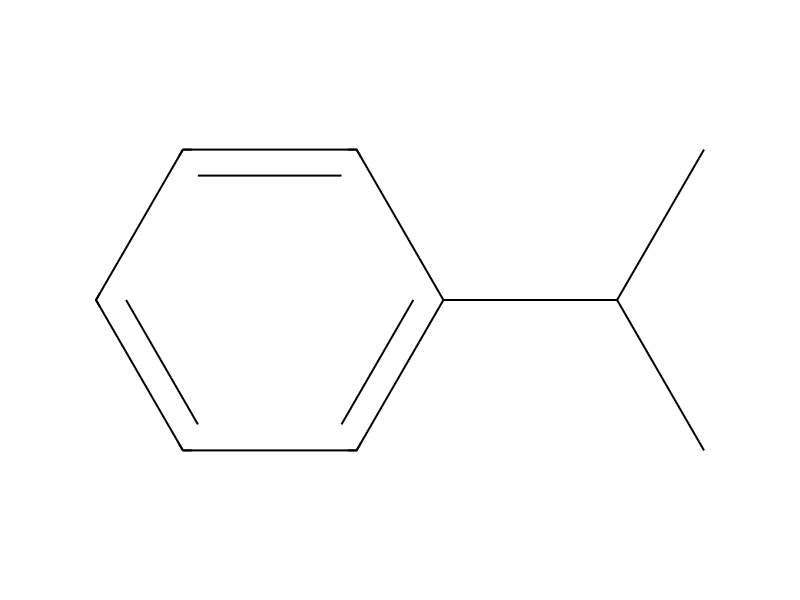
[CH2:1]=[CH:2][CH3:3].[CH:4]1[CH:9]=[CH:8][CH:7]=[CH:6][CH:5]=1>>[C:4]1([CH:2]([CH3:3])[CH3:1])[CH:9]=[CH:8][CH:7]=[CH:6][CH:5]=1Participants
Reactant 2

Product 1
Procedure
When the treated alkylatable aromatic compound comprises treated benzene and the alkylating agent is propylene to produce cumene, the reaction may also take place under at least partial liquid phase catalytic conversion conditions including a temperature of less than about 200° C., from about 100 to about 200° C., from about 125° C. to about 180° C.; a pressure of about 3102 kPa or less, e.g., from about 1724 kPa to about 3102 kPa; a weight hourly space velocity (WHSV) based on propylene alkylating agent of from about 0.1 hr−1 to about 25 hr−1, preferably from about 0.3 hr−1 to about 5 hr−1; and a molar ratio of treated benzene to propylene in the alkylation reactor of from about 0.1:1 to about 30:1, more preferably from about 1:1 to about 20:1 molar.
Sources & evidence
- ORD record
- ord-fa40dddc27914ea38cfa31737c75d6a1
- Source dataset
- uspto-grants-2015_03
- Patent number
- US08993820B2
Reaction notes
Loading…