Hydrochloric Acid → HCID 178489381, compound
Reaction equation

[OH:1][CH:2]([C:34]1[C:39]([C:40]([F:43])([F:42])[F:41])=[CH:38][CH:37]=[CH:36][N:35]=1)[C:3]1[CH:4]=[C:5]([C:9]2[CH:10]=[C:11]3[C:17]([C:18]4[CH:23]=[CH:22][CH:21]=[CH:20][C:19]=4[O:24][CH3:25])=[N:16][N:15](COC(=O)C(C)(C)C)[C:12]3=[N:13][CH:14]=2)[CH:6]=[CH:7][CH:8]=1.C(N)CN.Cl.C(=O)(O)[O-].[Na+]>C(O)C.[OH-].[Na+].C(Cl)(Cl)Cl>[CH3:25][O:24][C:19]1[CH:20]=[CH:21][CH:22]=[CH:23][C:18]=1[C:17]1[C:11]2[C:12](=[N:13][CH:14]=[C:9]([C:5]3[CH:4]=[C:3]([CH:2]([C:34]4[C:39]([C:40]([F:43])([F:41])[F:42])=[CH:38][CH:37]=[CH:36][N:35]=4)[OH:1])[CH:8]=[CH:7][CH:6]=3)[CH:10]=2)[NH:15][N:16]=1Participants
Reactant 4



Product 1

Reagents, catalysts & solvents 3



Procedure
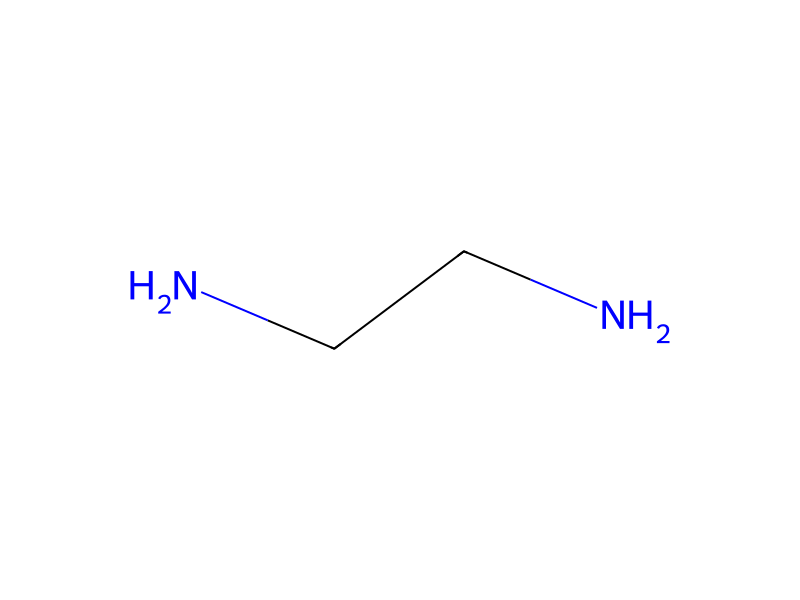
380 mg (0.64 mmol) of 2,2-dimethyl-propionic acid 5-{3-[hydroxy-(3-trifluoromethyl-pyridin-2-yl)-methyl]-phenyl}-3-(2-methoxy-phenyl)-pyrazolo[3,4-b]pyridin-1-ylmethyl ester was dissolved in hot ethanol. 0.5 ml (450 mg, 7.5 mmol) of ethylene diamine was added and the mixture diluted with 2 M aqueous sodium hydroxide (30% v/v). The resulting mixture was gently heated until all material was dissolved and the solution left at room temperature for 16 h. The pH was adjusted to 8 by addition of concentrated aqueous hydrochloric acid and the resulting solution was distributed between chloroform and saturated aqueous sodium bicarbonate. The aqueous layer was extracted three times with chloroform. The combined organic phases were dried over sodium sulfate and evaporated. The residue was purified by mass-triggered reverse-phase HPLC to afford 12 mg (25 μmol, 4%) of {3-[3-(2-methoxy-phenyl)-1H-pyrazolo[3,4-b]pyridin-5-yl]-phenyl}-(3-trifluoromethyl-pyridin-2-yl)-methanol as a yellow solid. 1H NMR (500 MHz, DMSO-d6) δ 13.83 (s, 1H), 8.86 (d, 1H), 8.79 (s, 1H), 8.28 (d, 1H), 7.79 (s, 1H), 7.66 (d, 1H), 7.62 (d, 1H), 7.54 (dd, 1H), 7.47 (t, 1H), 7.43 (t, 1H), 7.35 (d, 1H), 7.24 (d, 1H), 7.10 (t, 1H), 6.23 (d, 1H), 6.10 (d, 1H), 3.85 (s, 3H); MS: m/z 477.1 (M+H+).
Workup
- temperatureThe resulting mixture was gently heated until all material
- dissolutionwas dissolved
- extractionThe aqueous layer was extracted three times with chloroform
- dry with materialThe combined organic phases were dried over sodium sulfate
- customevaporated
- customThe residue was purified by mass-triggered reverse-phase HPLC
Sources & evidence
- ORD record
- ord-269f1fb3f881428985f3baf04edf9313
- Source dataset
- uspto-grants-2012_08
- Patent number
- US08242280B2
Reaction notes
Loading…