Dimethylformamide → 6-Bromopyridine-2-carbaldehyde
Reaction equation

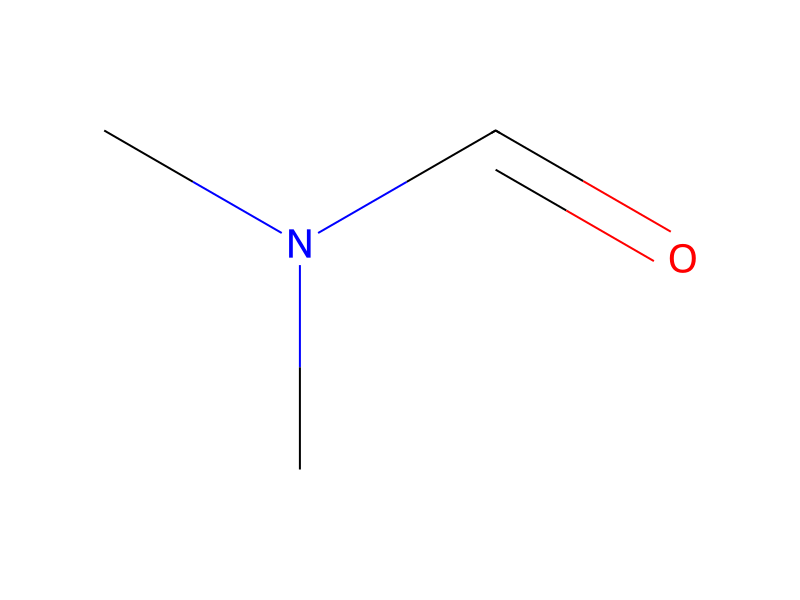
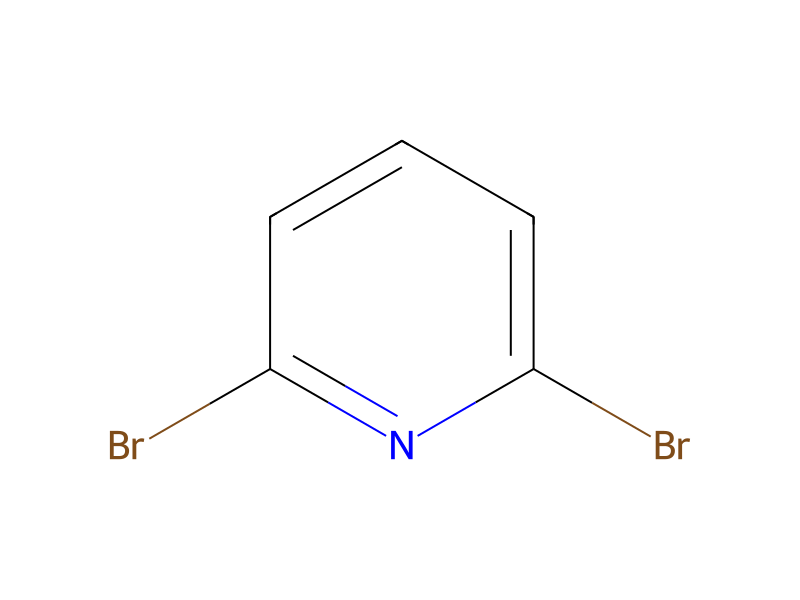
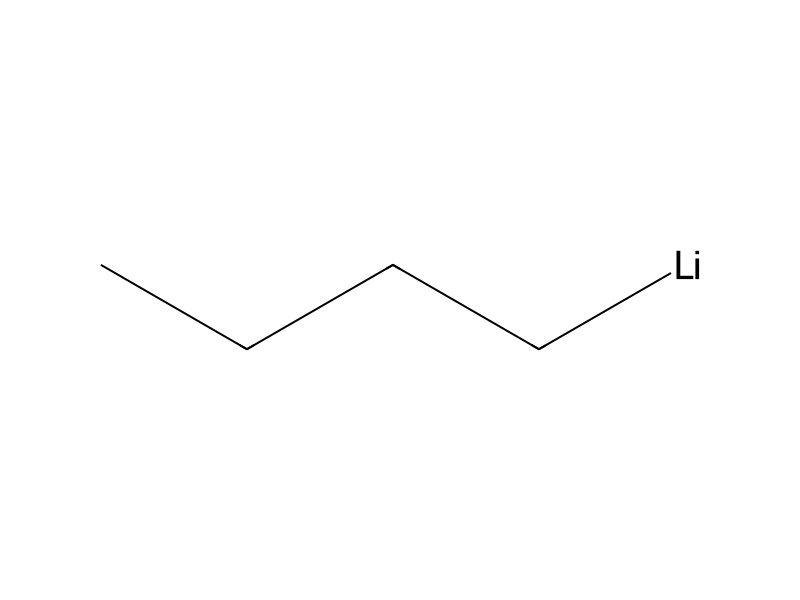
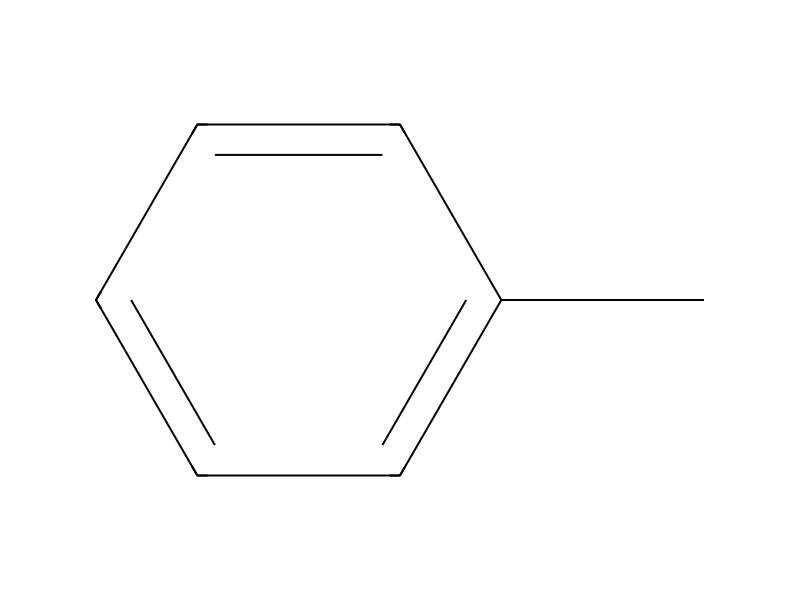
Br[C:2]1[CH:7]=[CH:6][CH:5]=[C:4]([Br:8])[N:3]=1.C([Li])CCC.C1(C)C=CC=CC=1.C([Li])CCC.C([Mg]Cl)CCC.C1(C)C=CC=CC=1.C([Li])CCC.C([Mg]Cl)CCC.BrC1C=CC=C(Br)N=1.C1(C)C=CC=CC=1.CN(C)[CH:67]=[O:68].C([O-])(=O)CC(CC(O)=O)(C(O)=O)O.[Na+]>C1(C)C=CC=CC=1>[CH:67]([C:2]1[CH:7]=[CH:6][CH:5]=[C:4]([Br:8])[N:3]=1)=[O:68]Participants
Reactant 8




Product 1

Reagents, catalysts & solvents 1
Conditions
- Temperature
- -10 °C
Procedure
Fit a 3-neck 500 mL round bottom flask with an additional funnel, mechanical stirrer, and thermocouple well. Dissolve 2,6-dibromopyridine (20 g, 84 millimoles (mmol)) in toluene (150 mL), and place the resulting solution in the addition funnel fitted in a neck of a 3-neck 500 mL round bottom flask. Charge the round bottom flask with toluene (50 mL) and a 1-butyl lithium solution (25 mL, 63 mmol, 2.5 molar (M) in hexane (Acros Organics, Geel, Belgium)). Stir and cool the resulting toluene/1-butyl lithium solution to −10° C. by placing the round bottom flask in a methanol/dry ice bath. Slowly add a 1-butyl magnesium chloride solution (16 mL, 32 mmol, 2.0 M in diethyl ether (Aldrich Chemical Company, Saint Louis, Mo., USA)) via a syringe to the round bottom flask while maintaining the temperature below −5° C. Then stir the resulting toluene/1-butyl lithium/1-butyl magnesium chloride mixture for 0.5 hour at −10 to −5° C. to give a milky white solution. Add dropwise the 2,6-dibromopyridine/toluene solution from the addition funnel over a period of 1 hour while maintaining temperature of the contents in the round bottom flask below −5° C. (mostly −10° C.). Then continue stirring for 1.5 hour to 2 hours while keeping the same bath temperature. Color of the contents in the round bottom flask gradually turns to olive green. Remove an aliquot (about 0.1 mL) and quench it in water (to make 2-bromopyridine from any 6-bromo-pyridyl lithium/magnesium chloride intermediate), then check the resulting quenched material by gas chromatography (GC) to see if there is any remaining 2,6-dibromopyridine. If GC results indicate that all of the 2,6-dibromopyridine has been consumed, add N,N-dimethylformamide (8.5 mL, 0.11 mol, pre-dried over 3A sieves) quickly via syringe to the contents in the round bottom flask. Keep temperature of the bath at −10 to −5° C. Remove an aliquot after 5 minutes, quench it with water, and analyze the resulting quenched material by GC. Observe a sizable 2-formyl-6-bromopyridine peak by GC and, optionally, a barely detectable 2-bromopyridine peak. Quench the reaction by adding aqueous monosodium citrate (slurried/dissolved in 150 mL to 200 mL water; about 1 M) to the contents in the round bottom flask. Vigorously stir the resulting quenched mixture for 10 minutes, and then dilute it with diethyl ether (200 mL). Separate the resulting organic phase from aqueous phase and wash it once with brine (saturated aqueous sodium chloride). Extract the aqueous phase once with diethyl ether, wash the extract once with brine, and combine the extract with the brine-washed original organic phase. Dry the combined diethyl ether mixtures over sodium sulfate (Na2SO4), and rotary evaporate the solution to give 15 g (theoretical yield is 16 g) of the 2-formyl-6-bromopyridine as a tan solid. Use the 2-formyl-6-bromopyridine without further purification in step (b) below.
Workup
- temperaturewhile maintaining the temperature below −5° C
- customto give a milky white solution
- stirringThen continue stirring for 1.5 hour to 2 hours
- customRemove an aliquot (about 0.1 mL)
- customquench it in water (
- customquenched material by gas chromatography (GC)
- customIf GC results
- customhas been consumed
- customat −10 to −5° C
- customRemove an aliquot after 5 minutes
- customquench it with water
- customquenched material by GC
- customQuench
- customthe reaction
- stirringVigorously stir the resulting
- customquenched mixture for 10 minutes
- additiondilute it with diethyl ether (200 mL)
- customSeparate the resulting organic phase from aqueous phase
- washwash it once with brine (saturated aqueous sodium chloride)
- extractionExtract the aqueous phase once with diethyl ether
- washwash the
- extractionextract once with brine
- extractionextract with the brine-
- washwashed original organic phase
- dry with materialDry the combined diethyl ether
- customrotary evaporate the solution
Sources & evidence
- ORD record
- ord-f37f5cd71bcb4d2780ddd598c3a8c428
- Source dataset
- uspto-grants-2012_08
- Patent number
- US08247553B2
Reaction notes
Loading…