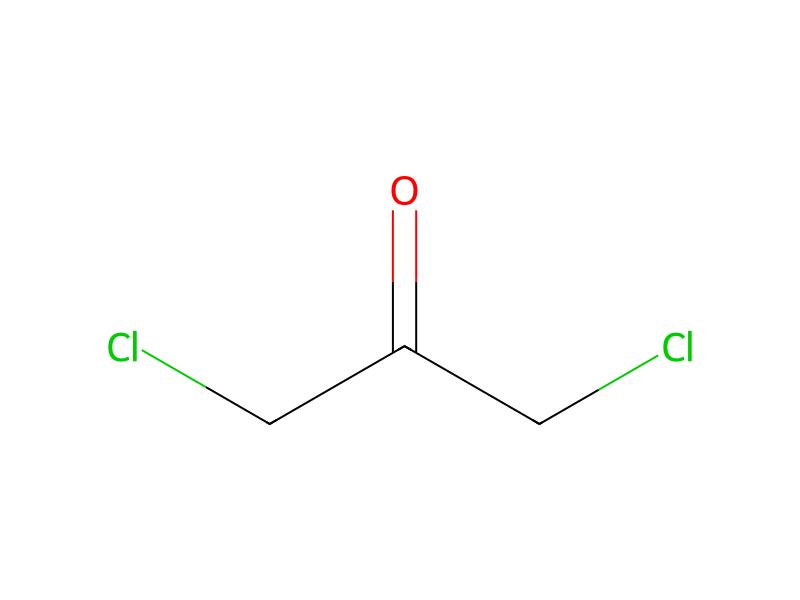
1,3-Dichloroacetone → 4-Chloromethyl-2-[2-(2-fluoro-4-trifluoromethyl-phenyl)-vinyl]-oxazole
Reaction equation

[F:1][C:2]1[CH:7]=[C:6]([C:8]([F:11])([F:10])[F:9])[CH:5]=[CH:4][C:3]=1[CH:12]=[CH:13][C:14]([NH2:16])=[O:15].[Cl:17][CH2:18][C:19]([CH2:21]Cl)=O>C1(C)C=CC=CC=1>[Cl:17][CH2:18][C:19]1[N:16]=[C:14]([CH:13]=[CH:12][C:3]2[CH:4]=[CH:5][C:6]([C:8]([F:11])([F:10])[F:9])=[CH:7][C:2]=2[F:1])[O:15][CH:21]=1Participants
4



Procedure
4.00 g (17.1 mmol) 3-(2-Fluoro-4-trifluoromethyl-phenyl)-acrylamide, 2.60 g (21.3 mmol) 1,3-dichloroacetone and 40 ml toluene were kept at reflux temperature for 16 h with continuous removal of water by use of a water separator (Dean-Stark trap). After cooling to room temperature, two extractions with 100 ml water were performed, the organic phase was dried over sodium sulphate and the solvent removed in vacuo. Chromatography on silica gel (eluent: n-heptane/ethyl acetate 5:1) gave 1.20 g (23%) 4-chloromethyl-2-[2-(2-fluoro-4-trifluoromethyl-phenyl)-vinyl]-oxazole.
Workup
- temperatureat reflux temperature for 16 h
- customwith continuous removal of water by use of a water separator (Dean-Stark trap)
- extractiontwo extractions with 100 ml water
- dry with materialthe organic phase was dried over sodium sulphate
- customthe solvent removed in vacuo
Sources & evidence
- ORD record
- ord-71f2121bc8a74d908ad2b34c678e4d08
- Source dataset
- uspto-grants-2006_02
- Patent number
- US07005526B2
Reaction notes
Loading…