Triphenylphosphine → 4-[1,1-Dimethyl-3-(2-methoxyphenyl)-2-propynyloxy]benzonitrile
Reaction equation

[CH3:1][O:2][C:3]1[CH:8]=[CH:7][CH:6]=[CH:5][C:4]=1[C:9]1[C:14]2[CH:15]=[C:16]([C:19]#[N:20])[CH:17]=[CH:18][C:13]=2[O:12][C:11]([CH3:22])([CH3:21])[CH:10]=1.CC1(C)CC(C2C=CC=CN=2)C2C=C(C(O)=O)C=CC=2O1.C1(P(C2C=CC=CC=2)C2C=CC=CC=2)C=CC=CC=1.CC(C)(OC1C=CC(C#N)=CC=1)C#C>C(NCC)C.[Pd](Cl)Cl.[Cu]I>[CH3:21][C:11]([CH3:22])([O:12][C:13]1[CH:14]=[CH:15][C:16]([C:19]#[N:20])=[CH:17][CH:18]=1)[C:10]#[C:9][C:4]1[CH:5]=[CH:6][CH:7]=[CH:8][C:3]=1[O:2][CH3:1]Participants
Reactant 4



Product 1

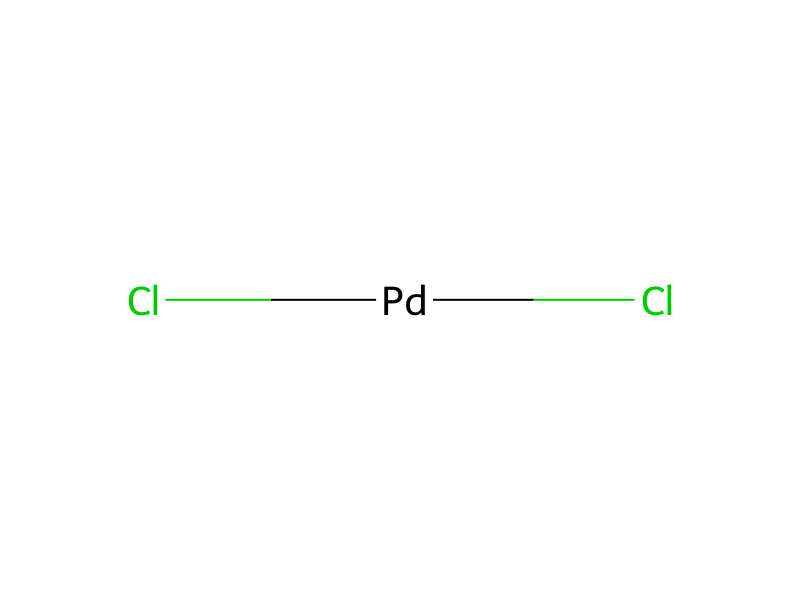
Reagents, catalysts & solvents 3


Procedure
The 4-(2-methoxyphenyl)-2.2-dimethyl-2H-1-benzopyran-6-carbonitrile used as the starting material was prepared as follows: (A) 2.34 g of 2-iodoanisole were added at room temperature to a solution of 9 mg of palladium(II) chloride, 26 mg of o triphenylphosphine and 19 mg of copper(I) iodide in 25 ml of diethylamine. This mixture was treated with 1.85 g of 4-(1,1-dimethyl-2-propynyloxy)benzonitrile and the resulting mixture was stirred for 48 hours. The mixture was evaporated and the residue was dissolved in a mixture of ethyl acetate and water. The organic phase was separated, dried over sodium sulphate and evaporated. The residue was chromatographed on silica gel using ethyl acetate/petroleum ether (1:4) for the elution to give 0.99 g of 4-[1,1-dimethyl-3-(2-methoxyphenyl)-2-propynyloxy]benzonitrile in the form of an oil. (B) 0.99 g of 4-[1,1-dimethyl-3-(2-methoxyphenyl)-2-propynyloxy]benzonitrile was dissolved in 10 ml of 1,2-dichlorobenzene and heated at reflux for 1.5 hours. After cooling the solution was evaporated and the residue was chromatographed on silica gel using ethyl acetate/petroleum ether (1:4) for the elution. After recrystallization from petroleum ether (boiling point 60°-80° C.) there were obtained 480 mg of 4-(2-methoxyphenyl)-2,2-dimethyl-2H-1-benzopyran-6-carbonitrile of melting point 109°-111° C.
Workup
- customwas prepared
- customThe mixture was evaporated
- dissolutionthe residue was dissolved in a mixture of ethyl acetate and water
- customThe organic phase was separated
- dry with materialdried over sodium sulphate
- customevaporated
- customThe residue was chromatographed on silica gel
- washfor the elution
Sources & evidence
- ORD record
- ord-64ff50fdc180487789feb20f36a87a16
- Source dataset
- uspto-grants-1992_06
- Patent number
- US05118694
Reaction notes
Loading…