Cyclopentanone → HCID 53687650, compound
Reaction equation

[CH2:1]([O:5][C:6]1[CH:13]=[CH:12][C:9]([CH:10]=O)=[CH:8][CH:7]=1)[CH:2]1[O:4][CH2:3]1.[C:14]1(=[O:19])[CH2:18][CH2:17][CH2:16][CH2:15]1.[OH-:20].[Na+]>C(O)C.O>[CH2:1]([O:5][C:6]1[CH:13]=[CH:12][C:9]([CH:10]=[C:15]2[CH2:16][CH2:17][C:18](=[CH:10][C:9]3[CH:12]=[CH:13][C:6]([O:20][CH2:1][CH:2]4[O:4][CH2:3]4)=[CH:7][CH:8]=3)[C:14]2=[O:19])=[CH:8][CH:7]=1)[CH:2]1[O:4][CH2:3]1Participants
Reactant 3
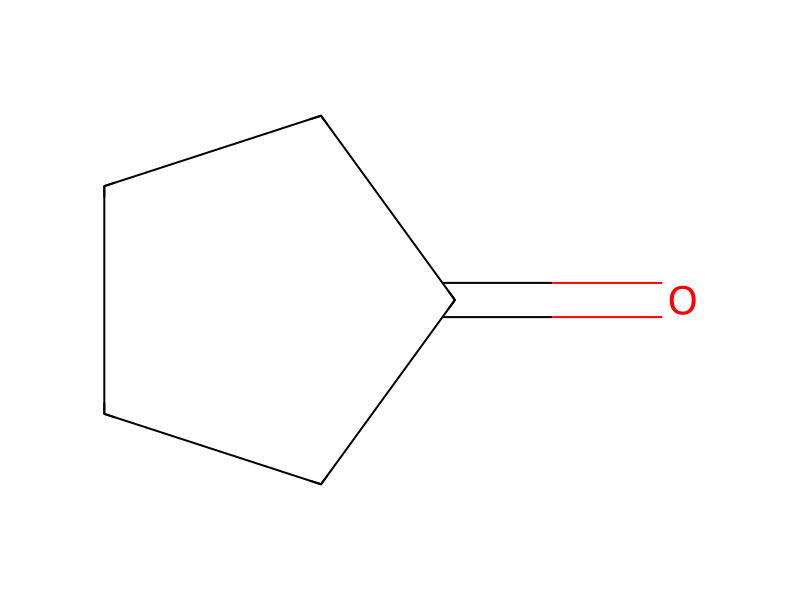


Product 1

Reagents, catalysts & solvents 2


Procedure
A solution of p-glycidyloxybenzaldehyde (40 g; prepared according to Method A) and cyclopentanone (9.4 g) in ethanol (40 g) was added over 1 hour to a stirred solution of sodium hydroxide (2.25 g) in a mixture of water (45 g) and ethanol (40 g), keeping the temperature at 25° to 30° C. On complete addition the mixture was stirred at 25° to 30° C. for a further 30 minutes, then water (100 g) was added and the mixture was stirred for 15 minutes. The precipitate was filtered off, washed with water and ice-cold ethanol, and dried at 60° C. in vacuo to give 1,3-bis(p-glycidyloxyphenylmethylidene)cyclopentan-2-one. The yield was 40 g (88% of theory) and the product had an epoxide content of 4.43 equivalents per kilogram, the theoretical value being 4.95 equivalents per kilogram. The N.M.R., I.R., and UV spectra of the product were consistent with the above structure.
Workup
- customat 25° to 30° C
- additionOn complete addition the mixture
- stirringthe mixture was stirred for 15 minutes
- filtrationThe precipitate was filtered off
- washwashed with water and ice-cold ethanol
- customdried at 60° C. in vacuo
Sources & evidence
- ORD record
- ord-571992d467c5472482e41e089b4a2d10
- Source dataset
- uspto-grants-1981_08
- Patent number
- US04282353
Reaction notes
Loading…