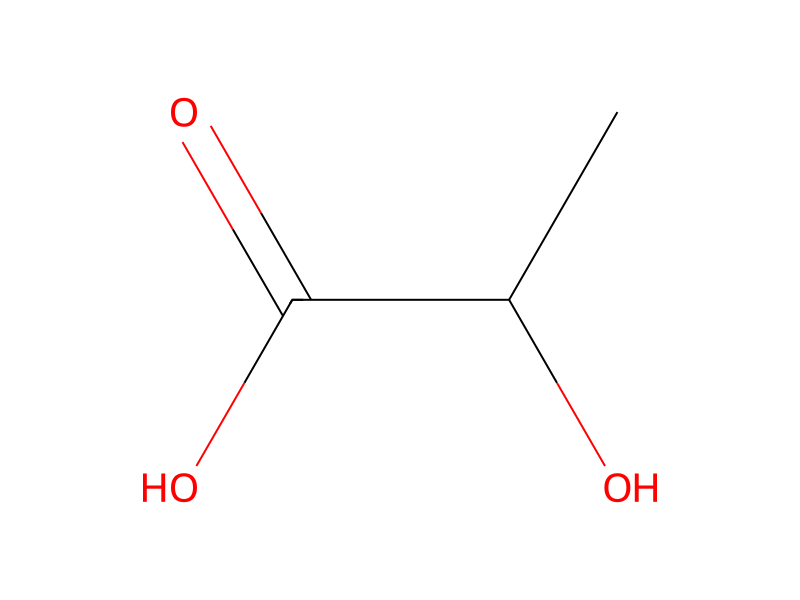
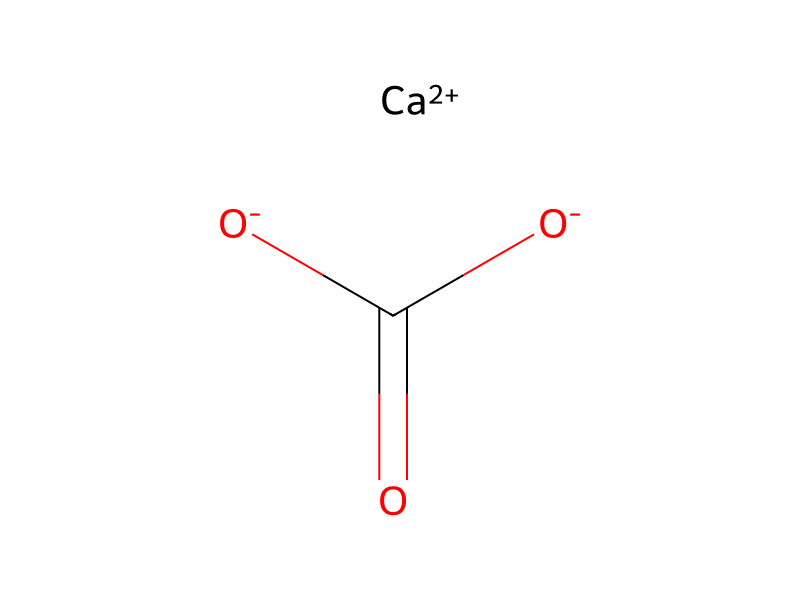
Lactic Acid → Calcium hexalactate
Reaction equation

[C:1]([OH:6])(=[O:5])[CH:2]([CH3:4])[OH:3].C(=O)([O-])[O-].[Ca+2:11]>O>[C:1]([O-:6])(=[O:5])[CH:2]([CH3:4])[OH:3].[C:1]([O-:6])(=[O:5])[CH:2]([CH3:4])[OH:3].[C:1]([O-:6])(=[O:5])[CH:2]([CH3:4])[OH:3].[C:1]([O-:6])(=[O:5])[CH:2]([CH3:4])[OH:3].[C:1]([O-:6])(=[O:5])[CH:2]([CH3:4])[OH:3].[C:1]([O-:6])(=[O:5])[CH:2]([CH3:4])[OH:3].[Ca+2:11].[Ca+2:11].[Ca+2:11]Participants
4
Reactant 2
Product 1

Reagents, catalysts & solvents 1

Procedure
30 kg of 80% synthetic lactic acid are dissolved in 66 kg of water and refluxed for 15 hours. Next, 4.4 kg of calcium carbonate are added to the approximately 25% solution of lactic acid at a temperature of about 70° C., while stirring, and the clear solution is finally dried in a thin-layer evaporator at about 80° C. and 25-50 torr vacuum. 25.4 kg of pourable calcium hexalactate are obtained, corresponding to 98.9% of the theoretical quantity.
Workup
- temperaturerefluxed for 15 hours
- customthe clear solution is finally dried in a thin-layer evaporator at about 80° C.
Sources & evidence
- ORD record
- ord-94480aee9a554322a7a49652fffbabf0
- Source dataset
- uspto-grants-1981_08
- Patent number
- US04282385
Reaction notes
Loading…