Potassium Hydroxide → Potassium alpha-isopropyl-4-chlorophenylacetate
Reaction equation

[CH:1]([CH:4]([C:8]1[CH:13]=[CH:12][C:11]([Cl:14])=[CH:10][CH:9]=1)[C:5]([OH:7])=[O:6])([CH3:3])[CH3:2].[OH-].[K+:16]>C(O)C.O>[CH:1]([CH:4]([C:8]1[CH:13]=[CH:12][C:11]([Cl:14])=[CH:10][CH:9]=1)[C:5]([O-:7])=[O:6])([CH3:3])[CH3:2].[K+:16]Participants
5
Reactant 2

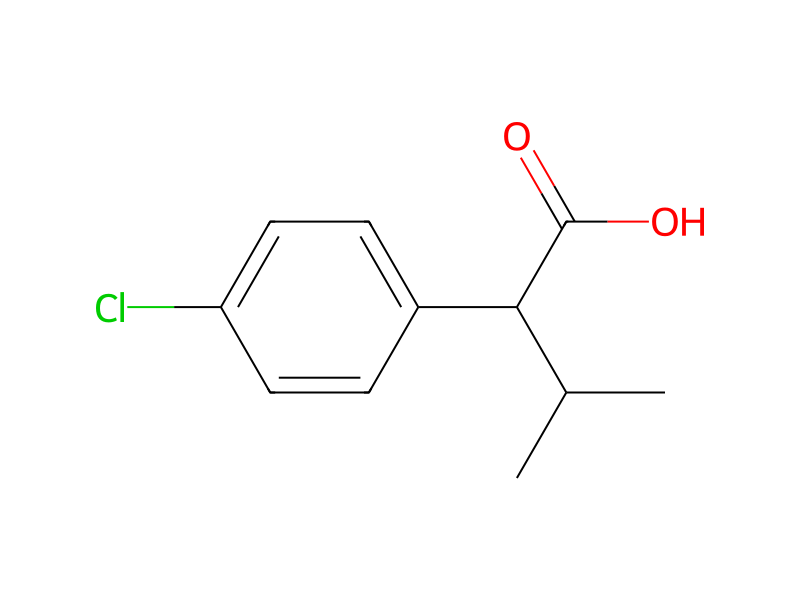
Product 1

Reagents, catalysts & solvents 2


Procedure
α-Isopropyl-4-chlorophenylacetic acid (1.3 g) was dissolved in ethanol (10 ml) and a solution of potassium hydroxide (0.34 g) in water (5 ml) was added to the ethanolic solution. The solvents were then removed by distillation under reduced pressure to give anhydrous potassium α-isopropyl-4-chlorophenylacetate.
Workup
- customThe solvents were then removed by distillation under reduced pressure
Sources & evidence
- ORD record
- ord-087120f1d8154163b5d8e1a40fed35df
- Source dataset
- uspto-grants-1981_08
- Patent number
- US04283414
Reaction notes
Loading…