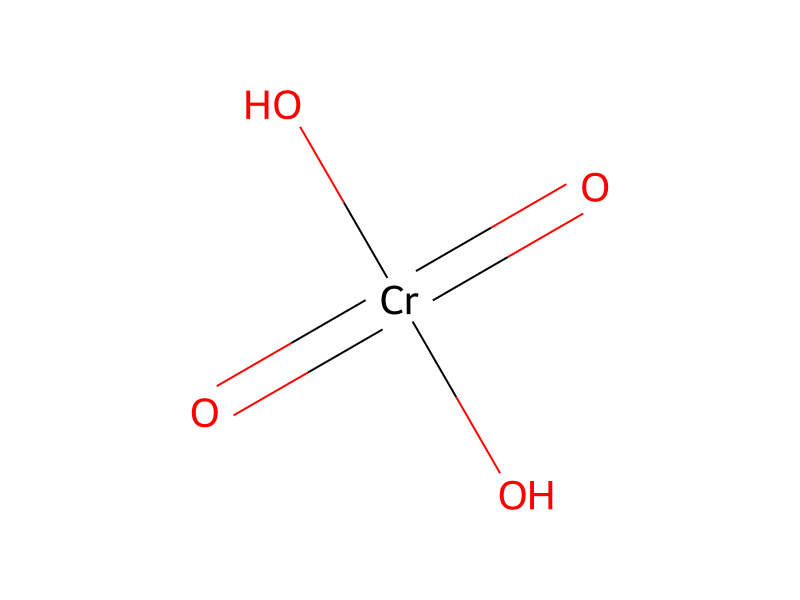
Chromic Acid → 6,7-Diacetoxychromone-3-carboxylic acid
Reaction equation

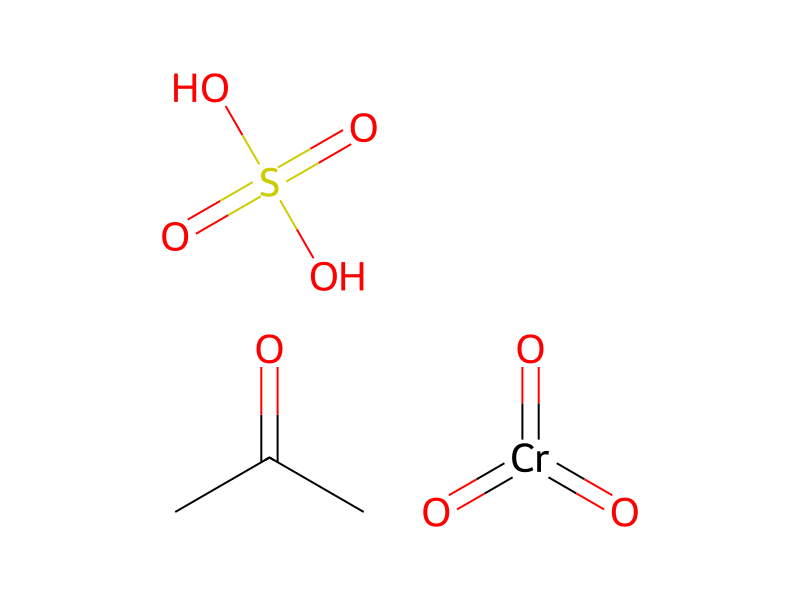
[C:1]([O:4][C:5]1[CH:6]=[C:7]2[C:12](=[CH:13][C:14]=1[O:15][C:16](=[O:18])[CH3:17])[O:11][CH:10]=[C:9]([CH:19]=[O:20])[C:8]2=[O:21])(=[O:3])[CH3:2].CC(C)=[O:24].OS(O)(=O)=O.O=[Cr](=O)=O.[Cr](O)(O)(=O)=O>CC(C)=O.S(=O)(=O)(O)O.O>[C:1]([O:4][C:5]1[CH:6]=[C:7]2[C:12](=[CH:13][C:14]=1[O:15][C:16](=[O:18])[CH3:17])[O:11][CH:10]=[C:9]([C:19]([OH:24])=[O:20])[C:8]2=[O:21])(=[O:3])[CH3:2]Participants
7





Procedure
6,7-Diacetoxychromone-3-carboxaldehyde (17.8 g) were dissolved in 1 litre of acetone. To this solution were added with stirring Jones reagent (32.8 ml) which had been previously prepared by dissolving chromic acid (133.6 g) in concentrated sulfuric acid (115 ml) diluted with water to a volume of 500 ml.
Workup
- customhad been previously prepared
Sources & evidence
- ORD record
- ord-9f1d2d55e2ce43c5b842dfc6c05dea00
- Source dataset
- uspto-grants-1981_08
- Patent number
- US04285941
Reaction notes
Loading…