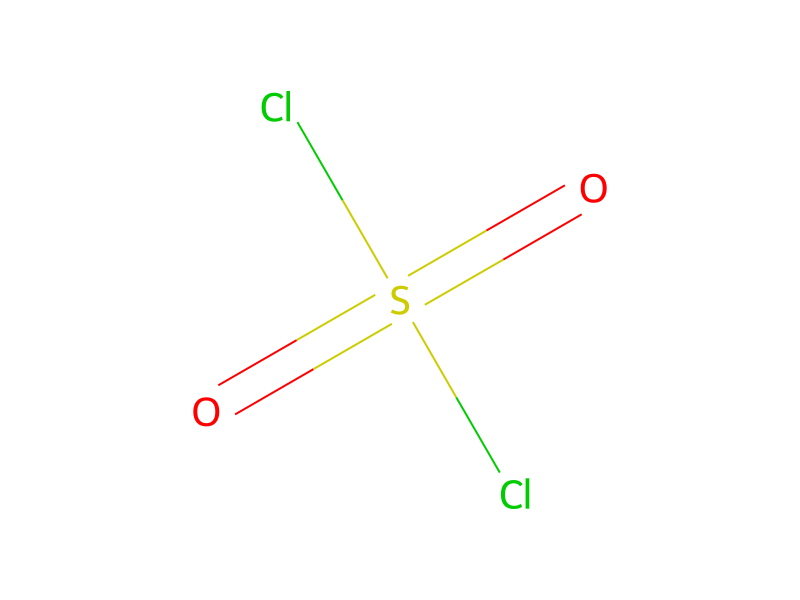
Sulfuryl chloride → 2-Chlorobenzoylacetanilide
Reaction equation

C(N[C:15]1[CH:46]=[CH:45][C:18]([C:19]([C:21](S)(C2N(C3C=CC(O)=CC=3)N=NN=2)[C:22]([NH:24][C:25]2[CH:30]=[CH:29][CH:28]=[CH:27][C:26]=2Cl)=[O:23])=[O:20])=[CH:17][CH:16]=1)(=O)CCCCCCCCCCC.OC1C=CC(N2C(S)=NN=N2)=CC=1.S(Cl)([Cl:63])(=O)=O>C(O)C>[Cl:63][C:45]1[CH:46]=[CH:15][CH:16]=[CH:17][C:18]=1[C:19]([CH2:21][C:22]([NH:24][C:25]1[CH:30]=[CH:29][CH:28]=[CH:27][CH:26]=1)=[O:23])=[O:20]Participants
5



Procedure
2-(p-lauroylaminobenzoyl)-2-(1-p-hydroxy-phenyltetrazole-5-yl)-mercapto-(o-chloro)-acetanilide (Compound 2) Analogously to Synthesis Example 1, 4.32 g. (0.02 mol) Na-salt of 1-(p-hydroxyphenyl)-5-mercaptotetrazole are reacted with 10.12 g (0.02 mol) 2-chloro-2-(p-lauroylamino)-benzoyl-(o-chloro)-acetanilide. An an intermediate product the respective 2-chlorobenzoylacetanilide was prepared according to the method "chlorination with sulfurylchloride in methylene" analogously to Synthesis Example 2. yield=7.2 g. (1×ethanol)=76% of theoretical; melting point 142° C.
Sources & evidence
- ORD record
- ord-81e26c8f453b496fb623846bd66f481f
- Source dataset
- uspto-grants-1981_08
- Patent number
- US04286054
Reaction notes
Loading…