Epichlorohydrin → HCID 22139194, compound
Reaction equation

[NH:1]1[C:9]2[C:4](=[CH:5][CH:6]=[CH:7][CH:8]=2)[C:3]([CH:10]=[O:11])=[CH:2]1.[OH-].[K+].S([O-])([O-])(=O)=O.[Na+].[Na+].[CH2:21]([CH:23]1[O:25][CH2:24]1)Cl>>[O:25]1[CH2:24][CH:23]1[CH2:21][N:1]1[C:9]2[C:4](=[CH:5][CH:6]=[CH:7][CH:8]=2)[C:3]([CH:10]=[O:11])=[CH:2]1Participants




Conditions
- Temperature
- 50 °C
Procedure
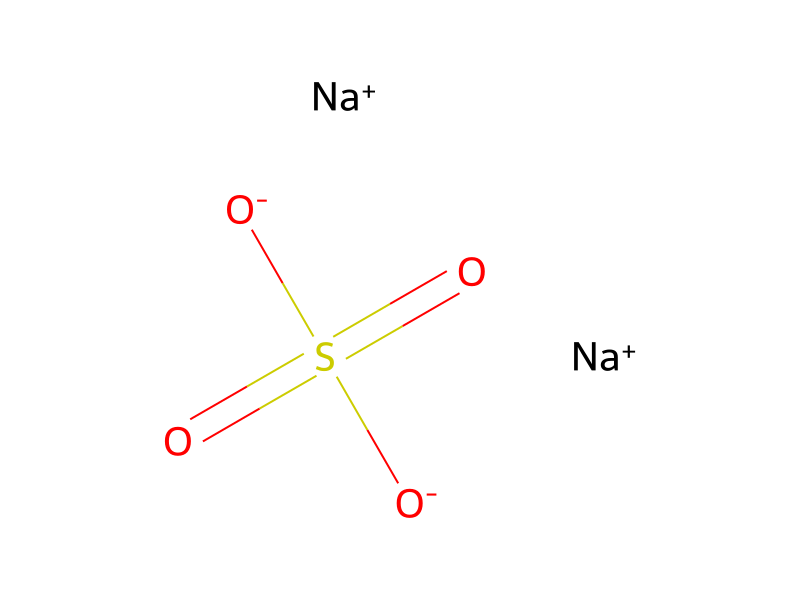
Indole-3-carbaldehyde (5 g, 0.034 mol) was dissolved in epichlorohydrin (55 g, available from Aldrich, Milwaukee, Wis.) under mild heating. Potassium hydroxide (KOH, 4.2 g, 0.076 mol) was added to the reaction mixture in three even portions. Additionally, sodium sulphate (Na2SO4, 0.7 g) was added before every addition of KOH into the flask. After stirred for 5 hours at 50° C., the reaction mixture was filtered and epichlorohydrin was removed by vacuum distillation from the filtrate. Then the product was recrystallized from a mixture of acetone and diethyl ether in a volume ratio of 1:1 to form white crystals which were washed with diethyl ether. The yield of the product was 73% (5 g). A 1H-NMR spectrum (100 MHz) of the product in CDCl3 was characterized by the following chemical shifts (δ, ppm): 9.97 (s, 1H, CHO), 8.4-8.2 (m, 1H, 2-HHt), 7.38 (s, 1H, 4-HHt), 7.5-7.2 (m, 3H, 5, 6, 7-HHt), 4.65-4.42(dd, 1H, one of NCH2 protons, (HA), JAX=2.4 Hz, JAB=15.2 Hz), 4.2-3.95 (dd, 1H, another NCH2 proton, (HB), JBX=5.7 Hz,), 3.31 (m, 1H, CHO), 2.83 (t, one of OCH2 protons, (HB), JBX=4.4 Hz,) 2.51-2.4 (dd, 1H, CH2O another proton, (HA), JAX=2.4 Hz, JAB=4.6 Hz). An infrared absorption spectrum of the product was characterized by the following absorption wave numbers (KBr windows, in cm−1): ν (arene C—H) 3098, 3045; ν (CH) 2924, 2805, 2752, 2762; ν (CHO) 1646; ν (C═C in Ar) 1536, 1471, γ(Ar) 750. A mass spectrum of the product was characterized by the following ions (in m/z): 202 (100%, M+1).
Workup
- filtrationthe reaction mixture was filtered
- customepichlorohydrin was removed by vacuum distillation from the filtrate
- customThen the product was recrystallized from a mixture of acetone and diethyl ether in a volume ratio of 1:1
- customto form white crystals which
- washwere washed with diethyl ether
- customAn infrared absorption spectrum of the product
- customwas characterized by the following absorption wave numbers (KBr windows, in cm−1)
Sources & evidence
- ORD record
- ord-47724875cea14adaaa783b4ae07cde15
- Source dataset
- uspto-grants-2008_04
- Patent number
- US07364825B2
Reaction notes
Loading…