L-Proline → HCID 53775406, compound
Reaction equation

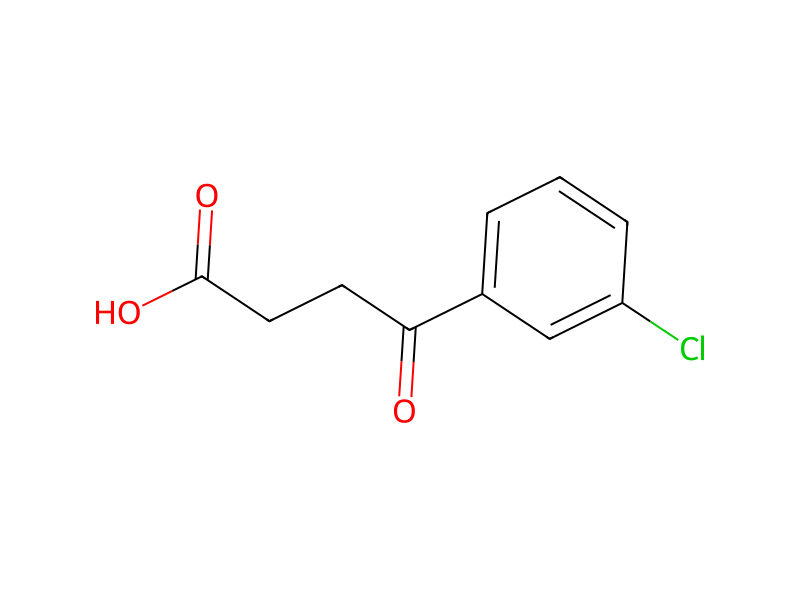
[Cl:1][C:2]1[CH:3]=[C:4]([CH:12]=[CH:13][CH:14]=1)[C:5]([CH2:7][CH2:8][C:9]([OH:11])=O)=[O:6].[NH:15]1[CH2:22][CH2:21][CH2:20][C@H:16]1[C:17]([OH:19])=[O:18]>>[Cl:1][C:2]1[CH:3]=[C:4]([CH:12]=[CH:13][CH:14]=1)[C:5]([CH2:7][CH2:8][C:9]([N:15]1[CH2:22][CH2:21][CH2:20][C@H:16]1[C:17]([OH:19])=[O:18])=[O:11])=[O:6]Participants
3


Procedure
The preceding compound is converted to 3-[3-chlorobenzoyl]propionic acid, hydroxysuccinimide ester as described in Example 15 and coupled with L-proline as described in Example 16 to give 1-[3-(3-chlorobenzoyl)propionyl]-L-proline. The preceding compound is reacted with bromine in acetic acid as described in Example 20 to give 1-[3-bromo-3-(3-chlorobenzoyl)propionyl]-L-proline. The preceding compound in a mixture of ethanol-water (1:1) is reacted with potassium thioacetate as in Example 21 to give the product of the Example as a glass.
Sources & evidence
- ORD record
- ord-273aa457a1ae428c9627ad85186c1f99
- Source dataset
- uspto-grants-1980_10
- Patent number
- US04226775
Reaction notes
Loading…