Pyridine → HCID 20476830, compound
Reaction equation

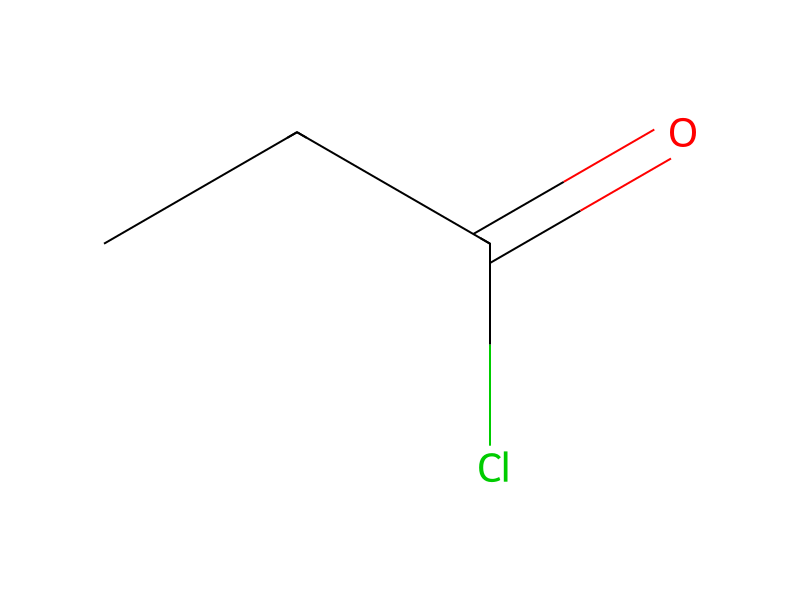
[Cl:1][C:2]1[CH:7]=[CH:6][C:5]([C:8]2[N:9]([CH3:21])[C:10](=[N:13][C:14]3[CH:19]=[CH:18][C:17]([OH:20])=[CH:16][CH:15]=3)[S:11][CH:12]=2)=[CH:4][C:3]=1[S:22](=[O:27])(=[O:26])[N:23]([CH3:25])[CH3:24].[C:28](Cl)(=[O:31])[CH2:29][CH3:30].N1C=CC=CC=1>C(Cl)(Cl)Cl>[Cl:1][C:2]1[CH:7]=[CH:6][C:5]([C:8]2[N:9]([CH3:21])[C:10](=[N:13][C:14]3[CH:15]=[CH:16][C:17]([O:20][C:28](=[O:31])[CH2:29][CH3:30])=[CH:18][CH:19]=3)[S:11][CH:12]=2)=[CH:4][C:3]=1[S:22](=[O:27])(=[O:26])[N:23]([CH3:24])[CH3:25]Participants
Reactant 3


Product 1

Reagents, catalysts & solvents 1

Procedure
2 g (4.7 mmoles) of 4-(4-chloro-3-dimethylsulfamoylphenyl)-2-(4-hydroxyphenylimino)-3-methyl-4-thiazoline is suspended in 40 ml of dry chloroform. 0.4 g (4.7 mmoles) of propionyl chloride (dissolved in 10 ml of chloroform) and 1.4 g (18 mmoles) of pyridine are added in that order. A slightly exothermic reaction produces, temporarily, a solution from which a yellow solid precipitates. After stirring for 3 hours at room temperature, a further 0.4 ml of propionyl chloride is added. The resulting yellow solution is allowed to stand for 3 days at room temperature and then evaporated to dryness in vacuo, the residue is distributed between water and ethyl acetate, the organic phase is dried and evaporated and the residue is recrystallized from isopropanol. Colorless crystals of m.p. 155°-159° C.
Workup
- customA slightly exothermic reaction
- customproduces
- customtemporarily, a solution from which a yellow solid precipitates
- additiona further 0.4 ml of propionyl chloride is added
- waitto stand for 3 days at room temperature
- customevaporated to dryness in vacuo
- customthe organic phase is dried
- customevaporated
- customthe residue is recrystallized from isopropanol
Sources & evidence
- ORD record
- ord-687f91164be94e0a8cb9c4c6fc31ac94
- Source dataset
- uspto-grants-1983_12
- Patent number
- US04421757
Reaction notes
Loading…