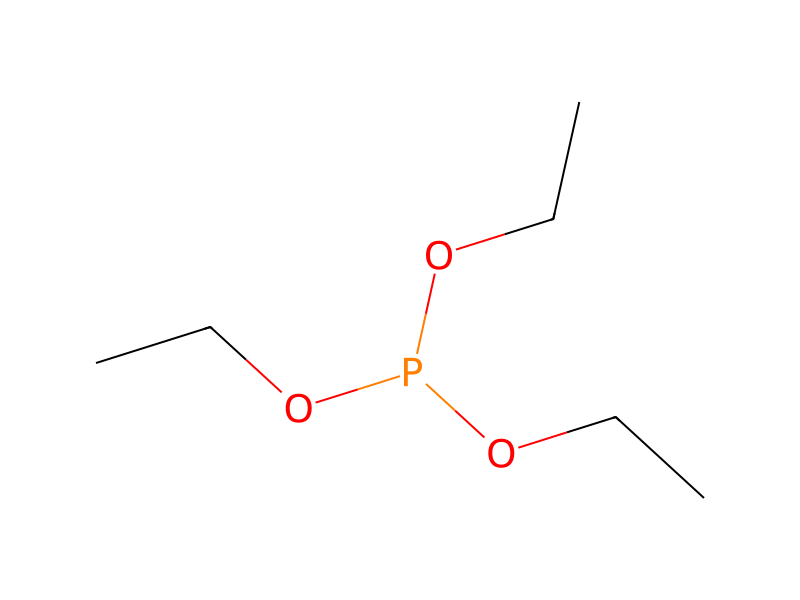
Triethyl phosphite → Phosphonic acid, [(formylamino)methyl]-, diethyl ester
Reaction equation

O[CH2:2][NH:3][CH:4]=[O:5].[CH2:6]([O:8][P:9]([O:13]CC)[O:10][CH2:11][CH3:12])[CH3:7]>C(O)C>[CH2:6]([O:8][P:9]([CH2:2][NH:3][CH:4]=[O:5])(=[O:13])[O:10][CH2:11][CH3:12])[CH3:7]Participants
4
Reactant 2

Product 1

Reagents, catalysts & solvents 1

Procedure
The mole ratio of N-(hydroxymethyl)formamide to triethylphosphite in step (2) of the process of the invention is 1:1. The reaction is conducted in the presence of heat and at a temperature sufficient to cause the reaction to go to completion. The reactants are heated until ethyl alcohol starts to evolve and this occurs at reflux temperature. When triethylphosphite is used, this temperature is approximately 120°-125° C. At this point, the alcohol is distilled off, leaving the product diethyl-N-(formyl)aminomethylphosphonate as the residue.
Workup
- temperatureof heat and at a temperature sufficient
- customthe reaction
- temperatureat reflux temperature
- customis approximately 120°-125° C
- distillationAt this point, the alcohol is distilled off
Sources & evidence
- ORD record
- ord-7133614b944b452fbfa4482758121e65
- Source dataset
- uspto-grants-1983_12
- Patent number
- US04422982
Reaction notes
Loading…