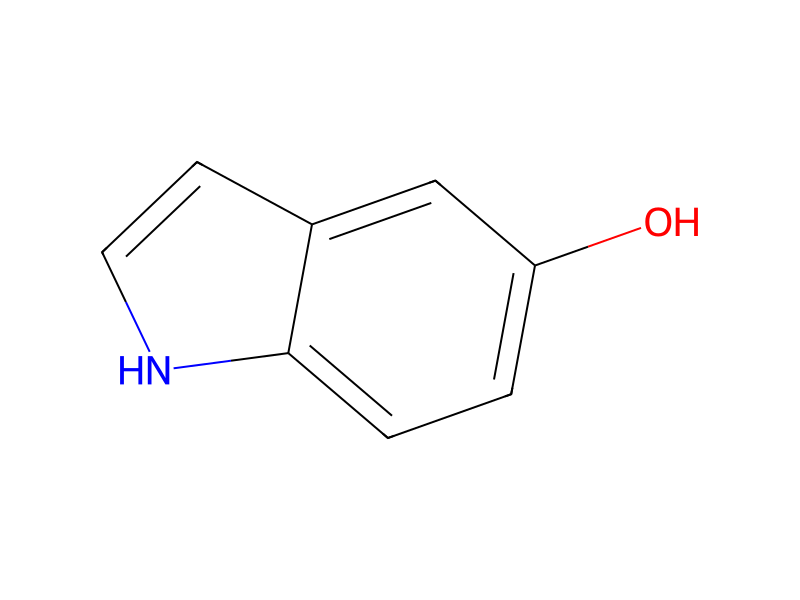
5-Hydroxyindole → HCID 59003786, compound
Reaction equation

Cl[C:2]1[C:7]([CH:8]=[O:9])=[C:6]([Cl:10])[N:5]=[CH:4][N:3]=1.[OH:11][C:12]1[CH:13]=[C:14]2[C:18](=[CH:19][CH:20]=1)[NH:17][CH:16]=[CH:15]2>>[Cl:10][C:6]1[C:7]([CH:8]=[O:9])=[C:2]([O:11][C:12]2[CH:13]=[C:14]3[C:18](=[CH:19][CH:20]=2)[NH:17][CH:16]=[CH:15]3)[N:3]=[CH:4][N:5]=1Participants
3

Procedure
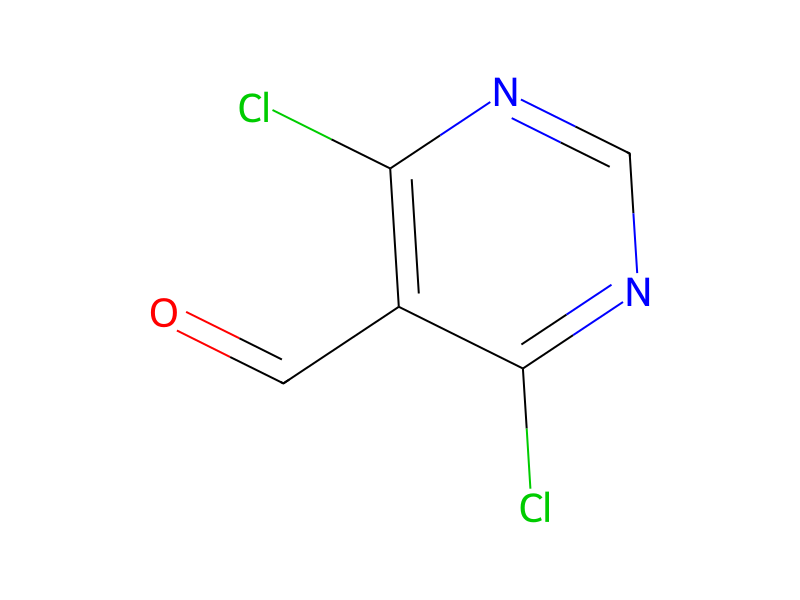
Using the procedure of Example 1, 4,6-dichloro-pyrimidine-5-carbaldehyde Compound 2a (0.10 g) and 5-hydroxy-indole Compound 3a (75 mg) were reacted to provide 4-chloro-6-(1H-indol-5-yloxy)-pyrimidine-5-carbaldehyde Compound 3b (15 mg, 10%). 1H NMR (400 MHz, CDCl3) δ 10.60 (s, 1H), 8.60 (s, 1H), 8.30 (s, 1H), 7.45 (d, 1H), 7.40 (d, 1H), 7.30 (d, 1H), 6.95 (dd, 1H), 6.55 (d, 1H). MS (ESI) m/z: 306 (M+H+).
Workup
- customwere reacted
Sources & evidence
- ORD record
- ord-afec8e5fb05848038169e2ec8dd2d4ed
- Source dataset
- uspto-grants-2011_09
- Patent number
- US08013153B2
Reaction notes
Loading…