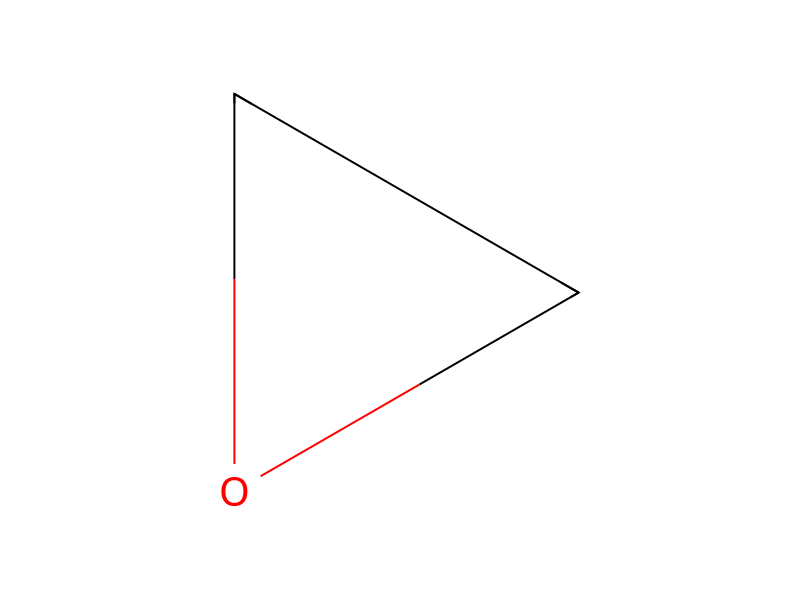
Ethylene Oxide → Bis(2-hydroxyethyl) terephthalate
Reaction equation

[C:1]([OH:12])(=[O:11])[C:2]1[CH:10]=[CH:9][C:5]([C:6]([OH:8])=[O:7])=[CH:4][CH:3]=1.[CH2:13]([CH:16]1OCC[O:17]1)CC.[CH2:21]1[O:23][CH2:22]1>C([O-])(=O)C1C=CC(C([O-])=O)=CC=1.C([N+](CC)(CC)CC)C.C([N+](CC)(CC)CC)C>[C:1]([O:12][CH2:21][CH2:22][OH:23])(=[O:11])[C:2]1[CH:10]=[CH:9][C:5]([C:6]([O:8][CH2:13][CH2:16][OH:17])=[O:7])=[CH:4][CH:3]=1Participants
5
Reactant 3


Product 1

Reagents, catalysts & solvents 1

Conditions
- Temperature
- 155 °C
Procedure
A 3-liter autoclave is charged with 600 grams of crude terephthalic acid (3.61 moles), 1600 ml. of 2-propyldioxolane reaction medium, 0.11 mole of tetraethyl ammonium terephthalate catalyst and then purged with nitrogen. Liquid ethylene oxide (473 grams, 10.75 mole) is then pumped in and the reactor heated quickly to 155°C. by passing steam through internal coils. After about 31/2 minutes the reaction is terminated by pressuring the contents of the autoclave into a vessel where the ethylene oxide is flashed and then the unreacted terephthalic acid removed by filtration. Cooling of the filtrate to about 18°C. yields about 742 grams of crude bis(2-hydroxyethyl) terephthalate.
Workup
- custompurged with nitrogen
- customAfter about 31/2 minutes the reaction is terminated
- customthe unreacted terephthalic acid removed by filtration
- temperatureCooling of the filtrate to about 18°C.
Sources & evidence
- ORD record
- ord-ba6d303984584c57b5402f3698f81288
- Source dataset
- uspto-grants-1976_07
- Patent number
- US03969394
Reaction notes
Loading…