Anthranilic Acid → 2-(3-Chloro-phenyl)-benzo[d][1,3]oxazin-4-one
Reaction equation

[C:1]([OH:10])(=[O:9])[C:2]1[C:3](=[CH:5][CH:6]=[CH:7][CH:8]=1)[NH2:4].[Cl:11][C:12]1[CH:13]=[C:14]([CH:18]=[CH:19][CH:20]=1)[C:15](Cl)=O.O>N1C=CC=CC=1>[Cl:11][C:12]1[CH:13]=[C:14]([C:15]2[O:9][C:1](=[O:10])[C:2]3[CH:8]=[CH:7][CH:6]=[CH:5][C:3]=3[N:4]=2)[CH:18]=[CH:19][CH:20]=1Participants
5
Reactant 3
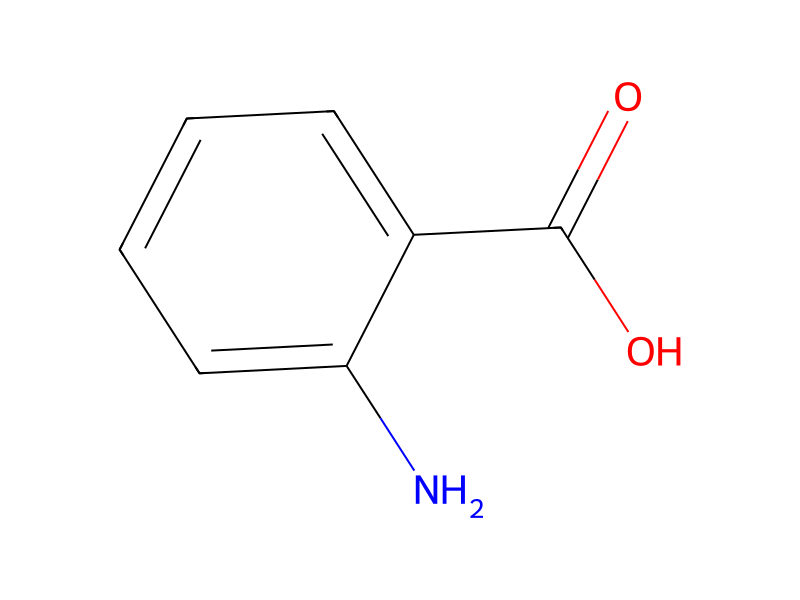


Product 1

Reagents, catalysts & solvents 1

Procedure
To a stirred solution of 76.5 g (0.56 mole) of anthranilic acid in 1000 ml of pyridine at room temperature was added 197 g (1.12 mole) of m-chlorobenzoyl chloride at a rapid dropwise rate. The temperature rose to 45°-50° and, midway through the addition, a precipitate began forming. After stirring one hour at room temperature the slurry was poured into 1500 ml of water and the precipitate was filtered, washed well with water and air dried to give 139 g (96.5%) of 2-(m-chlorophenyl)-4H-3,1-benzoxazin-4-one, m.p. 158°-60°. Crystallization from ethanol gave an analytical sample, m.p. 159°-60°.
Workup
- additionThe temperature rose to 45°-50° and, midway through the addition
- customa precipitate began forming
- filtrationthe precipitate was filtered
- washwashed well with water and air
- customdried
Sources & evidence
- ORD record
- ord-70dab278861f477e8f514145282a9dea
- Source dataset
- uspto-grants-1976_07
- Patent number
- US03970652
Reaction notes
Loading…