2-Chloro-4-(methylsulfonyl)benzoic acid → Vismodegib
Reaction equation

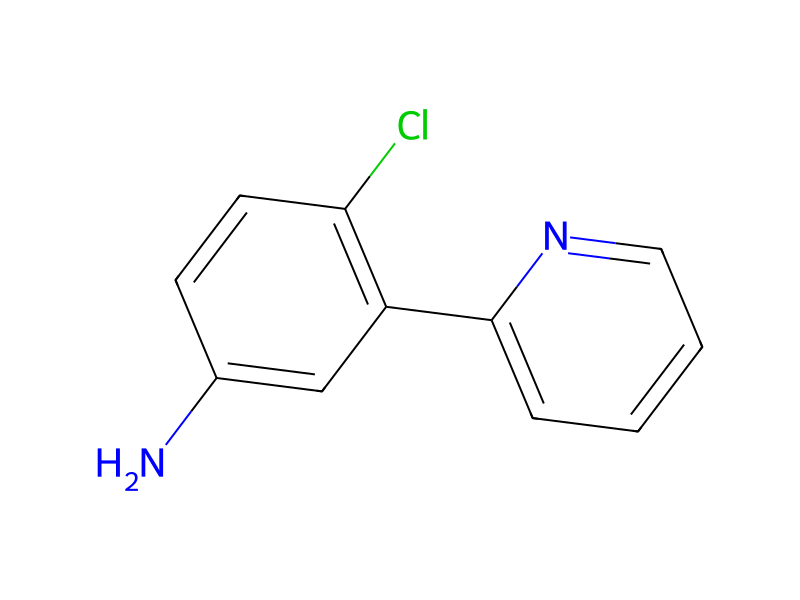
[Cl:1][C:2]1[CH:8]=[CH:7][C:5]([NH2:6])=[CH:4][C:3]=1[C:9]1[CH:14]=[CH:13][CH:12]=[CH:11][N:10]=1.[Cl:15][C:16]1[CH:24]=[C:23]([S:25]([CH3:28])(=[O:27])=[O:26])[CH:22]=[CH:21][C:17]=1[C:18](O)=[O:19]>>[Cl:15][C:16]1[CH:24]=[C:23]([S:25]([CH3:28])(=[O:27])=[O:26])[CH:22]=[CH:21][C:17]=1[C:18]([NH:6][C:5]1[CH:7]=[CH:8][C:2]([Cl:1])=[C:3]([C:9]2[CH:14]=[CH:13][CH:12]=[CH:11][N:10]=2)[CH:4]=1)=[O:19]Participants
3


Procedure
Procedure G was used to couple 4-chloro-3-(pyridin-2-yl)aniline (50 mg) and 2-chloro-4-methylsulfonylbenzoic acid to produce 2-chloro-N-(4-chloro-3-(pyridin-2-yl)phenyl)-4-(methylsulfonyl)benzamide. MS (Q1) 421.0 (M)+. The product was then dissolved in 1 N HCl solution followed by freebasing with 0.5 N NaOH solution (pH to 11). The resulting precipitate was filtered and vacuum-dry.
Sources & evidence
- ORD record
- ord-8bb10ef484f84e4386370c87b6c90069
- Source dataset
- uspto-grants-2016_03
- Patent number
- US09278961B2
Reaction notes
Loading…