Hydrochloric Acid → Aminophenazone hydrochloride
Reaction equation

[ClH:1].[CH3:2][C:3]#[N:4].CC1N(C)N([C:13]2[CH:14]=[CH:15][CH:16]=[CH:17][CH:18]=2)C(=O)C=1N(C)C.[CH3:22][N:23]1[C:27](C)=[C:26](NC)C(=O)N1C1C=CC=CC=1.NC1C(=O)N(C2C=CC=CC=2)[N:41]([CH3:51])[C:40]=1C.C(NC1C(=O)N(C2C=CC=CC=2)N(C)C=1C)=[O:54].CN1C(C)=C(NO)C(=O)N1C1C=CC=CC=1.CN(C)C1C(=O)N(C2C=CC=CC=2)N(C)C=1CO.C(NC1C(=O)N(C2C=CC=CC=2)N(C)C=1)=O.C(NC1C(=O)N(C2C=CC=CC=2)N(C)C=1CO)=O>CCOCC.O>[CH3:26][C:27]1[N:23]([CH3:22])[N:4]([C:17]2[CH:18]=[CH:13][CH:14]=[CH:15][CH:16]=2)[C:3](=[O:54])[C:2]=1[N:41]([CH3:51])[CH3:40].[ClH:1]Participants
Reactant 10
 HCID 313Hydrochloric Acid
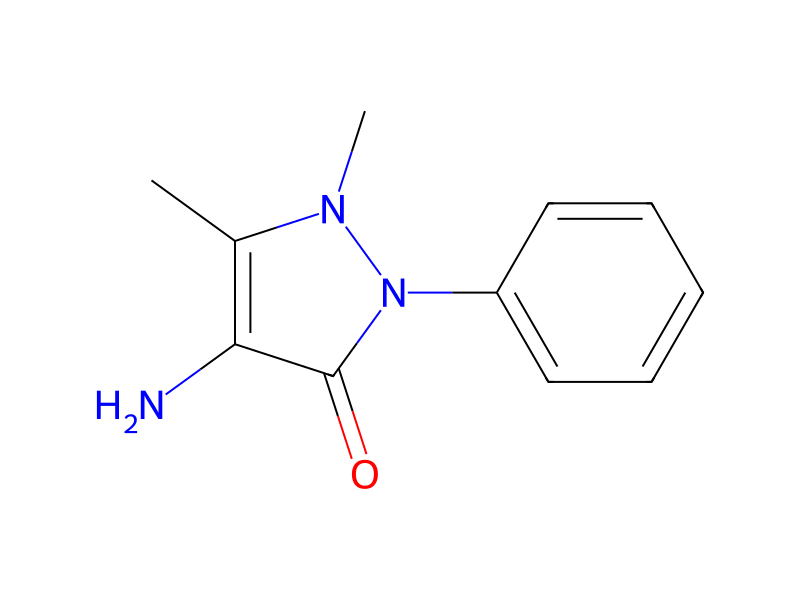 HCID 21514-Aminoantipyrine
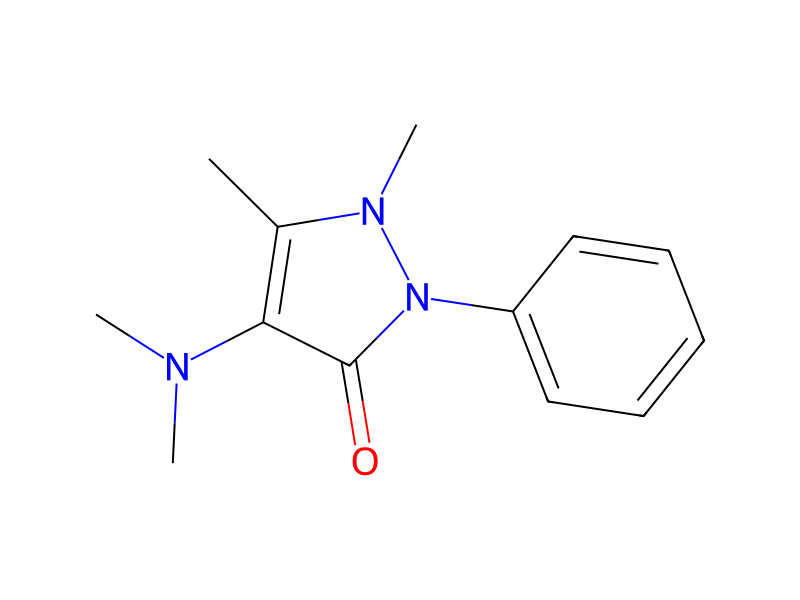 HCID 6009Aminopyrine
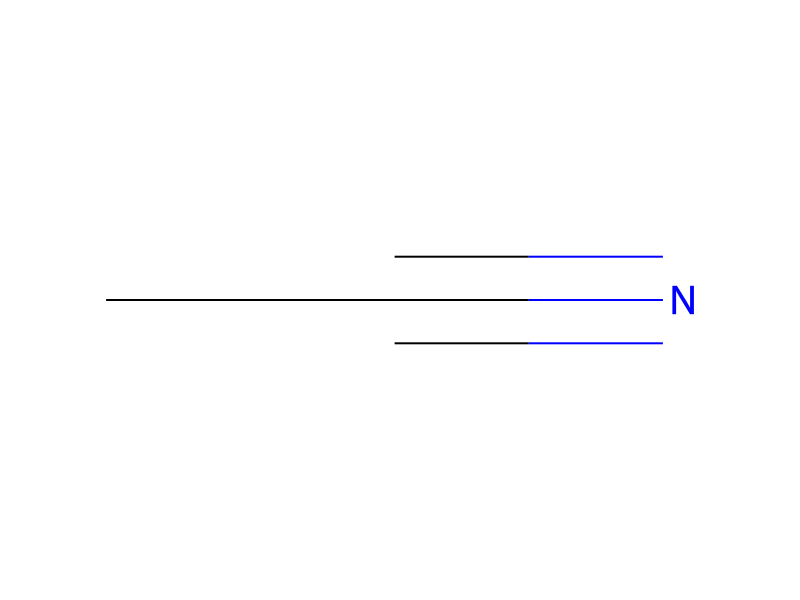 HCID 6342Acetonitrile
 HCID 10618Methylaminoantipyrine
 HCID 726664-(Formylamino)antipyrine
 HCID 30820313-Hydroxymethylaminopyrine
 HCID 189134594-Formylamino-2-methyl1-phenyl-3-pyrazolin-5-one
 HCID 189134602,3-Dimethyl-4-hydroxyamino-1-phenyl-3-pyrazolin-5-one
 HCID 189134614-Formylamino-3-hydroxymethyl-2methyl-1-phenyl-3-pyrazolin-5-one
Product 1

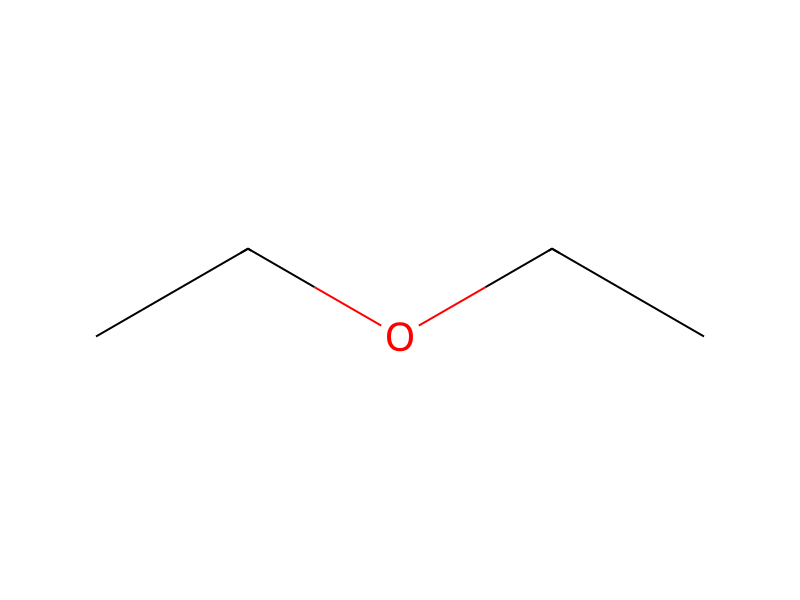
Reagents, catalysts & solvents 2
Procedure
Aminopyrine hydrochloride was prepared from the free base (Aldrich) by treatment with HCl in ether. lodosobenzene (1650 mg, 7.5 mmol, prepared according to the method of Saltzman et al., Org. Synth., 43:60-61 (1963)) was added with stirring at room temperature in portions every 30 min to a solution of octachloro-octachloro tetrasulfonato Fe(III) porphyrin (6.2 mg 3.9 μmol) in 50 ml of 80:20 H2O:CH3CN containing 678 mg (3.0 mmol) of aminopyrine. Two hr after the last addition of the oxidant, the solution was evaporated under reduced pressure at 50° C. The residue was dissolved in 20 ml of aqueous Na2CO3 solution, and the solution was extracted with CH2Cl2 (3×50 ml). The organic layer was dried over Na2CO3 and evaporated under reduced pressure. The residue was chromatographed on silica gel, eluting with 1:25 methanol:methylene chloride. Seven oxidation products were obtained from the eluate (see Scheme 2): 2,3-dimethyl-4-monomethylamino-1-phenyl-3-pyrazolin5-one (AP-1); 4-amino-2,3-dimethyl-1-phenyl-3-pyrazolin-5-one (AP-2); 4formylamino-2,3-dimethyl-1-phenyl-3-pyrazolin-5-one (AP-3); 2,3-dimethyl-4hydroxyamino-1-phenyl-3-pyrazolin-5-one (AP-4); 4-dimethylamino-3hydroxymethyl-2-methyl-1-phenyl-3-pyrazolin-5-one (AP-5); 4-dimethylamino-2,3-dimethyl-1-phenyl-3-pyrazolin-5-one-4-oxide (AP-6); and 4-dimethyl-2,3dimethyl-1-(4-hydroxyphenyl)-3-pyrazolin-5-one (AP-7), 4-formylamino-2-methyl1-phenyl-3-pyrazolin-5-one (AP-8), and 4-formylamino-3-hydroxymethyl-2methyl-1-phenyl-3-pyrazolin-5-one (AP-9).
Workup
- customlodosobenzene (1650 mg, 7.5 mmol, prepared
- addition, 43:60-61 (1963)) was added
- additionTwo hr after the last addition of the oxidant
- customthe solution was evaporated under reduced pressure at 50° C
- dissolutionThe residue was dissolved in 20 ml of aqueous Na2CO3 solution
- extractionthe solution was extracted with CH2Cl2 (3×50 ml)
- dry with materialThe organic layer was dried over Na2CO3
- customevaporated under reduced pressure
- customThe residue was chromatographed on silica gel
- washeluting with 1:25 methanol
- customSeven oxidation products were obtained from the eluate (see Scheme 2)
Sources & evidence
- ORD record
- ord-71c73e3a87404acf82e5763a8c983f19
- Source dataset
- uspto-grants-1998_06
- Patent number
- US05760216
Reaction notes
Loading…