Acetic Anhydride → Ethyl 2-(2-chloro-4-iodo-benzoyl)-3-ethoxy-acrylate
Reaction equation

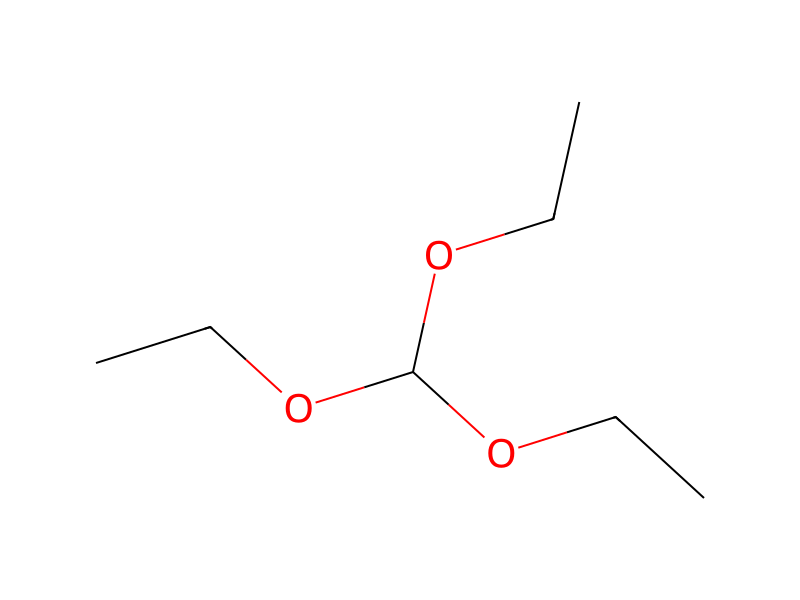
[Cl:1][C:2]1[CH:7]=[C:6]([I:8])[CH:5]=[CH:4][C:3]=1[C:9](=[O:16])[CH2:10][C:11]([O:13][CH2:14][CH3:15])=[O:12].[CH:17](OCC)(OCC)[O:18][CH2:19][CH3:20].C(OC(=O)C)(=O)C>>[Cl:1][C:2]1[CH:7]=[C:6]([I:8])[CH:5]=[CH:4][C:3]=1[C:9]([C:10](=[CH:17][O:18][CH2:19][CH3:20])[C:11]([O:13][CH2:14][CH3:15])=[O:12])=[O:16]Participants
4



Procedure
md) 53.7 g of ethyl 3-(2-chloro-4-iodo-phenyl)-3-oxo-propionate are heated to boiling under reflux for 4 hrs. with 40 g of triethyl orthoformate and 46.1 g of acetic anhydride. The volatile constituents are distilled off in a water-jet vacuum and finally in a high vacuum. 55.9 g (90%) of ethyl 2-(2-chloro-4-iodo-benzoyl)-3-ethoxy-acrylate are obtained as a yellowish oil. Mass spectrum: peaks inter alia at 408 (M+, 4%), 373 (67%), 342 (14%), 335 (100%).
Workup
- temperatureunder reflux for 4 hrs
- distillationThe volatile constituents are distilled off in a water-jet vacuum and finally in a high vacuum
Sources & evidence
- ORD record
- ord-f30372f5d3ff4c65a6638ec5f0321b17
- Source dataset
- uspto-grants-1998_06
- Patent number
- US05763450
Reaction notes
Loading…