Acetic Anhydride → 3-(2,4-Difluorophenyl)acrylic Acid
Reaction equation

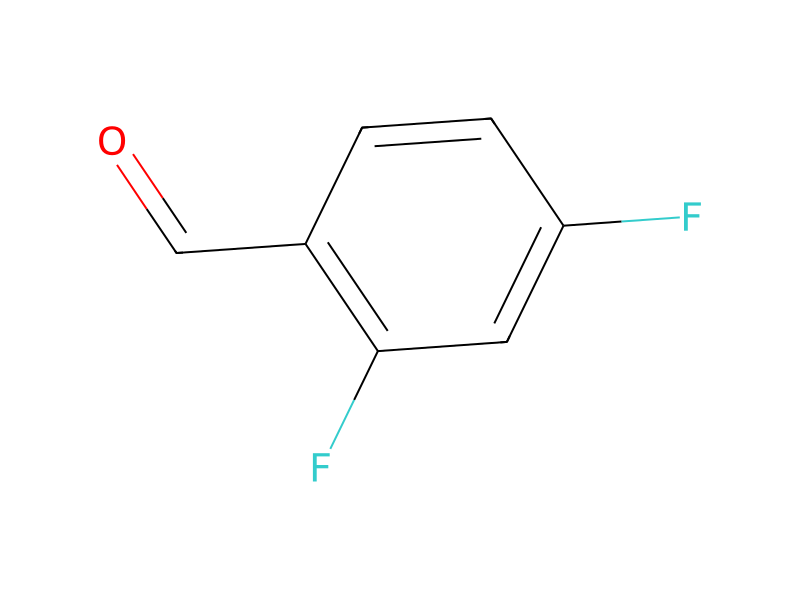
[F:1][C:2]1[CH:9]=[C:8]([F:10])[CH:7]=[CH:6][C:3]=1[CH:4]=O.[C:11]([O:14]C(=O)C)(=[O:13])[CH3:12]>>[F:1][C:2]1[CH:9]=[C:8]([F:10])[CH:7]=[CH:6][C:3]=1[CH:4]=[CH:12][C:11]([OH:14])=[O:13]Participants
3


Procedure
A disadvantage here is the high reaction temperature needed, the unsatisfactory yield and the difficult accessibility of the compounds of the formula (I). Monatshefte der Chemie 90, 680 (1959) describes the reaction of 2,4-difluorobenzaldehyde with acetic anhydride at 180° C., 2,4-difluorocinnamic acid being obtained in a 77% yield.
Workup
- customthe unsatisfactory yield
Sources & evidence
- ORD record
- ord-409bf82a2f894970bf5030fb0f263e0f
- Source dataset
- uspto-grants-2005_10
- Patent number
- US06956129B2
Reaction notes
Loading…