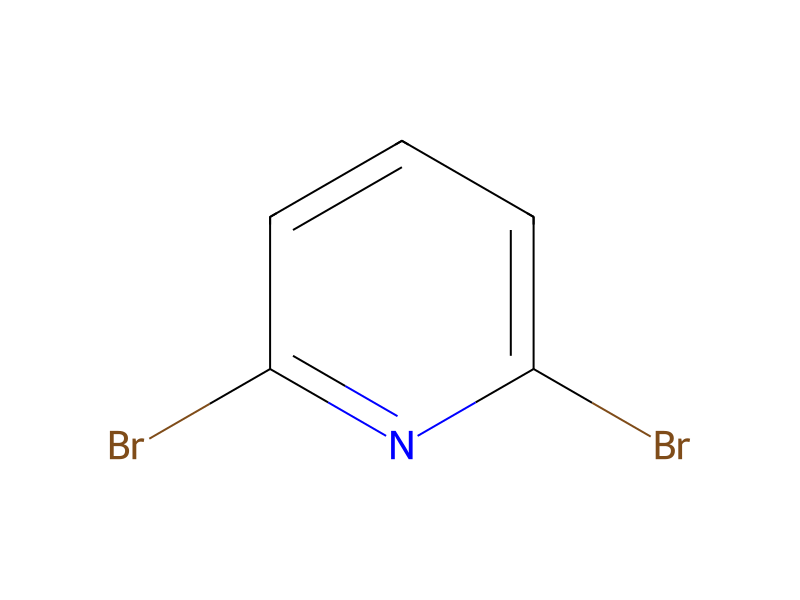
2,6-Dibromopyridine → HCID 22288643, compound
Reaction equation

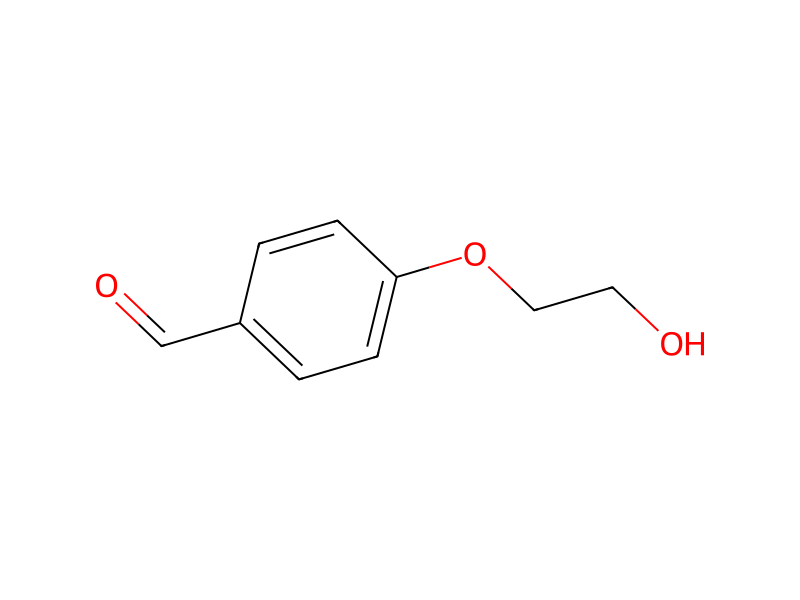
[H-].[Na+].[OH:3][CH2:4][CH2:5][O:6][C:7]1[CH:14]=[CH:13][C:10]([CH:11]=[O:12])=[CH:9][CH:8]=1.[Br:15][C:16]1[CH:21]=[CH:20][CH:19]=[C:18](Br)[N:17]=1>CN(C=O)C.[I-].C([N+](CCCC)(CCCC)CCCC)CCC>[Br:15][C:16]1[N:17]=[C:18]([O:3][CH2:4][CH2:5][O:6][C:7]2[CH:14]=[CH:13][C:10]([CH:11]=[O:12])=[CH:9][CH:8]=2)[CH:19]=[CH:20][CH:21]=1Participants




Procedure
To a 60% suspension of sodium hydride (0.22 g) in DMF (30 mL), 4-(2-hydroxyethoxy)benzaldehyde (1.00 g) was added at 0° C., and the suspension was stirred for 30 minutes. Subsequently, 2,6-dibromopyridine (2.14 g) and tetrabutylammonium iodide (0.022 g) were sequentially added to the mixture at 0° C., and the resultant mixture was stirred at room temperature for two hours. After completion of reaction, the reaction mixture was poured into an ice-water mixture, and the thus-formed organic matter was separated through extraction by use of ethyl acetate, followed by washing with water. The washed product was dried over magnesium sulfate, and the residual solvent was removed through distillation under reduced pressure. The thus-yielded residue was purified by means of a silica gel column, to thereby yield 1.50 g of the title compound as colorless crystals (yield 77.3%).
Workup
- customAfter completion of reaction
- customthe thus-formed organic matter was separated through extraction by use of ethyl acetate
- washby washing with water
- dry with materialThe washed product was dried over magnesium sulfate
- customthe residual solvent was removed through distillation under reduced pressure
- customThe thus-yielded residue was purified by means of a silica gel column
Sources & evidence
- ORD record
- ord-bf30a5d4dcf34124acd476cee4dae779
- Source dataset
- uspto-grants-2005_10
- Patent number
- US06958353B2
Reaction notes
Loading…