1,4-Dibromobutane → HCID 565307, compound
Reaction equation

[CH3:1][C:2]1[O:3][CH:4]=[CH:5][CH:6]=1.[Br:7][CH2:8][CH2:9][CH2:10][CH2:11]Br.C([Li])CCC>>[Br:7][CH2:8][CH2:9][CH2:10][CH2:11][C:4]1[O:3][C:2]([CH3:1])=[CH:6][CH:5]=1Participants
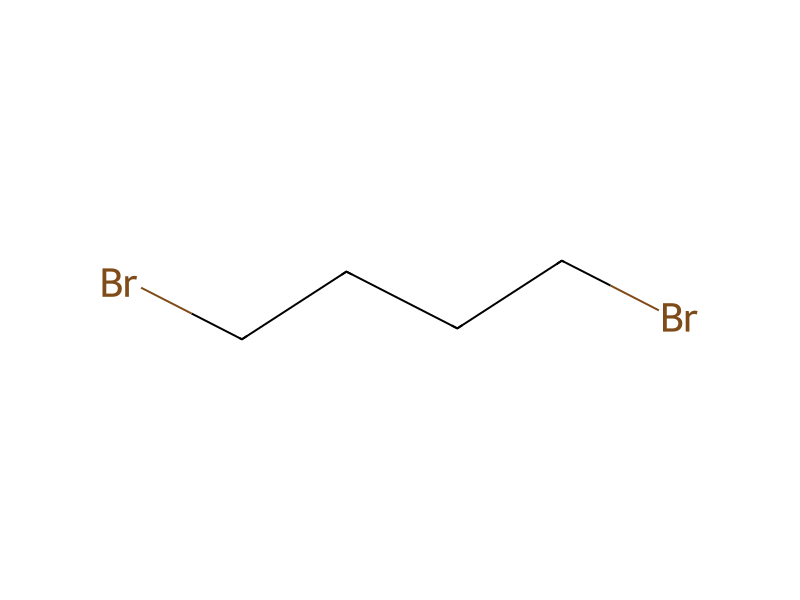



Procedure
2-methylfuran 26 is alkylated with 1,4-dibromobutane in the presence of a strong base, for example, n-butyllithium under anhydrous conditions, to produce 5-(4-bromobutyl)-2-methylfuran 27. The latter is then treated with ethylene or propylene glycol in the presence of an acid catalyst to afford the diketal bromide 28 (n=2 or 3). The bromide 28 is converted with a source of iodine ion, for example, sodium iodide, to the corresponding diketal iodide 29, which in turn is caused to react with triphenylphosphine to give the diketal phosphonium iodide 30. Treatment of the latter with phenyllithium in ether splits out the elements of HI resulting in a red solution of the ylide 25 which is not isolated as such but is used directly in condensation with aldehyde 8 (or 8a or 8b).
Sources & evidence
- ORD record
- ord-5ab3588993c54a8cbeb2932a9e6c364a
- Source dataset
- uspto-grants-1977_10
- Patent number
- US04055603
Reaction notes
Loading…