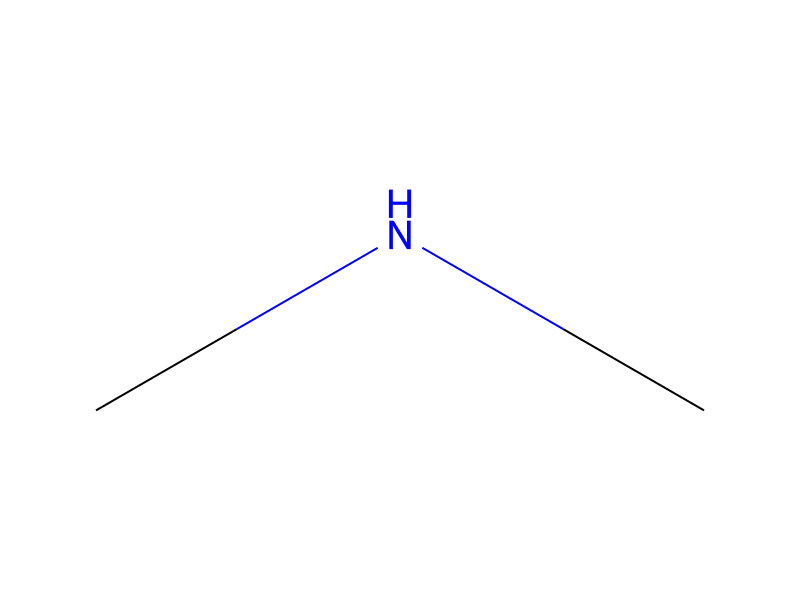
Dimethylamine → N,N-dimethyl-2-(phenylthio)benzamide
Reaction equation

[C:1]1([S:7][C:8]2[CH:16]=[CH:15][CH:14]=[CH:13][C:9]=2[C:10](Cl)=[O:11])[CH:6]=[CH:5][CH:4]=[CH:3][CH:2]=1.C1(SC2C=CC=CC=2C(O)=O)C=CC=CC=1.S(Cl)(Cl)=O.[CH3:37][NH:38][CH3:39]>C1C=CC=CC=1>[CH3:37][N:38]([CH3:39])[C:10](=[O:11])[C:9]1[CH:13]=[CH:14][CH:15]=[CH:16][C:8]=1[S:7][C:1]1[CH:6]=[CH:5][CH:4]=[CH:3][CH:2]=1Participants
6
Reactant 4



Product 1

Reagents, catalysts & solvents 1

Procedure
Following the procedure described in Example 1, 2-(phenylthio)benzoyl chloride is prepared from 0.065 mole of 2-(phenylthio)benzoic acid and excess thionyl chloride. A solution of the oily acid chloride in 50 ml. of benzene is added dropwise with stirring to a solution of 7 g. of dimethylamine in 50 ml. of benzene. The mixture is heated briefly to refluxing. Evaporation of the solvent under reduced pressure leaves N,N-dimethyl-2(phenylthio)benzamide as the residue.
Workup
- temperatureThe mixture is heated briefly
- temperatureto refluxing
- customEvaporation of the solvent under reduced pressure
Sources & evidence
- ORD record
- ord-ed7394fb081a4987ae8a173d76f7e731
- Source dataset
- uspto-grants-1977_10
- Patent number
- US04055665
Reaction notes
Loading…