Water → 2-(2,6-Dichloro-4-trifluoromethylphenylhydrazono)acetaldehyde
Reaction equation

[Cl:1][C:2]1[CH:7]=[C:6]([C:8]([F:11])([F:10])[F:9])[CH:5]=[C:4]([Cl:12])[C:3]=1[NH:13][NH2:14].[CH:15]([CH:17]=O)=[O:16].O>C(O)(=O)C>[Cl:1][C:2]1[CH:7]=[C:6]([C:8]([F:9])([F:11])[F:10])[CH:5]=[C:4]([Cl:12])[C:3]=1[NH:13][N:14]=[CH:17][CH:15]=[O:16]Participants
Reactant 3

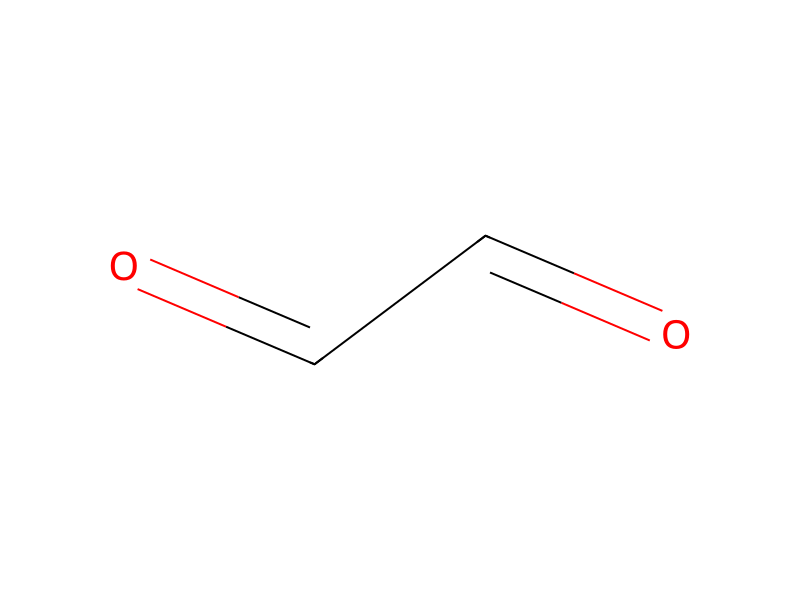

Product 1

Reagents, catalysts & solvents 1

Procedure
A solution of 2,6-dichloro-4-trifluoromethylphenylhydrazine (5 g) in acetic acid was added dropwise to a mixture of 40% aqueous glyoxal (50 ml) and water (400 ml). The mixture was stirred at room temperature for 2 hours and solid collected by filtration. A sample was recrystallised from ethanol to give 2-(2,6-dichloro-4-trifluoromethylphenylhydrazono)acetaldehyde, m.p. 131°-133°. This crude product (2.85 g) in ethanol (30 ml) was added to a solution of hydroxylamine hydrochloride (0.7 g) in water (10 ml), which had been neutralized with sodium acetate (0.82 g). The mixture was stirred at room temperature and then extracted with ethyl acetate. The extract was washed with brine, dried and evaporated to 2-(2,6-dichloro-4-trifluoromethylphenylhydrazono)acetaldehyde oxime. This was then treated with copper sulphate, in a similar manner to Example 1, to give 2-(2,6-dichloro-4-trifluoromethylphenyl)-2H-1,2,3-triazole 1-oxide, m.p. 153°-154°, which in turn was treated with trimethyloxonium tetrafluoroborate and sodium methanethiolate, in a similar manner to Example 3, to give 2-(2,6-dichloro-4-trifluoromethylphenyl)-4-methylthio-2H-1,2,3-triazole, m p. 100°-101°. (Compound 11)
Workup
- filtrationsolid collected by filtration
- customA sample was recrystallised from ethanol
Sources & evidence
- ORD record
- ord-c31edd0bb716474ba2a50c1673e3bdf9
- Source dataset
- uspto-grants-1991_11
- Patent number
- US05064844
Reaction notes
Loading…