O-Benzylhydroxylamine → N-benzyloxy-N'-decylurea
Reaction equation

[CH2:1]([N:11]=[C:12]=[O:13])[CH2:2][CH2:3][CH2:4][CH2:5][CH2:6][CH2:7][CH2:8][CH2:9][CH3:10].[CH2:14]([O:21][NH2:22])[C:15]1[CH:20]=[CH:19][CH:18]=[CH:17][CH:16]=1>ClCCCl.C(Cl)Cl>[CH2:14]([O:21][NH:22][C:12]([NH:11][CH2:1][CH2:2][CH2:3][CH2:4][CH2:5][CH2:6][CH2:7][CH2:8][CH2:9][CH3:10])=[O:13])[C:15]1[CH:20]=[CH:19][CH:18]=[CH:17][CH:16]=1Participants
Reactant 2
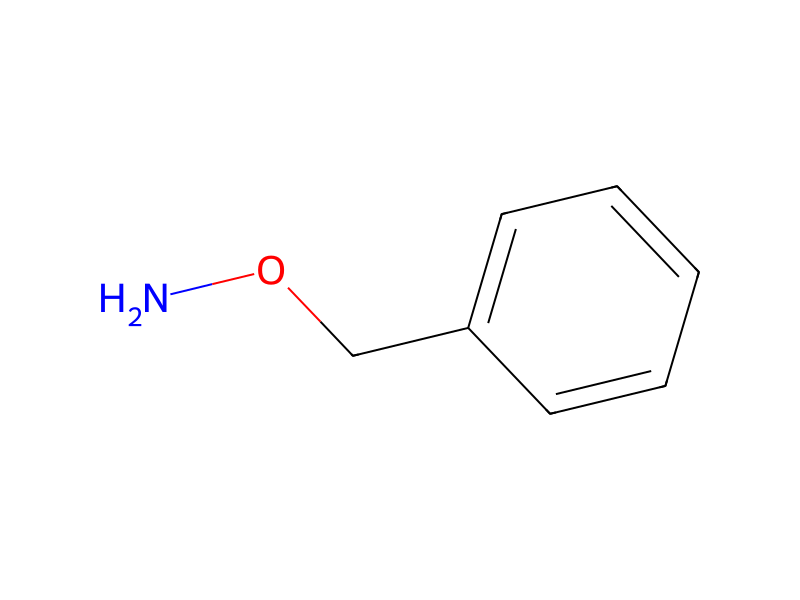

Product 1

Reagents, catalysts & solvents 2


Procedure
To a solution of decyl isocyanate (19.6 g, 0.11 mol) in 1,2-dichloroethane (100 ml) was added a solution of benzyloxyamine (0.114 mol) in methylene chloride (100 ml). The solution was refluxed for 20 minutes, evaporated, and the residue triturated with pentane to give N-benzyloxy-N'-decylurea as a white solid (22.36 g, 67% yield). This urea (2.95 g, 10 mmol) was dissolved in DMF (30 ml) at 40° C. Sodium hydride (425 mg of a 60% dispersion in oil) was added. Within 15 minutes, a precipitate formed. After 30 minutes, methyl iodide (0.64 ml) was added, and the mixture was stirred for one hour at room temperature. The resulting solution was poured in 1% HCl, and the resulting solid was washed with water, collected by filtration, and air-dried. Recrystallization from pentane provided N-benzyloxy-N-methyl-N'-decylurea as a white solid (2.25 g, 73% yield). Hydrogenolysis as in Example 2 above, and recrystallization from ethanol-water, provided the title compound as a white solid (1.43 g, 91% yield), mp 74°-76° C.
Workup
- temperatureThe solution was refluxed for 20 minutes
- customevaporated
- customthe residue triturated with pentane
Sources & evidence
- ORD record
- ord-23d312d0f50f4002a9e2de0867f71901
- Source dataset
- uspto-grants-1991_11
- Patent number
- US05066658
Reaction notes
Loading…