Methanesulfonyl chloride → 1-Benzyloxy-4-(2-methanesulfonyloxyethyl)benzene
Reaction equation

[CH3:1][S:2](Cl)(=[O:4])=[O:3].[CH2:6]([O:13][C:14]1[CH:22]=[CH:21][C:17]([CH2:18][CH2:19][OH:20])=[CH:16][CH:15]=1)[C:7]1[CH:12]=[CH:11][CH:10]=[CH:9][CH:8]=1>C(OCC)C.N1C=CC=CC=1>[CH2:6]([O:13][C:14]1[CH:15]=[CH:16][C:17]([CH2:18][CH2:19][O:20][S:2]([CH3:1])(=[O:4])=[O:3])=[CH:21][CH:22]=1)[C:7]1[CH:8]=[CH:9][CH:10]=[CH:11][CH:12]=1Participants
Reactant 2

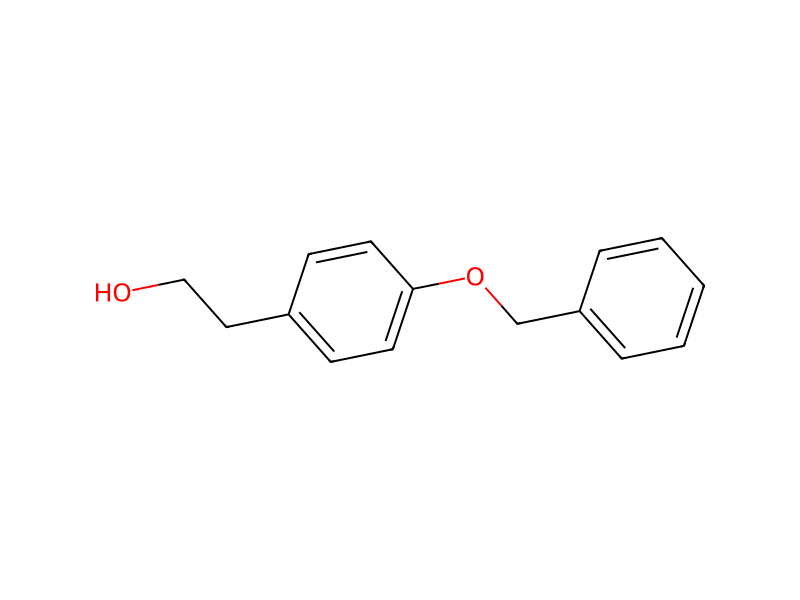
Product 1

Reagents, catalysts & solvents 2


Procedure
A solution of 3.51 g of methanesulfonyl chloride in 5 ml of diethyl ether was added dropwise over a period of 0.5 hour to a stirred solution of 7.0 g of 4-benzyloxyphenethyl alcohol in 20 ml of pyridine at 0° C. Stirring was continued for 2 hours while the mixture was allowed to warm to room temperature. The mixture was then partitioned between 150 ml of 2N hydrochloric acid and dichloromethane. The organic phase was separated, washed with water, dried over sodium sulfate, filtered, and evaporated. Trituration of the residue with n-hexane brought about crystallization. The crystals were removed by filtration and dried, whereby 8.9 g (95%) of 1-benzyloxy-4-(2-methanesulfonyloxyethyl)benzene having a melting point of 60°-64° C. were obtained.
Workup
- customThe mixture was then partitioned between 150 ml of 2N hydrochloric acid and dichloromethane
- customThe organic phase was separated
- washwashed with water
- dry with materialdried over sodium sulfate
- filtrationfiltered
- customevaporated
- customTrituration of the residue with n-hexane brought about crystallization
- customThe crystals were removed by filtration
- customdried
Sources & evidence
- ORD record
- ord-96e1c929ce9c49218a7bd3c1dd4b6a19
- Source dataset
- uspto-grants-1987_05
- Patent number
- US04663462
Reaction notes
Loading…