Isobutylene → L-Proline 1,1-dimethylethyl ester
Reaction equation

[NH:1]1[CH2:8][CH2:7][CH2:6][C@H:2]1[C:3]([OH:5])=[O:4].[CH3:9][C:10](=[CH2:12])[CH3:11]>C(Cl)Cl>[C:10]([O:4][C:3](=[O:5])[C@@H:2]1[CH2:6][CH2:7][CH2:8][NH:1]1)([CH3:12])([CH3:11])[CH3:9]Participants
4
Reactant 2

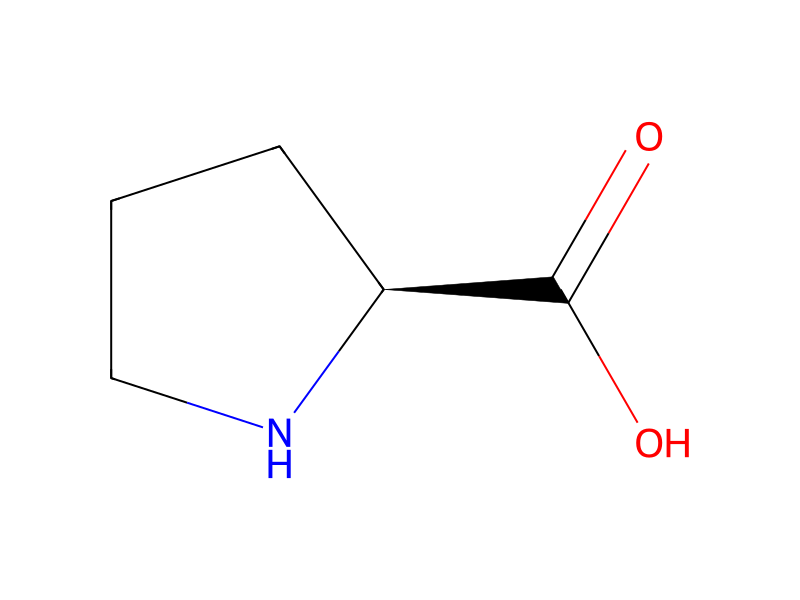
Product 1

Reagents, catalysts & solvents 1

Procedure
It was found that reaction of proline and excess isobutylene in methylene chloride using anhydrous benzenesulfonic acid in situ to effect phase transfer and N-protection of free proline (solubilization via protonation) afforded an 80% assay yield of proline t-butyl ester. This equilibrium reaction required three days to complete at 0°-5° C. at an optimized charge ratio of proline:benzenesulfonic acid:isobutylene of 1:1.5:12. A strongly basic workup neutralized the benzenesulfonate salts and freed the t-butyl ester for extraction into a neutral organic solvent. The product was typically used as a solution in methylene chloride or alternatively isolated in pure form by concentration and vacuum distillation.
Sources & evidence
- ORD record
- ord-f126920818d04267b90e16f3bfa74892
- Source dataset
- uspto-grants-1991_02
- Patent number
- US04992541
Reaction notes
Loading…